
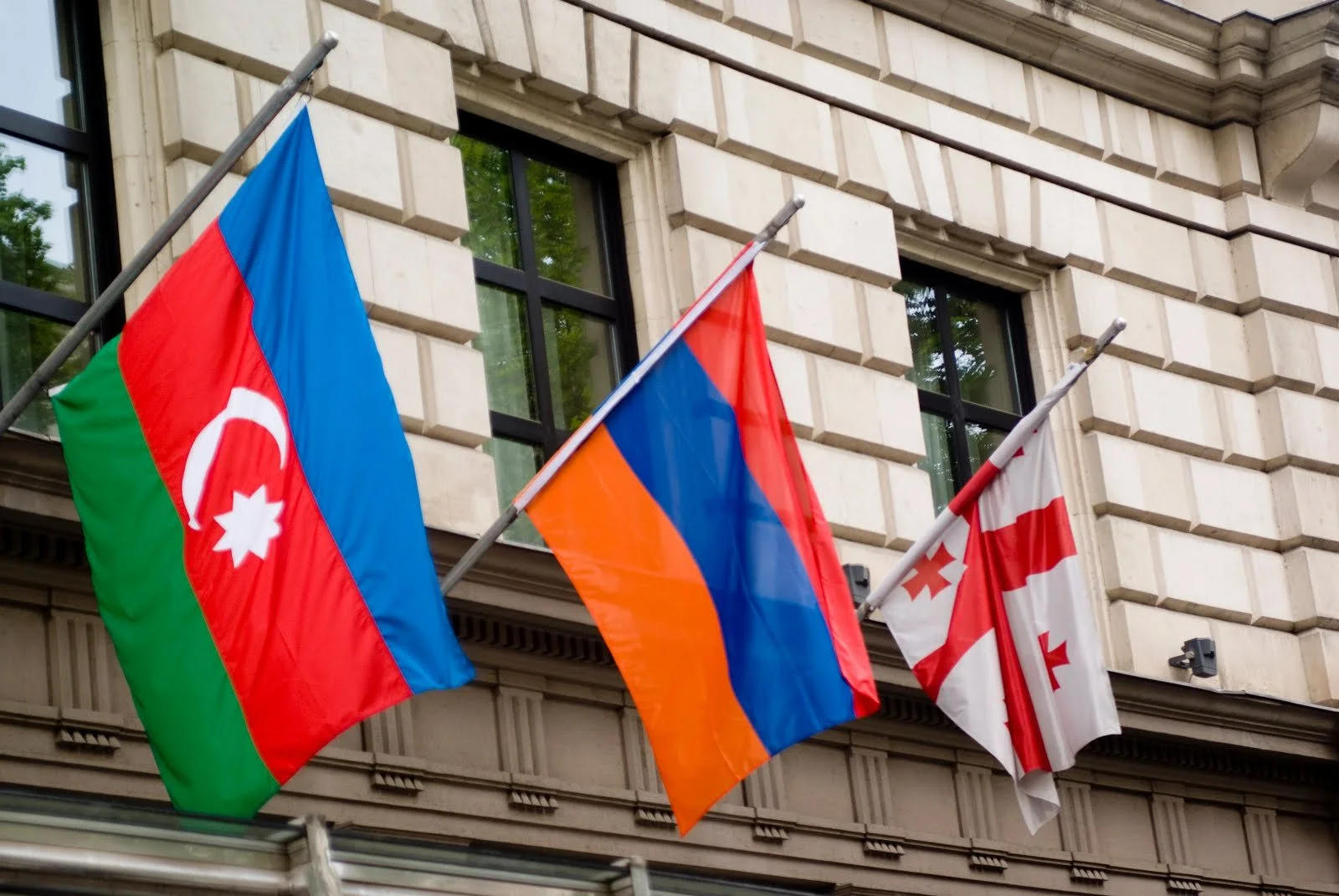
The New Caucasus Chessboard: Multipolarity, Corridor Competition, and the Limits of Strategic Drift in the Post-Karabakh South Caucasus
April 02, 2026 - Written by Luka Okropirashvili
Introduction
The South Caucasus is no longer a sideshow. For three decades after the Soviet collapse, the region operated under a logic largely shaped by Moscow and by the weight of unresolved territorial conflicts. That framework is gone. In its place is a considerably more complex competitive environment in which Russia, Türkiye, Iran, India, China, the EU, and the United States all pursue overlapping and often contradictory interests across the same narrow strip of territory between the Black Sea and the Caspian. The local states, Armenia, Azerbaijan, and Georgia, are not passive recipients of this competition. They are active participants, hedging between power centres with varying degrees of relevant skill and success.
Two developments catalysed this shift above all others. Russia's full-scale invasion of Ukraine in February 2022 disrupted conventional supply chains and forced a major rerouting of Eurasian freight, dramatically elevating the strategic value of South Caucasus transit corridors. In parallel, the second Nagorno-Karabakh conflict and Azerbaijan's decisive 2023 offensive permanently altered the regional balance of power, rendering existing security frameworks obsolete and triggering a wave of strategic recalibration across all three states.
The presented report sets out to analyse the South Caucasus in light of these transformations. Its purpose is to map the competing interests of external powers and local actors, assess the military, economic, and social forces redefining the regional landscape, and identify the principal opportunities and risks that will shape its near-term trajectory. The report concludes with scenario projections and actionable policy recommendations directed at the European Union, the United States, and each of the three South Caucasus states. The South Caucasus is moving fast; the decisions being made now will shape the region for years to come, and this analytical work aims to inform those who must navigate them.
From Frozen Order to Competitive Multipolarity
For most of the post-Soviet period, Russia acted as the region's informal hegemon. It managed prolonged conflicts in Nagorno-Karabakh, Abkhazia, and South Ossetia as instruments of leverage, stationed troops in Armenia, and kept all three South Caucasus states economically and institutionally dependent on Moscow-led frameworks. This arrangement rested not on genuine consent but on the absence of credible alternatives.
The series of Nagorno-Karabakh conflicts exposed the fragility of fragmented security frameworks and regional power structures. Azerbaijan, equipped with advanced Turkish and Israeli high-tech weaponry and a diverse, comprehensive array of modern warfare innovations, launched a 24-hour offensive in September 2023, reclaiming key disputed territories and emerging as a powerful regional actor.
Armenia’s historical overdependence on Moscow, which accounted for over 90 percent of its major arms imports between 2011 and 2020, proved to be functionally and strategically insufficient. Even with Russian troops stationed in Gyumri, the exclusive Collective Security Treaty Organisation (CSTO) security guarantees fell short; while they offered a measure of symbolic reassurance, they were unable to prevent significant territorial losses and decisive setbacks during the historic conflict.
In addition, the war in Ukraine snapped the Northern Corridor, a vital artery between China and Europe. Sanctions on Russia compelled Beijing to pivot toward the Middle Corridor, traversing Central Asia, the Caspian Sea, and the South Caucasus. The freight tonnage on this route surged by 86 percent in 2023 to over 2.8 million tonnes, and exports via the Northern Corridor dropped by 56 percent.
India's proactive efforts to promote the International North-South Transport Corridor (INSTC) have linked New Delhi to Russia and Europe through Iran and the South Caucasus, bypassing volatile or politically sensitive routes through Pakistan, Afghanistan, or the Suez Canal. These shifts helped fortify the strategic and economic importance of the South Caucasus as a hub for connectivity and transit. As noted by many, the region has entered a genuinely post-hegemonic phase, though not a post-conflict one.
What has replaced the old order is best characterised as non-aligned, asynchronous multipolarity. No single external actor dominates. Russia, Türkiye, Iran, the United States, India, and China each hold selective influence over specific states and specific issue areas, but none commands the region as a whole. Local states have learned and adapted to exploit this fragmentation, practising multi-vector foreign policies that seek to extract concessions from competing powers without fully committing to any of them.
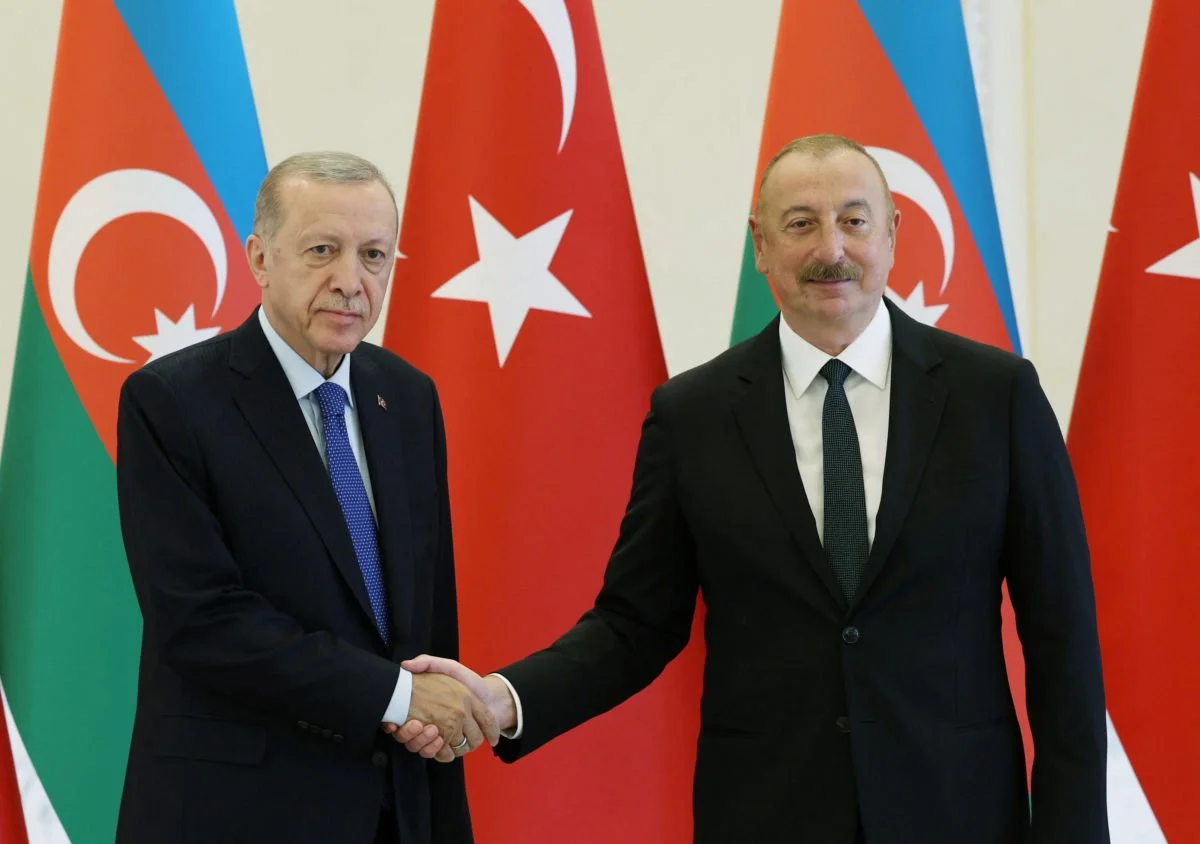
Key Players and Stakeholders
Türkiye
Türkiye has emerged as one of the clearest strategic winners from the post-2020 realignment. The Three Brothers axis with Azerbaijan and Pakistan provides Ankara with a consolidated military and diplomatic bloc, while deep infrastructure investment in Georgia extends its footprint westward. The latter is most visible in Georgia's Black Sea ports and Adjara region. Batumi and Poti serve as critical nodes in Turkish commercial strategy, with Turkish business communities and diaspora maintaining a substantial and longstanding presence in both cities. Turkish capital is deeply embedded in Batumi's real estate, hospitality, and trade sectors, while Poti's port infrastructure has attracted significant Turkish logistics interest as freight volumes along the Middle Corridor have skyrocketed.
Following the Washington-hosted trilateral talks, Türkiye has cautiously pursued normalisation with Armenia, primarily to facilitate the Zangezur Corridor, which would grant Ankara overland access to Central Asia, bypassing both Russia and Iran. This process has produced tangible, if still incremental, results. For instance, Armenia and Türkiye are close to finalising the simplified visa procedure for diplomatic, special, and service passport holders and opening the land border to third-country nationals. Apart from reciprocal diplomatic moves, Turkish Airlines, a majority state owned company, launched daily direct flights between Istanbul and Yerevan in March 2026, with services set to expand to fourteen flights per week by June, a route that had been absent for decades. On the ground, Turkish and Armenian officials held a second round of technical talks in November 2025 focused on rehabilitating and reopening the long-closed Kars-Gyumri railway, meeting at the Akyaka-Akhurik border crossing and in the Armenian city of Gyumri. The two sides also agreed to restore the electricity interconnector between the two countries and to jointly rehabilitate the historic Ani Bridge, a symbolic landmark on the shared frontier. Türkiye’s special envoy, Serdar Kilic, made a rare visit to Armenia via a land crossing, the first time in decades that envoys had used such a route. These steps remain fragile and fall well short of full normalisation, but they reflect a shared interest in unlocking the corridor connectivity that both Ankara and Yerevan stand to gain from.
These are not incidental commercial or technical relationships but structural footholds that reinforce Ankara's broader corridor ambitions. Türkiye now functions as a gatekeeper across the South Caucasus, a role it is actively reinforcing through energy transit agreements and military-technical cooperation.
Iran
Tehran's posture is one of strategic anxiety dressed as assertiveness. Iran shares a long border with Azerbaijan and fears that both the consolidation of Turkish-Azerbaijani power on its northern flank and the strategic detour of the Trump Route for International Peace and Prosperity (TRIPP) and the Zangezur Corridor would deliver. It has responded through diplomatic warnings, economic signalling, and selective support for Armenia as a counterweight. As it has been observed, Tehran is increasingly on the outside of primary decision-making in the South Caucasus, able to complicate developments but not to shape them.
As of March 2026, the South Caucasus appears to have receded as a strategic priority for Tehran, as Iran is actively engaged in an intense military confrontation with the United States and Israel. Iran enters 2026 in a position of acute vulnerability, consumed by the pressures of ongoing conflict, deepening internal institutional fragility, economic freefall, and nationwide protests that erupted in December 2025. The death of Supreme Leader Ali Khamenei has further left the leadership in flux at a moment of heightened external threat. Its regional proxy network has been weakened, and its deterrence model, long the foundation of Iranian influence projection, has been visibly punctured and limited. With its strategic focus fixed on survival and fighting a multifront conflict against the United States and Israel, Tehran has neither the capacity nor the leverage to push its ambitious geopolitical agenda to incentivise a favourable status quo in the South Caucasus.
In this context, Türkiye, operating from a position of regional power with deep economic integration into international systems that Iran conspicuously lacks, emerges as a principal beneficiary of this vacuum. Ankara is quietly consolidating influence across the corridors and trade architecture that Tehran would have preferred to undermine or block, alongside Western actors and relatively new entrants such as India and China that are playing an increasingly prominent role in the regional balance.
India
India has built a carefully calibrated presence that blends hard security with economic footholds. Defence contracts with Armenia worth over $600 million since 2020, covering Pinaka rocket launchers, ATAGS artillery systems, and Swathi radars, have established New Delhi as a credible alternative arms supplier and a hedge against the Türkiye-Pakistan-Azerbaijan axis. Economically, some 200 Indian companies operate in Azerbaijan, and annual oil imports from Baku exceed $1.6 billion, according to India's Ministryof Commerce trade data. India's engagement with the International North-South Transport Corridor (INSTC), linking New Delhi to Russia and Europe via Iran and the South Caucasus, reflects a long-term strategy of securing Eurasian logistical footholds rather than seeking immediate power projection.
Yet India's expanding presence does not occur in a vacuum, and its growing footprint places it in direct and indirect competition with several powers simultaneously. The most immediate friction is with the Türkiye-Pakistan-Azerbaijan axis. Indian arms supplies to Armenia are read in Ankara, Islamabad, and Baku not as neutral interactions but as deliberate counterweights to a bloc that India regards as structurally hostile. This dynamic exports an existing rivalry, rooted in the Kashmir dispute and broader India-Pakistan-China antagonism, into a theatre that had previously been insulated from it.
The competition with China is quieter but structurally more consequential. Both powers are pursuing corridor connectivity across the same Eurasian geography, with Beijing concentrating on the Middle Corridor and Georgia's Anaklia Port, while New Delhi anchors its strategy around the INSTC running through Iran. These are not directly competing routes so much as parallel architectures built on different political assumptions, and local states have thus far welcomed both. However, as corridor investment deepens and political conditions shift, the space for simultaneous accommodation of Chinese and Indian interests will narrow.
China
Beijing maintains a studied neutrality in local conflicts while concentrating on infrastructure leverage at critical nodes. Its investments in Georgia's Anaklia Port development and Azerbaijan's Alat Free Economic Zone reflect a focus on securing Belt and Road Initiative connectivity rather than political influence. The regional connectivity assessments highlight that Chinese investment in the region has grown substantially since 2021, though the strategic payoff for local states remains constrained by Beijing's transactional, infrastructure-centred approach.
Russia
The strategic role of Russia has continued to wane, partly due to the war in Ukraine and partly because regional actors have grown accustomed to operating without its approval. Moscow’s authority, once grounded in the assumption that it could restrain conflict while providing political leverage, has largely collapsed. It should be noted that even now, Russia retains tools to exert influence, such as economic measures and control over the transit/energy routes (like the INSTC, away from Azerbaijan toward Central Asia or Georgia).
Azerbaijan’s pursuit of a principled hedging and balancing foreign policy provides it with an advantageous buffer against potential pressure from Moscow. The two-sided interrelation is therefore characterised by pragmatism; Moscow and Baku maintain a calibrated mix of interdependence and autonomy, signalling the shift away from post-Soviet hierarchical control toward a more adaptable and situational regional order.
On the other hand, Armenia-Russia reciprocal relationship still goes on in terms of practical cooperation, through diplomatic talks, trade, and defence-technology collaboration in the intelligence and nuclear fields. Yet, big moves, like the withdrawal from CSTO, would be difficult in the short run. Both sides exercise caution, keeping their relationship largely transactional and limited. Moscow’s focus on Armenia is primarily shaped by how Western powers engage the country, but new dynamics are shifting influence toward Ankara and Beijing. This effort for diversification of alliances seeks to reduce Armenia’s historical reliance on Moscow and challenges Russia to adopt a more flexible and nuanced approach in its regional competition.
Meanwhile, Russia successfully manages to exploit all strategic ambiguities around Georgia. Russian influence in Georgia is no longer based on escalation but on passive-aggressive forcing. The fact that Abkhazia and South Ossetia remain occupied, the process of borderisation, and the economic ties that have been established for years continue to remind Georgia of its weaknesses. A Georgia that is less central to Western strategy, more entangled with Chinese capital, and increasingly unreliable and less predictable in its regional relationships, is easier for Russia to manage without overt pressure. Strategic drift serves Moscow’s interests far better than confrontation.
United States
Washington has re-engaged the South Caucasus under a sharply transactional framework. The U.S.-brokered TRIPP initiative, which links Azerbaijan to Nakhchivan through Armenia with integrated rail, energy, and digital infrastructure, reflects a strategic logic in which connectivity and corridor management deliver more durable influence than open-ended democracy promotion. The August 2025 peace agreement, initiated in Washington, formalised this role. As the U.S. National Security Strategy released in early 2026 makes clear, countering rival influence through economic architecture has become Washington's primary tool in regions where direct military engagement is not feasible. Georgia, by contrast, enters this moment with a reputation for internal political chaos and strained relations with the West, and risks receiving less than its neighbours from renewed American engagement in the region.
Historically, Tbilisi pursued a Western-oriented trajectory centered on EU and NATO integration. Yet the reversion to a limited strategic autonomy and an amorphous, pragmatic multi-vector foreign policy, prioritising contested attempts at hedging and balancing among competing powers, means Georgia now struggles to manoeuvre within the region's multipolar, competitive order. This cautious deviation and misaligned pivot toward a Eurasian camp carries strategic risks, as it could further erode traditional Western commitments and the country’s long-term foreign policy trajectory. All of these external dynamics are intensified by Georgia’s domestic political conditions. Persistent polarisation, contested legitimacy, and weakened ties with Western partners limit Georgia’s principal ability to actively contribute to the regional order now taking form around it.
While Georgia continues to maintain functional and practically passive relations with its immediate neighbours and remains an operational transit corridor and strategic actor in the South Caucasus, this alone is no longer sufficient to secure its regional relevance. U.S. attention is selective, and Washington increasingly rewards actors who deliver stability and economic outcomes. If Georgia is perceived as politically noisy and strategically opportunistic, it may find itself competing with Armenia and Azerbaijan for American investment and diplomatic bandwidth.
The European Union
The European Union remains a major, though increasingly challenged, actor in the South Caucasus. Brussels has long sought to anchor Georgia, Armenia, and Azerbaijan through association agreements, trade liberalisation, and energy partnerships under the Eastern Partnership framework. Yet recent shifts in the region’s power balance and Georgia’s ongoing recalibration complicate the EU’s leverage.
Armenia's EU pivot has produced tangible milestones. In March 2025, Armenia's parliament adopted the EU Integration Act, formally launching the country's accession process. A new Strategic Agenda for the EU-Armenia Partnership was adopted in December 2025, and both sides welcomed the handover of a Visa Liberalisation Action Plan as a key milestone toward visa-free travel, with an EU-Armenia Summit scheduled for May 2026. A 270 million euro Resilience and Growth Plan covering the period 2024 to 2027 underpins this agenda, targeting connectivity, resilience, and private sector development.
Yet the risks of overextension are real. Armenia has pursued its European ambitions without formally severing ties with Russia, remaining a member of the Eurasian Economic Union (EAEU) while its participation in the Collective Security Treaty Organization (CSTO) is effectively frozen. In 2024, Armenia's trade turnover with the EAEU exceeded $12.7 billion, growing by 54 percent, while trade turnover with the EU fell by 11.7 percent to $2.34 billion. Before Russia's full-scale invasion of Ukraine, trade between Armenia and Russia stood at approximately $2.5 billion annually; by 2024, it had reached $12 billion. Much of this growth was driven by re-export activity rather than structural economic integration, and Russia has projected that bilateral trade will fall from $12.4 billion in 2024 to around $6 billion in 2025 as those sanctions-evasion channels shrink.
The decline is revealing: it exposes how much of Armenia's recent economic development rested on a transactional arrangement with Moscow rather than genuine diversification. As trade turnover and economic/commercial activities between Armenia and Russia still reach billions of dollars, with Armenia ranking among Russia's top ten trade partners, this indicates that economic exposure to Moscow remains structurally significant even as political distance grows.
As for Georgia, the EU still represents its historic opportunity for Western integration aspirations, but the bloc’s fragmented internal politics, overcomplicated enlargement strategy, and limited security presence create vulnerabilities that rival powers, Russia, China, and Türkiye, have been quick to exploit.
Concurrently, the EU’s updated Black Sea strategy emphasises connectivity, resilience, and energy diversification, seeking to bind the South Caucasus more firmly into European markets and reduce dependence on Russian transit. Whether this pitch can counterbalance the pull of alternative Eurasian frameworks remains uncertain, particularly as local actors hedge between Brussels’ normative agenda and the material incentives offered by competing powers.
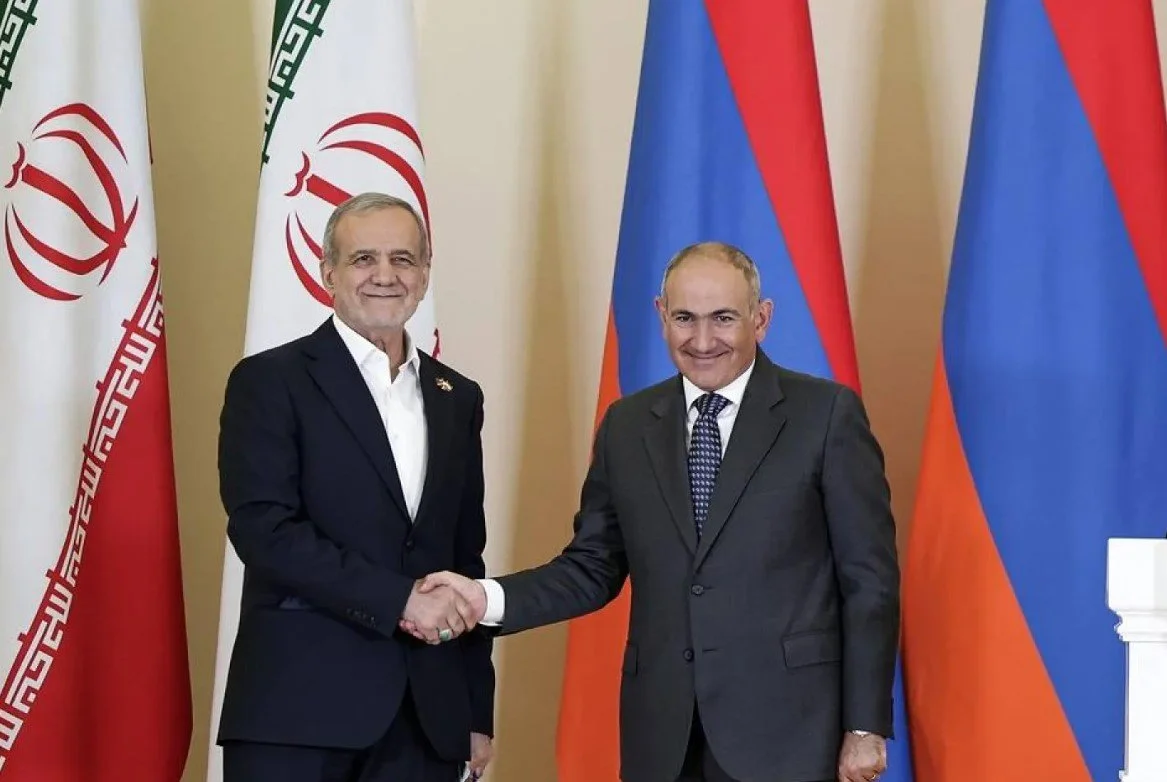
Military, Economic, and Social Dimensions
Militarily, Azerbaijan has consolidated a clear advantage, deploying advanced Turkish Bayraktar drones and Israeli intelligence systems to decisive effect. Armenia's rearmament through Indian and French (EU) partnerships is progressing but remains in early stages. Georgia's defence posture is increasingly ambiguous, caught between NATO aspirations that have stalled and a domestic political environment that has cooled relations with Western security partners.
Economically, the region is experiencing moderate but real growth. The European Bank for Reconstruction and Development projected GDP growth of 3 to 4 percent for Georgia and Azerbaijan in 2025, with slightly lower figures for Armenia, driven by trade expansion, energy exports, and corridor-linked investment. Armenia is pursuing a pivot toward technology and services, Georgia is deepening its Black Sea trade role, and Azerbaijan is aligning its energy strategy with a broader national economic vision that capitalises on European demand for non-Russian gas.
Socially, the region carries deep fractures. Georgia's polarised domestic political environment has weakened the internal consensus needed to respond coherently to external pressures. Armenia is managing the psychological and demographic weight of the Karabakh displacement, with over 100,000 ethnic Armenians having fled to Armenia following the 2023 offensive. Azerbaijan's post-conflict confidence has fuelled domestic nationalism that constrains Baku's room for compromise in peace negotiations.
Opportunities and Risks
The primary opportunity the current environment presents is connectivity-driven economic integration. If TRIPP, the Middle Corridor, and the INSTC develop in parallel, the South Caucasus could emerge as one of the world's most strategically valuable transit zones, generating leverage and revenue for local states beyond what any single bilateral relationship could deliver. The August 2025 peace agreement between Armenia and Azerbaijan, if it holds, provides the political foundation for this trajectory.
Georgia's drift toward strategic irrelevance is the most underappreciated near-term danger. A country that loses its transit centrality without securing an alternative source of leverage becomes vulnerable to both external sidelining and internal dysfunction. The Zangezur Corridor, while commercially logical, carries serious escalatory potential: Iran regards its realisation as a direct strategic threat, and while a crisis scenario along its route could, in principle, draw in multiple external actors simultaneously, such an escalation appears considerably less likely under current conditions, given Tehran’s mounting strategic and internal constraints. At last, the peace between Armenia and Azerbaijan remains fragile. The absence of a comprehensive settlement on outstanding border and enclave issues means that the shadow of renewed conflict has not passed.
Policy Recommendations
For the European Union
Brussels must move beyond normative conditionality and offer credible economic incentives tied to measurable benchmarks. The updated Black Sea Strategy provides a framework, but it requires the financial and institutional backing to compete with the material offers being made by China and Türkiye. Maintaining meaningful engagement with Georgia, even as its government backtracks on democratic standards, is essential to preventing full strategic drift.
For the United States
Washington's engagement in the South Caucasus has shifted from periodic mediation to the construction of a durable peace environment, and it must now ensure that the shift is institutionalised rather than dependent on any single administration. Vice President Vance's February 2026 visit to Armenia and Azerbaijan, the first such trip by a sitting U.S. vice president to both countries, demonstrated that this westward anchoring ambition is real. The Charter on Strategic Partnership signed in Baku, covering connectivity, energy, digital infrastructure, and security cooperation, and the technology and civilian nuclear commitments made in Yerevan, are precisely the kind of concrete, layered engagement the region requires.
TRIPP must be formalised as a long-term diplomatic and economic framework rather than a signature initiative vulnerable to political cycles in Washington. The corridor's value as a geopolitical instrument, embedding American companies in key infrastructure, establishing alternative east-west transit routes, and reducing dependency on Russia-dominated logistics networks, is fully realisable only if it is backed by sustained institutional commitment.
On security, Washington must ensure that both Armenia and Azerbaijan receive tangible American/Western dividends from the peace process rather than symbolic diplomacy. Defence technology transfers and formal security dialogues are a start, but they must be managed carefully to reinforce the peace architecture rather than introduce new asymmetries that complicate it. For Armenia in particular, a credible security partnership remains the single most important factor in preventing Yerevan from concluding that Western partnership is structurally unreliable, a conclusion that would push it back toward dependency on powers less invested in its long-term sovereignty.
For Azerbaijan
Azerbaijan enters 2026 from a position of clear strategic advantage. The restoration of territorial integrity in 2020 and 2023 freed Baku to pursue longer-term goals: corridor development, energy diplomacy, and regional integration on its own terms. However, consolidating the architecture of Azerbaijani multi-alignment, including the Three Brothers axis with Türkiye and Pakistan, the deepening energy relationship with Europe, the security partnership with Israel, and a calibrated pragmatism toward Russia, requires more than leveraging and curated diplomacy. A durable peace with Armenia, one that addresses complex border and enclave issues rather than deferring them, is the single most important step Baku can take to cement its regional standing. Continued escalatory posturing on the Zangezur Corridor risks triggering Iranian countermoves and complicating Azerbaijan’s carefully managed, multi-vector foreign and regional policy, but again, this scenario remains relatively unlikely under current regional processes.
For Armenia
On the surface level, Armenia fully understands the incompatibility of simultaneous membership in both the EU and the Eurasian Economic Union (EAEU), and that when the choice becomes final and unavoidable, Armenia will make the definitive strategic decision. That moment is approaching faster than Yerevan may have anticipated. In 2025, Armenia also applied for membership in the Shanghai Cooperation Organisation, a move that raised legitimate questions about the coherence of its stated European aspirations, with the application ultimately being blocked. Overcommitting to Chinese capital before the Western track is consolidated risks replicating the dependency dynamic that defined the Russian relationship for three decades.
Finally, Yerevan must be clear-eyed about the sequencing of political, security, and economic gains from the diversification of its foreign policy strategy. The peace process with Azerbaijan represents an opening, but an incomplete one. Outstanding border demarcation and enclave access problems remain unresolved, and until they are, the geopolitical dividends of normalisation will remain contingent rather than durable. Armenia's long-term strategic agency rests on converting this diplomatic window of opportunity into domestic institutional strength and international credibility, not simply on accumulating external partnerships.
For Georgia
Georgia's position is the most troubling. The country possesses real transit and geographic advantages as a transit corridor, and its European aspirations command genuine public support. But the government's drift toward a loosely defined strategic autonomy has cost it credibility with Western partners without delivering the material benefits of Eurasian alignment. At Davos in early 2026, Armenian and Azerbaijani leaders presented themselves as architects of a new South Caucasus. Georgia was not in the room. When Armenia and Azerbaijan openly discussed trade routes that would no longer require passage through Georgian territory, the message was clear: peace between neighbours creates options, and options reduce dependency. Georgia's transit monopoly is eroding, not collapsing, but the trajectory of travel matters. A credible return to Western integration benchmarks would restore the bargaining power that recent strategic manoeuvres have marginalised.
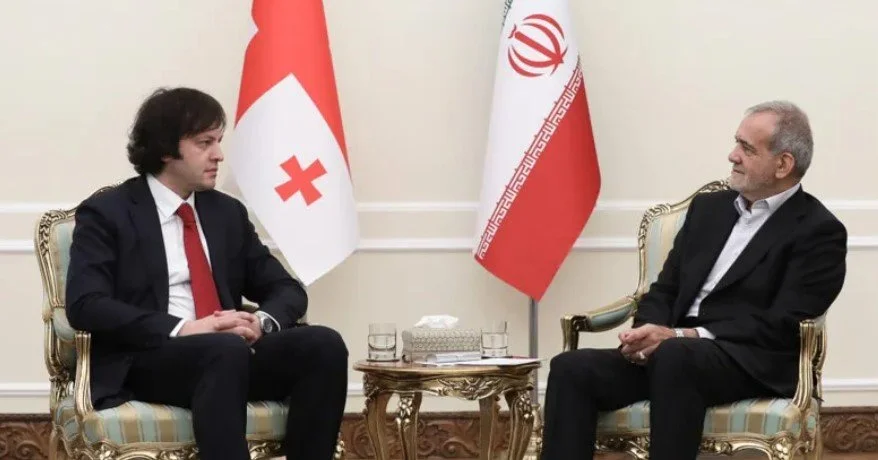
Potential Scenarios
Scenario 1: Managed Multipolarity
The most likely near-term trajectory. The region stabilises around transactional relationships, corridor projects advance incrementally, and local states preserve strategic autonomy at the cost of deeper integration with any single power. TRIPP generates modest economic gains but does not resolve outstanding political tensions. Georgia remains functionally relevant but loses strategic initiative.
Scenario 2: Renewed Escalation
A crisis triggered by Zangezur Corridor disputes, Georgian domestic fracture, or a breakdown in the Armenia-Azerbaijan peace process draws in external actors with competing interests. In the long run, Iran's threshold for direct intervention is higher than its rhetoric suggests, but a miscalculation along the corridor route cannot be excluded. The majority of risk assessments consistently flag unresolved border demarcation and enclave access as the most likely flashpoints.
Scenario 3: Western Re-engagement
Sustained U.S. and EU investment in credible security guarantees and economic incentives allows at least one South Caucasus state to consolidate a genuinely Western-oriented trajectory. Georgia's reversal of its democratic backsliding, while not inevitable, remains possible and would significantly alter the regional calculus. Armenia's growing integration into European economic frameworks could accelerate this outcome.
Conclusion
The South Caucasus is not in transition toward a new stable order. It is in transition, full stop. The old certainties of Russian dominance, frozen conflicts, and Western disengagement are gone. What is being built in their place is an architecture of competing corridors, transactional alliances, and multi-vector hedging that is neither stable nor inevitable.
The states of the South Caucasus are more consequential today than at any point since independence. Whether they convert that consequence into lasting strategic agency will depend on how this critical moment is managed and consolidated.

Written by Luka Okropirashvili
Analyst for the Central Asia & Caucasus Research Desk