
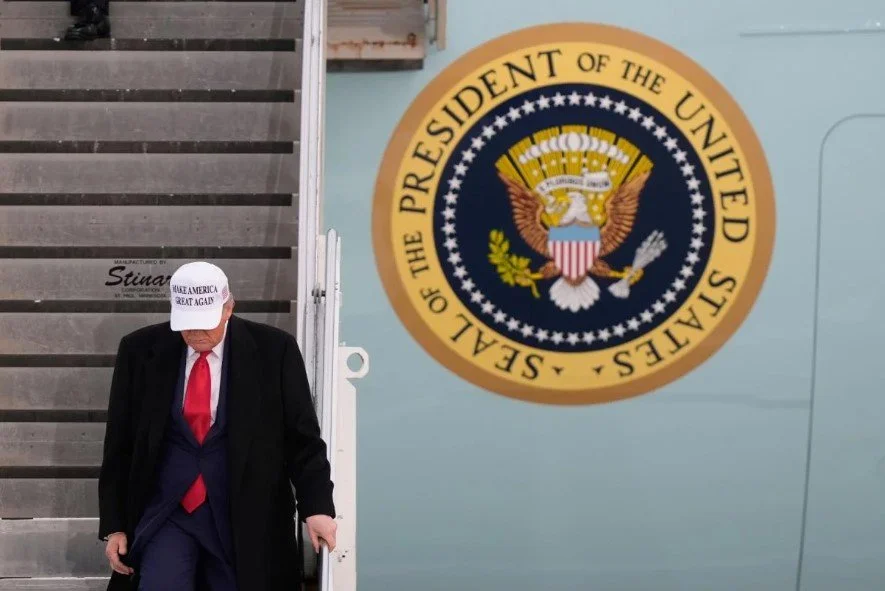
An Irrational Actor on the International Stage: the
United States of America
April 06, 2026 - Written by Samuel Charles O’Dell
Whistle-Stop Relations: 1953-2026
In order to understand the current U.S. military doctrine, it is integral to trace the beginnings of contemporary US foreign policy with Iran and Venezuela.
In 1953, sixteen years before revolution, the United States and United Kingdom enacted a joint operation to catalyse a coup against the democratically elected Mossadegh government. Arguably, this was the first significant move in the following series of events that have persistently reinforced a trajectory of divisive, hostile bilateral relations between the U.S. and Iran.
By April 1957, Eisenhower’s Atoms for Peace initiative provided various countries with provisions for the development of peaceful nuclear programmes, who in return pledged against acquiring nuclear weapons. In Iran’s case, nuclear development served both Tehran’s interests—reducing reliance on oil wealth and substantiating regime legitimacy—and Washington’s, by curating influence through cooperation with the Gulf ’s “gendarme”. Such cooperation would not last.
After the 1979 revolution, the new Islamic Republic of Iran saw the development of a generation with “intense hatred of the Shah and his American backers”. Relations with the U.S. rapidly deteriorated from this point and nuclear progress stagnated. Supreme Leader Ruhollah Khomeini and Prime Minister Mehdi Barzagan pushed for reversing the Shah’s nuclear investments, arguing the programme was an economic burden and a Western project on Iranian soil. However, when Ali Khamenei succeeded the Supreme Leadership in 1989, the previously semi dormant nuclear programme drastically expanded with cooperation from Moscow and Beijing. Completion of two nuclear reactors in Bushehr and a micro-nuclear research centre in Isfahan triggered alarm in the West, with some arguing Tehran was preparing for nuclear weaponisation.
Relations increasingly worsened in the early 2000s due to bilateral foreign policy decisions marred by anti-cooperative sentiment. Soon after Tehran offered counter-terror services, following the 9/11 attacks, George W. Bush dubbed Iran (along with Iraq and North Korea) the ‘Axis of Evil’. Such rhetoric, paired with the looming invasion of Iraq, pushed Iran towards nuclear weapon development in 2002. However, seeking to placate—chiefly Western—nuclear alarmists, Tehran implemented the NPT-Additional Protocol, though adherence ranged from inconsistent to flagrantly violative. Undeclared sites at Natanz and Arak were exposed by the Mujaheddin-e Khalq, for instance. Rouhani again attempted to curb accusations of weaponisation by claiming that Ayatollah Khamenei had issued a fatwa against nuclear weapons, yet the West maintained deep mistrust in Tehran’s nuclear ambitions—periods of increased low enriched uranium (LEU) production followed by sanctions and subsequent easing of operations did little to convey the programme’s civility.
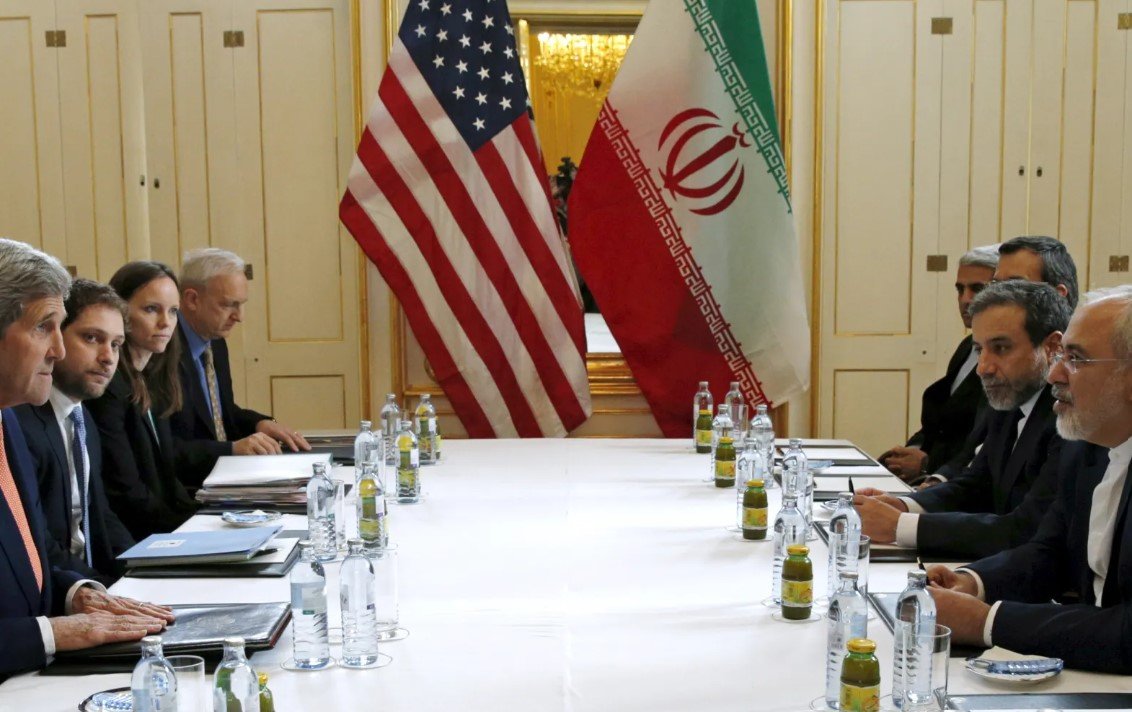
This turbulent period ended with the establishment of the Joint Comprehensive Plan of Action (JCPOA). Fully complied with by Iran until U.S. withdrawal, the JCPOA resulted in a 96% reduction of Tehran’s LEU stockpile, extending Iran’s breakout time to at least one year. During this period, relations were increasingly characterised by “diplomatic engagement” and “cooperative international relations”. From a Eurocentric point of view, the JCPOA was successful in limiting Iran’s nuclear weapon capability, whilst from an Iranian point of view it ensured continuation of civil nuclear energy. Such relations which resembled peace and positivity nonetheless ended.
One major critic argued the JCPOA allowed Iran to adhere to the agreement while still pursuing nuclear weapons, warning of a “nuclear holocaust”. This critic later became the 45th President of the U.S., withdrew from the JCPOA, and enacted a “maximum pressure” campaign. Sanctions targeted individuals associated with the Islamic Revolutionary Guard Corps (IRGC), aiming both to weaken Tehran’s proxies and catalyse a middle-class revolution. Replacing Obama-era diplomacy, Trump’s “more assertive and unilateral approach” nonetheless failed to subjugate Iran.
For the incumbent “Trump 2.0” administration, the failure of maximum pressure perhaps necessitated the heightening of military aggression, increasingly emblematic of his second term. In June 2025, Israel enacted Operation Rising Lion with U.S. assistance, bombing key Iranian nuclear sites but failing to obliterate them as planned. Nine months later, on 28 February, the U.S. and Israel began Operation Epic Fury, resulting in the killing of Ayatollah Ali Khamenei and other key leaders.
This latest episode of U.S. military aggression has unfolded through an onslaught of rhetoric about the supposed existential threat posed by Iran’s nuclear programme, followed by a rapid build-up of American naval and air forces across the Mediterranean and Arabian seas. After Trump warned that Iran had ten days to accept a new nuclear deal or “bad things [would] happen”, U.S. forces began mobilising toward Iran. Warships including the USS Abraham Lincoln and at least seven accompanying vessels had already been stationed in the Arabian Sea since late January, positioned for action. The USS Gerald Ford—the world’s largest aircraft carrier—also began moving on 12 February and was reportedly sighted off the Israeli coast fifteen days later.
By late February, the U.S. Air Force had significantly increased its regional presence, deploying additional C-17 and C-5 transport aircraft and KC-135 refuelling tankers. Against this backdrop of military escalation and mounting pressure on Tehran to accept a Trump-approved nuclear deal, Operation Epic Fury commenced on 28 February 2026. Washington initially claimed that its joint strikes with Israel targeted Iran’s nuclear infrastructure. Yet the administration’s rhetoric—promising that “HELP IS ON ITS WAY” and urging Iranians to seize their “only chance for generations” to topple the regime— suggests a broader agenda. Although Trump has claimed that Iran is “begging to make a deal”, the international community waits to see what comes from the alleged talks between the warring parties.
Washington’s military aggression in Iran makes their foreign policy intentions increasingly evident in the context of recent events in Venezuela. Eight weeks before enacting the war on Iran, Washington launched Operation Absolute Resolve involving the kidnapping of Venezuelan President Nicolás Maduro and First Lady Cilia Flores under the cover of missile strikes on Caracas. Iran and Venezuela have historically shared close ties—Hugo Chávez once described the two nations as “brothers” and Venezuela has persevered in its efforts to join BRICS+.
The American establishment has identified and expressed concern over this relationship. Senator Marco Rubio, and acting National Security Advisor, argued that Venezuela could “no longer cozy up to Hezbollah and Iran in our own hemisphere”. Think tanks such as the Jewish Institute for National Security of America (JINSA) have similarly warned that a Caracas-Tehran alliance threatens U.S. national security. Even Trump himself has explicitly linked the two states, claiming he must “be involved in the appointment [of the next Supreme Leader of Iran], like with Delcy (Rodriguez) in Venezuela”.
Much like Iran, Venezuela once possessed a significant oil industry, indicating Trump’s intentions in the hydrocarbon-rich region. Whilst the 20th century saw the U.S. occupy substantial control over the Venezuelan oil sector, the presidency of Hugo Chavez championed oil nationalisation, eventually diminishing U.S. influence in the sector. Between 2011 and 2025 Venezuelan oil exports to the U.S. slowly declined whilst shipments to China grew considerably. However, since the kidnapping of Maduro and installation of Rodriguez, the U.S. has once again regained incredible influence over Venezuelan hydrocarbon exports, now destined for European and American markets. And yet, Washington’s vision is somewhat a deluded one—whilst the Venezuelan oil industry was once incredibly prosperous, years of mismanagement has caused a gradual reduction in export numbers. Nonetheless, it is certain that foreign policy in Washington is driven, at least partially, by the (unrealistic) desire to assert its control over global oil exports.
Foreign policy decisions under the Trump administration is therefore becoming increasingly defined by aggressive, unchecked military measures in nations it deems threatening to its security, who possess influence over oil. In both instances, this has resulted in attempts to enforce a change in leadership and, in Venezuela, coerce its decision-making to the ends of U.S. prosperity. Such a strategy for U.S. security is increasingly becoming perceived, by the international community, in terms of irrational foreign policy. This has severe economic and normative implications, particularly for the potential international conflicts that remain underpinned by imperialist tendencies.
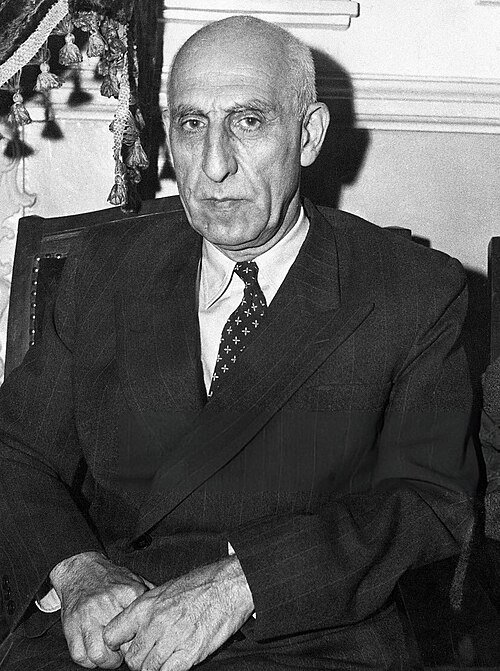
Mohammad Mosaddegh, Iranian Prime Minister from 1951-1953.
The Increasing Irrationality of U.S. Foreign Policy
The U.S. military operations in Venezuela and Iran were received internationally as abrupt and largely unanticipated. Two days after the capture of Nicolás Maduro and Cilia Flores, the UN Security Council convened an emergency session in which numerous member states criticised Washington for military overreach. UN Secretary-General António Guterres stated that “rules of international law have not been respected with regard to the 3 January military action,” invoking Article 2(4) of the UN Charter. In response, U.S. Ambassador Mike Waltz attempted to reframe Operation Absolute Resolve as a “law enforcement operation,” a rhetorical move designed to circumvent accusations of violating the Charter and to situate the action within a supposedly acceptable normative framework.
This rhetorical strategy reflects a broader tension in contemporary international relations. Since 1945, formal alliances and treaties have generated mutual expectations of cooperation and transparency among member states. Typically, alliances “strengthen existing alignments… by their solemnity, specificity, legal and normative obligations.” Within institutions such as the North Atlantic Treaty (NATO) and the United Nations, states generally expect that major military actions —especially those undertaken by founding members—will be communicated in advance. Such behaviour signals rationality and predictability: qualities central and expected for alliance cohesion.
Yet nearly all responses during the UN meeting indicated that states, including U.S. allies, were not informed prior to Operation Absolute Resolve. The action was widely perceived as unilateral and contrary to the spirit of international norms. While adversaries predictably framed the operation as illegitimate, it was notable that allies adopted similar language. France argued that the missile strikes in Caracas “[ran] counter” to UN principles, while Denmark warned that the operation “constitute[d] a dangerous precedent.” Although Operation Absolute Resolve may have advanced U.S. strategic interests in Venezuelan hydrocarbons, it simultaneously deepened perceptions of Washington as an increasingly irrational or unpredictable actor.
Concerns intensified following Operation Epic Fury. International reactions again emphasised the lack of consultation, embodied by a Japanese journalist’s question to the U.S. President on 19 March 2026: “Why didn’t you tell U.S. allies in Europe and Asia, like Japan, about the war before attacking Iran?” On this occasion, the President did not attempt a legal or normative justification, instead asserting that secrecy was necessary to preserve operational surprise. While Washington may have viewed this as essential, its allies did not consider it grounds for superseding transparency. Two anonymous Gulf nation officials reportedly expressed frustration that the U.S. had initiated a conflict with Iran without considering the security implications for neighbouring states, which were subsequently drawn into the confrontation. Former Saudi intelligence chief, Turki al-Faisal, publicly suggested that the U.S. President had been pressured into supporting Israel’s war, further reinforcing perceptions of Washington’s strategic incoherence.
European allies likewise highlighted Washington’s unpredictability. France described the U.S. as “unpredictable,” while German Foreign Minister Johann Wadephul warned that U.S. escalation risked undermining support efforts in Ukraine—an issue of central strategic importance to Europe. These international perceptions are mirrored domestically. Although the U.S. Constitution grants Congress “the sole power to declare war”, the President initiated military action in both Venezuela and Iran unilaterally. Washington’s attempt to characterise the Venezuelan operation as “law enforcement” reflects an awareness of the constitutional vulnerabilities that can be exploited by the administration. Similar rhetorical manoeuvres have emerged regarding Iran: although the President initially referred to the conflict as a “war,” he later regarded, “They don’t like the word ‘war,’ because you’re supposed to get approval.” As the conflict deepens, it will become increasingly difficult for the administration to persuade domestic or international audiences that the operation in Iran does not constitute an invasion or war.
International Security Implications
Regardless of how Washington attempts to characterise its military action in Venezuela, the international community increasingly perceives the United States as an irrational actor. The invasions of both Venezuela and Iran have generated severe global consequences, beginning with the immediate humanitarian toll. Iranian civilians have already suffered from missile strikes, including the attack on Shajareh Tayyebeh girls’ elementary school, where 165 civilian deaths were reported. Should the U.S. proceed with a ground invasion of Iran, the number of civilian casualties is likely to rise into a considerably higher casualty and death toll.
The second major consequence concerns the global hydrocarbon market. The effective closure of the Strait of Hormuz has produced an astronomical shock to global energy flows. Approximately 80 percent of the oil and LNG transiting Hormuz is normally destined for China, India, Japan, and South Korea, placing immense strain on their energy security and prices. While most states suffer from this disruption, Russia has benefited significantly. As of 29 March, Russian daily oil revenues reached 388 million euros per day, roughly a 20% increase above its February daily average. This surge comes at a critical moment with Moscow facing sustained economic hardship since its invasion of Ukraine and the sanctions imposed thereafter. Yet Washington’s recent lifting of sanctions—along with waivers enabling states such as India to purchase Russian oil stranded at sea—has eased Russia’s economic burden. Washington’s current Russia policy actively bolsters Putin’s invasion of Ukraine but also distances itself from its European allies, who oppose measures that alleviate pressure on Moscow. The result is a widening perception that the U.S. cannot be relied upon by allies to maintain a united front.
The geopolitical consequences extend beyond economics. The current trajectory of U.S. foreign policy risks encouraging renewed great-power competition through territorial expansion. Prolific international relations theorists, such as John Mearshimer, have long argued that in an anarchic system, great powers fear one another and seek to establish regional hegemony. While Russia requires little encouragement to continue its war in Ukraine, the U.S.–Iran conflict may incentivise Moscow to consolidate its gains in the Donbas and Crimea. Washington’s preoccupation with Iran may also create opportunities for China. Since 1979, the U.S. has maintained “robust unofficial relations with Taiwan,” providing substantial funding to counter Beijing's coercion. Defence exports have been central to this support; among U.S. arms recipients, only Japan, Israel, and Saudi Arabia have received more than Taiwan since the George H. W. Bush administration.
Yet the war in Iran threatens to undermine this long-standing deterrent posture. Despite U.S. officials insisting the conflict will be short-lived, the risk of a protracted war is high. A sustained campaign would inevitably divert U.S. military resources and funding toward operations in Iran, weakening its capacity to support Taiwan. Should U.S. military assistance wane, Beijing may interpret this as its principal opportunity to launch its long-anticipated invasion of Taiwan.
Summary and Going Forward
Since the beginning of Donald Trump’s second term, Washington has taken measures internationally which reflect its domestic policymaking—to defy legality and norms in order to pursue its own ends. Manifesting on the international stage as heightened military aggression, this has resulted in the invasions of Venezuela and Iran. Whilst conflict in Venezuela compelled the intended desire, de facto control of Venezuelan oil, the U.S. has directly caused an increasingly protracted war with Iran that has had severe implications for the rest of the world. Whilst Gulf nations suffer humanitarian casualties, and international oil scarcity has plunged much of the world into crisis, Russia and China could seize the opportunity to capitalise on their own expansionist wars.
Washington’s erratic foreign policy has therefore cast itself as an untrustworthy, irrational actor on the world stage—reflected by responses from both its adversaries and allies. As Washington reportedly considers a ground invasion of Iran, it would both reinforce the existing implications as well as the growing perception of Washington as an irrational actor. Donald Trump must therefore steer his administration away from military action entirely in Iran and must quickly restore peace in the region. The risks of refusing to do so could see further implications for world economies and fallout within international treaties and alliances that would likely be antagonistic to peace-making.

Written by Samuel Charles O’Dell
Analyst on the Security & Terrorism Research Desk