

Somalia’s Security Transition after ATMIS: Political Settlements, External Partnerships, and the Risk of Fragmented State Authority
April 18, 2026 - Written by Mohamed Yusuf Adan
Introduction
Somalia’s security transition has entered a critical and uncertain phase. The African Union Transition Mission in Somalia (ATMIS) formally ended and was replaced by the African Union Support and Stabilization Mission in Somalia (AUSSOM) on 1 January 2025 under UN Security Council Resolution 2767. The new mission is intended to support a Somali-led security architecture while gradually reducing the footprint of international peace operations. However, this transition is occurring amid persistent insurgent pressure, severe fiscal constraints, and unresolved political disputes between the Federal Government of Somalia and several Federal Member States.
The implications extend beyond Somalia’s internal stability. The country sits at the strategic intersection of the Red Sea and Indian Ocean maritime corridors, a region increasingly shaped by geopolitical competition, counterterrorism operations, migration routes, and external security partnerships. A successful transition could strengthen Somali sovereignty, improve regional security cooperation, and reduce long-term dependence on international peacekeeping missions. Conversely, a failed transition risks deepening institutional fragmentation, expanding the operational space for Al-Shabaab, and increasing the likelihood of renewed external intervention.
At its core, the challenge facing Somalia is not simply the replacement of an international security mission. Rather, Somalia is attempting to transfer security responsibility while still negotiating the political foundations of the state itself. This makes the transition as much a question of political order and institutional legitimacy as of military capability. The trajectory of Somalia’s post-ATMIS environment will therefore depend on three interconnected variables: the cohesion of Somalia’s political settlement, the reliability and coordination of external security partnerships, and the state’s ability to convert battlefield gains into durable local governance and legitimate authority.
This report assesses the evolving political and security dynamics shaping Somalia’s transition. It examines the broader strategic context, maps the interests of key stakeholders, evaluates the military, economic, and social dimensions of the transition, and identifies the opportunities and risks that will influence Somalia’s security trajectory. The analysis concludes with policy recommendations and forward-looking scenarios outlining the potential short-, medium-, and long-term outcomes of Somalia’s post-ATMIS security transition.
Contextual Analysis
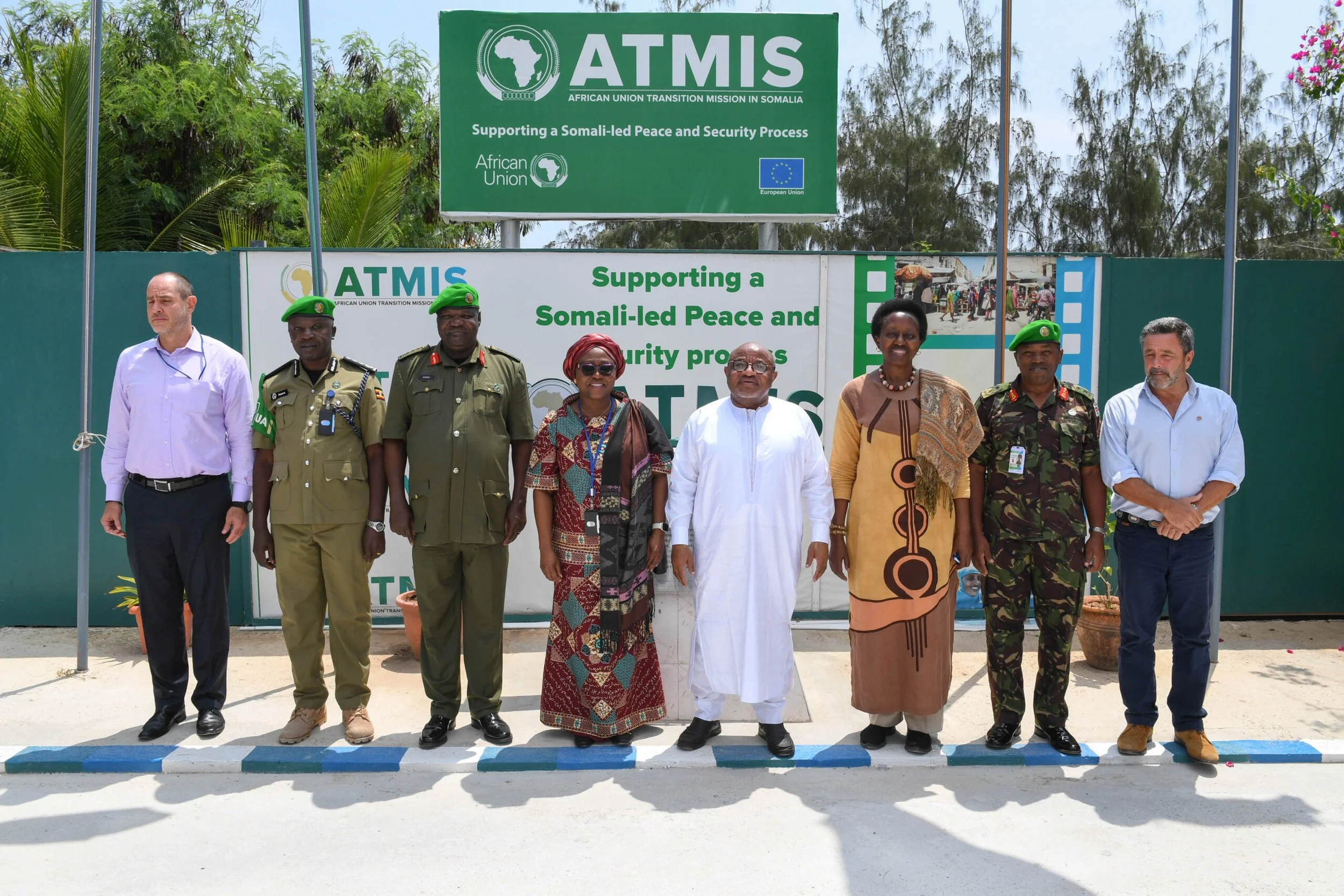
ATMIS became operational in April 2022 as the successor to AMISOM, with a mandate centred on gradually transferring security responsibility to Somali forces. The drawdown proceeded in phases, including a reduction of 3,000 personnel during phase two and the transfer of seven forward operating bases, alongside the closure of two others. Later drawdown reporting indicated that additional handovers remained part of the broader exit process.
The shift from ATMIS to AUSSOM did not resolve the central question underlying the transition: whether Somali institutions were ready to absorb the political, financial, and operational burden of a reduced external security presence. UN reporting in 2025 continued to describe a fragile environment marked by insurgent violence, civilian protection concerns, and implementation gaps. In the Secretary-General’s March 2025 report, UNTMIS recorded 402 civilian casualties during the reporting period, a 34 percent increase from the previous period, with Al-Shabaab responsible for 199 of those casualties, or 49 percent of the total.
The military environment also deteriorated during 2025. It was reported in April 2025 that Al-Shabaab briefly captured villages within 50 km of Mogadishu and seized Adan Yabaal, a strategic town previously used by government forces as a staging point in central Somalia. It was also reported that fighting broke out over Wargaadhi, a key military base in Middle Shabelle. These events did not amount to state collapse, but they demonstrated that Al-Shabaab retained the capacity to exploit transition gaps, test government response times, and challenge state presence in strategically important areas.
Somalia’s economic setting further compounds the problem. The World Bank reported that growth was projected to slow to 3 percent in 2025 from 4.1 percent in 2024, with foreign aid reductions affecting fiscal space, food security, and social assistance. It also underscored that domestic revenue remains exceptionally weak, reflecting a narrow formal tax base, administrative constraints, and long-standing dependence on external support. In its 2025 analysis of domestic revenue mobilization, the World Bank placed Somalia’s domestic revenue-to-GDP ratio at around 3 percent, far below levels typically seen even in fragile states.
This fiscal weakness has direct security consequences. Security transitions require regular troop payments, fuel, mobility, equipment maintenance, ammunition supply, and territorial holding capacity. Without predictable financing, force expansion can remain nominal rather than operational. Reporting on the May 2025 UN update noted that AUSSOM’s estimated budget for July 2025 to June 2026 stood at $166.5 million, while arrears to troop-contributing countries and urgent funding gaps raised doubts about sustainability.
The political backdrop is equally unstable. Somalia’s federal compact remains contested, and recent constitutional disputes have renewed concerns over centralisation, electoral timing, and political consensus. Parliament’s approval of constitutional changes on 5 March 2026 could delay elections and potentially extend the president’s term, drawing criticism from opposition actors and reopening debate over the balance of power within the Somali state. In a security transition, these disputes are not peripheral. They directly affect command relationships, federal-regional coordination, and the legitimacy of coercive authority. Political moves of this kind also risk weakening the federal government’s legitimacy at a particularly sensitive moment.
Key Players and Stakeholders
The Federal Government of Somalia (FGS) views the transition as an opportunity to demonstrate sovereignty, institutional progress, and national command over security affairs. Mogadishu’s objective is to show that Somali forces can gradually replace external peace support while maintaining international backing. However, its leverage remains limited by low domestic revenue, dependence on foreign support, and recurrent disputes with federal member states.
The Federal Member States (FMS) remain indispensable to the security landscape, but they are not always politically aligned with the centre. In practice, security provision in Somalia still depends on regional bargaining, local armed actors, clan networks, and negotiated authority. When relations between Mogadishu and the FMS deteriorate, coordination weakens, command becomes fragmented, and security vacuums emerge. Crisis Group has repeatedly framed Somalia’s instability through this unresolved centre-periphery tension.
The African Union and troop-contributing countries remain central to the transition’s viability. Even after the end of ATMIS, Somalia still required a stabilisation mission under AUSSOM. AU reporting has emphasised continuity and Somali ownership, but the financing crisis has exposed the limits of transition planning without a stable reimbursement mechanism and long-term burden-sharing arrangement.
The United Nations plays a coordinating, reporting, and legitimising role. Through Security Council mandates, monitoring, and mission support structures, the UN continues to frame Somalia’s transition as a governance issue as much as a security issue. Its reporting consistently links military transition to civilian protection, institutional capacity, and state legitimacy, rather than treating force substitution as a stand-alone metric of success.
The United States remains a major external counterterrorism partner. American support has focused on elite force development, targeted operations, and selective capacity-building, including support to the Danab Brigade. Washington’s main interest is containing extremist threats and limiting transnational terrorism. While this assistance has improved tactical performance in some areas, it does not by itself resolve the broader structural issues of fragmented command, weak governance, and political competition.
Türkiye has emerged as one of Somalia’s most influential bilateral partners. Ankara has expanded its role through defense cooperation, maritime security support, military training, and a long-standing strategic presence in Mogadishu. This gives Somalia greater room to diversify partnerships and reduce reliance on a single external security framework. At the same time, Türkiye’s growing role adds another layer to an already crowded security environment shaped by overlapping external agendas.
The principal spoiler remains Al-Shabaab. The group’s strategy extends far beyond direct battlefield confrontation. It relies on bombings, infiltration, intimidation, taxation, coercive governance, and the exploitation of local grievances to erode state authority over time. Its resilience lies in its ability to turn political fragmentation and weak local administration into strategic advantage. Recent attacks on military, political, and civilian targets confirm that the group remains highly adaptive and well positioned to exploit transition-related vulnerabilities.
Military, Economic and Social Dimensions
On the military side, the central question is not whether Somali forces can launch operations. They can, and they have. The deeper issue is whether they can hold territory, secure supply lines, maintain unified command, and prevent insurgent re-entry after offensive gains. The experience of 2025 suggests that tactical gains remain vulnerable when they are not backed by reliable logistics, functioning local administration, and sustained territorial presence. Reuters reporting on central Somalia showed how quickly Al-Shabaab could pressure strategic towns and military positions once state presence thinned.
Economically, the transition remains highly exposed. Somalia’s growth outlook is modest, foreign assistance is under strain, and domestic revenue remains extremely low relative to the demands of national security provision. The World Bank’s estimate of a domestic revenue-to-GDP ratio of around 3 percent is one of the clearest indicators of structural weakness. A state with that level of fiscal limitation will struggle to finance a professional, territorially effective, and nationally integrated security architecture without long-term external support.
The social dimension is equally important. Security transitions are not sustained by troop deployments alone. Public trust, grievance management, and the perceived legitimacy of state authority matter deeply in contested and recently recovered areas. Where communities view security forces as politicised, predatory, temporary, or disconnected from governance and service delivery, insurgents can re-enter through coercion, taxation, or informal influence. UN reporting on civilian harm and broader protection concerns reinforces the link between security outcomes and state legitimacy.
Three data points stand out for political risk monitoring. First, 4.4 million Somalis were projected to face acute food insecurity through the end of 2025, underlining how insecurity, aid shortfalls, and weak state capacity continue to reinforce one another. Second, the World Bank places Somalia’s domestic revenue ratio at around 3 percent of GDP, highlighting the severe fiscal limits on security-sector sustainability. Third, AUSSOM’s estimated budget for July 2025 to June 2026 was $166.5 million, underscoring that even the post-ATMIS transition model remains heavily dependent on external financing.
Opportunities and Risks
There are real opportunities in the current transition. A smaller AU mission, combined with expanded bilateral support, could create more room for Somali ownership, greater flexibility in decision-making, and a more nationally shaped security agenda. If security gains are linked to local administration, reconciliation, and service delivery, the transition could produce more durable outcomes than a mission-dependent model. Somalia’s external partnerships, particularly with Türkiye and the United States, also provide a degree of diversification that was less visible in earlier phases of the conflict.
The risks, however, are more substantial. The first is fragmented authority. Somali security institutions remain vulnerable to overlapping mandates, federal-regional rivalry, and politicised command structures. A transition that deepens fragmentation rather than coordination would weaken state coherence. The second is financial fragility. Without dependable and predictable external support, troop readiness, mobility, logistics, and territorial holding capacity will be difficult to sustain. The third is political drift. Constitutional disputes, electoral tensions, and centre-periphery bargaining could divert elite attention away from security coordination at a critical moment. The fourth is insurgent adaptation. Al-Shabaab does not need to overrun the state nationally to succeed. It only needs to exploit enough local vacuums, delays, and grievances to keep the transition unstable and state authority contested.
Policy Recommendations
Somalia and its partners should adopt a narrower and more realistic sequencing strategy. Territorial transfer should follow demonstrated holding capacity, not political timetable pressure. This means prioritizing fewer districts where logistics, police support, local administration, and community engagement can be sustained, rather than overextending national forces across multiple fragile fronts.
Mogadishu should treat coordination with federal member states as a core security requirement, not a secondary governance issue. Stabilization efforts will remain vulnerable unless centre-regional cooperation is institutionalized through clear mechanisms for command coordination, recruitment alignment, intelligence-sharing, and local administration.
International partners should align military support more closely with fiscal realism and civilian governance. Training and elite-force assistance are useful, but they cannot substitute for a sustainable system of salaries, logistics, oversight, and district-level administration. Without those foundations, tactical gains will remain difficult to convert into lasting state presence.
AUSSOM financing requires greater predictability. A stabilisation mission cannot effectively support transition if it operates under recurring reimbursement delays, arrears, and budget uncertainty. Stabilisation planning will remain fragile unless funding mechanisms become more reliable.
Somali authorities and partners should place greater emphasis on the governance-security link in recovered areas. Military operations that are not followed by dispute resolution, basic administration, and visible service delivery are likely to produce only temporary gains. The transition will hold only if communities see the state as present, credible, and more legitimate than insurgent alternatives.
Potential Scenarios and Forecast Outlook
In the short term, security volatility is likely to increase as Somali forces absorb greater operational pressure and external support structures continue to adjust under AUSSOM. Al-Shabaab will likely intensify asymmetric attacks on military positions, transport routes, and symbolic state targets in order to test the transition and expose operational gaps. Political disputes between Mogadishu and regional actors will continue to complicate coordination, especially in contested districts. The near-term outlook is therefore one of heightened pressure rather than immediate stabilization.
Over the medium term, the trajectory will depend on whether Somalia can improve force coordination, maintain external financing, and reduce federal-regional political friction. If these areas improve, Somali institutions may gradually consolidate control in selected districts and reduce the most acute transition risks. If not, the more likely outcome is a fragmented transition in which formal state control remains concentrated in major centres while insurgents recover influence in rural belts, transport corridors, and politically divided areas. This is the most plausible scenario if current trends continue.
In the long term, Somalia is likely to move toward one of two broad trajectories. The first is managed consolidation, in which Somali forces, backed by sustained external support and stronger political coordination, gradually improve institutional coherence and reduce the strategic room available to Al-Shabaab. The second is prolonged fragmentation, in which formal state institutions coexist with enduring insurgent reach, regionally uneven authority, and recurring external dependence. The long-term outcome will depend less on military offensives alone than on whether Somalia can build politically coordinated, fiscally viable, and socially legitimate authority after the transition.
Conclusion
Somalia’s post-ATMIS transition is not simply a military handover. It is a broader test of whether a fragile federal state can align politics, finance, and coercive power under conditions of persistent insurgency. The transition offers opportunity, but it offers little margin for error. External partnerships remain essential, yet they cannot by themselves resolve the political fragmentation, institutional weakness, and fiscal constraints that continue to shape Somalia’s security landscape.
The most likely near-term outcome is neither rapid consolidation nor outright collapse. It is a contested middle ground in which Somali institutions make selective gains while Al-Shabaab continues to exploit weak coordination, low state penetration, and political distraction. Whether Somalia moves beyond that middle ground will depend less on symbolic claims of sovereignty than on whether it can build credible, financed, and politically coordinated authority after the transition.
A failed transition would not simply delay security reform. It would risk replacing mission dependence with a more fragmented and volatile form of state insecurity. A successful one would require Somalia and its partners to treat security not as a stand-alone military issue, but as the political and institutional foundation of state authority itself.
Written by Mohamed Yusuf Adan
Analyst on the Africa Research Desk