
How Iran Changed Modern Warfare
May 06, 2026 - Written by Aydin Dezfouli
Introduction
The Iran-US conflict revealed that Iran has become one of the most consequential sharpers of modern warfare. Far from relying on conventional military strength, Tehran reshaped the battlefield through decentralised command structures, mass-produced drones and missiles, cost-imposition strategies, and other asymmetric tactics designed to offset and overwhelm technologically superior adversaries. Its ability to strike U.S. bases across the Gulf, pressure Israel with saturation attacks, and weaponisation the Strait of Hormuz demonstrates a new model of warfare that blends asymmetric force, economic disruption, and regional proxy networks. As the conflict expanded into a multi-front crisis affecting global energy markets and continuing to them, it became clear that Iran’s approach has redefined how states project power, absorb pressure, and challenge established military doctrines.
Military Structure
Since the end of the Iran–Iraq War (1980–1988), the Islamic Revolutionary Guard Corps (IRGC) has expanded into what is often described as a “state within a state”. With an approximate force of 185,000 personnel, the IRGC has established its own ground force of around 150,000 ground personnel, a navy of 20,000, and an aerospace force of 15,000. By mobilising the 600,000 Basij paramilitary force within Iran, the clandestine wing of the IRGC, the Qods Force has long been active across the wider Middle East, arming and training militias. All the while operating its own independent intelligence unit.
With the national armyincreasingly sidelined, the IRGC has consolidated control over the security apparatus while simultaneously expanding its economic and political reach. Operating outside the constraints of parliamentary oversight, the organisation functions under the direct authority of the Supreme Leader, enabling it to bypass formal institutions and pursue its own strategic priorities. This centralisation of power has entrenched the IRGC as the dominant actor within Iran’s security state, blurring the boundaries between military authority, political influence, and economic control.
On 28 February 2026, following the launch of Operation Epic Fury, targeting the compound of the Supreme Leader, the United States signalled its intention to initiate open military confrontation with Tehran. Reporting at the time indicated that objectives included eliminating the head of state and destroying Iran’s drone and ballistic-missile stockpiles, as well as its naval and air-defence capabilities. Although Ayatollah Khamenei, National Security Advisor Ali Larijani, and several senior IRGC commanders were killed, subsequent reporting indicated that predictions of an imminent regime collapse did not materialise.
Following the 12‐day war in June 2025, the IRGC restructured its organisational model. The so‐called Mosaic Doctrine restructured the force by decentralising it into 31 autonomous provincial commands, with each province operating its own headquarters and conducting operations independently. This shift was driven in part by lessons from Israel’s conduct during the conflict, where its 12‐day strike campaign relied on a pre‐established target architecture developed well before hostilities began. Israel’s ability to hit nuclear facilities, air‐defence systems, and IRGC command nodes simultaneously across 27 provinces exposed the vulnerability of Iran’s centralised command structure. In response, the IRGC adopted a model in which semi‐autonomous provincial units could continue operating even under sustained, pre‐planned, multi‐axis attack, reducing dependence on real‐time centralised command and increasing organisational resilience.
Under the Mosaic doctrine, air-defence systems were reportedly activated only when strategically advantageous, with the aim of avoiding detection and deceiving opposing forces. Stockpiles of ammunition, missiles, and drones, along with fast-track boat flotillas, were deployed and activated through semi-autonomous units as part of the Mosaic Doctrine. On the ground, the Basij were mobilised nationwide as security forces, setting up checkpoints to prevent any potential unrest among the population during the conflict.
Military Strategy
In retaliation, Iran struck major U.S. bases in Bahrain, Qatar, the United Arab Emirates, and Kuwait (GCC), using a coordinated combination of ballistic missiles, cruise missiles, and drones. The U.S. Navy’s Fifth Fleet headquarters in Bahrain, Al Udeid Air Base in Qatar, Al Dhafra Air Base in the UAE, and Ali Al Salem Air Base in Kuwait were all hit within hours of each other. Several Gulf states reported civilian casualties and infrastructure damage, including fires in residential and commercial areas.
The attacks also extended beyond military sites. Iran targeted energy facilities, airports, hotels, and urban centres, arguing that Gulf states had made themselves legitimate targets by hosting U.S. forces. This marked a significant escalation, as Gulf governments initially reluctant to be drawn into the conflict found themselves directly affected.
Iran’s strikes on the Gulf also targeted sites tied to U.S. financial interests, including commercial districts in Dubai, Jebel Ali Port, and the Fujairah oil facility. Additional attacks on Saudi oil sites and Omani ports disrupted shipping and damaged tankers linked to U.S. operators, thereby creating instability across key economic hubs. According to Gulf-War-Tracker, the current economic disruption of the GCC stands at $33.718 billion.
Qatar later shot down two Iranian Su-24MK bombers, marking the first direct Arab-Iranian air combat engagement in decades. The scale and simultaneity of Iran’s strikes demonstrate a deliberate strategy to overwhelm regional air-defence networks and signal its capacity to retaliate across multiple fronts.
Overall, Iran’s actions have transformed the conflict from a bilateral confrontation into a regional security crisis, forcing Gulf states to respond militarily and politically to a conflict they had not initiated.
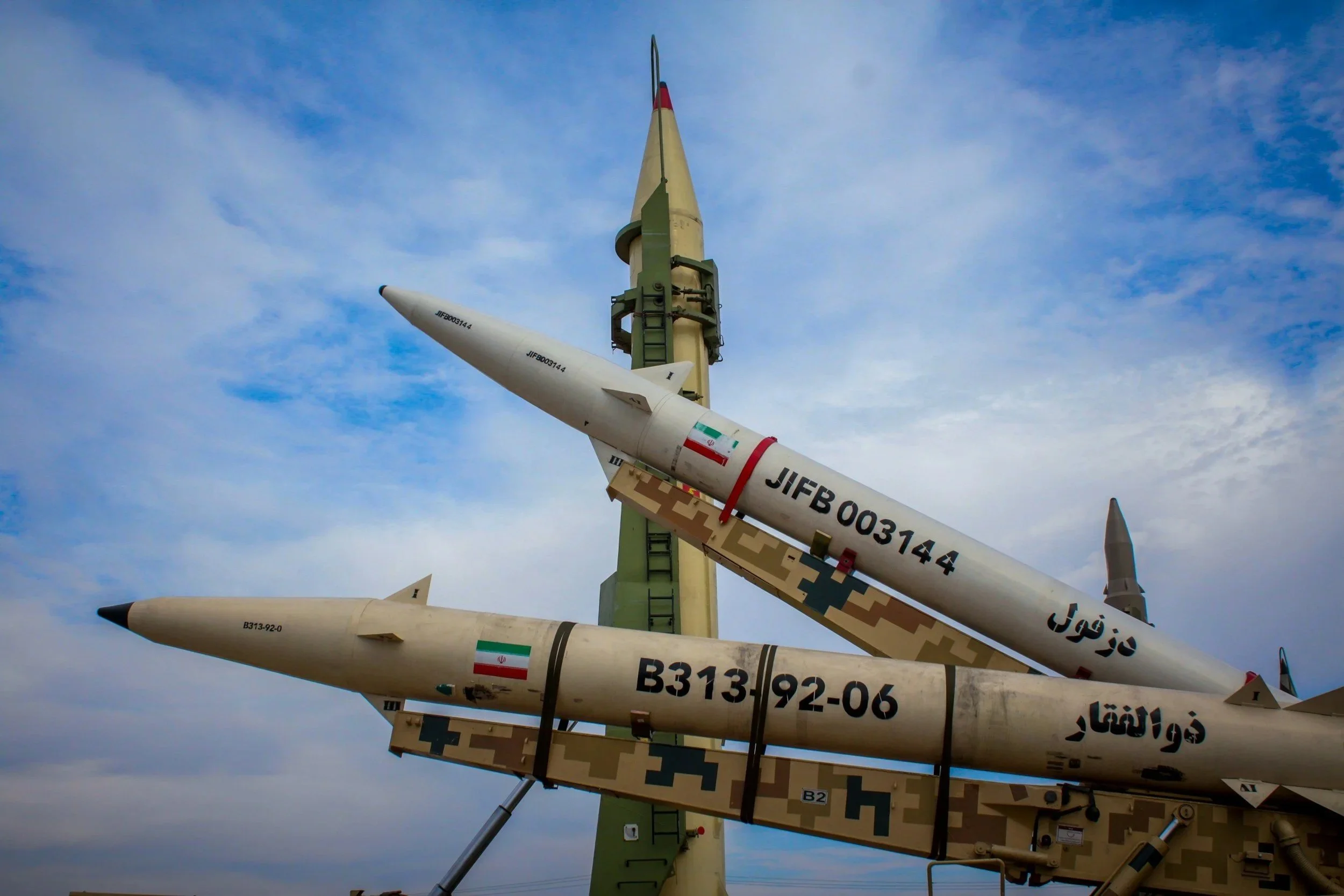
Iranian‐made Shahed drones cost between $35,000 and $80,000 to produce, and with an estimated 500 manufactured per day, they are inexpensive, expendable, and easily transportable. By contrast, intercepting these drones with systems such as Patriot or THAAD (Terminal High Altitude Area Defence) costs around $1 million per missile, creating a stark cost imbalance, with U.S military costs estimated at $56.199 billion. This dynamic has exposed a major vulnerability in the United States’ traditional “Cold War” doctrine of relying on large, high‐value weapon systems, which is increasingly challenged by modern asymmetric and low‐cost saturation tactics.
The U.S Air Force largely maintained control over Iranian airspace, conducting more than 13,000 reported precision strikes. Early declarations of victory and claims that Iran’s air‐defence network had been fully destroyed were later undermined when Iranian forces downed an F‐15 and an A‐10 Thunderbolt, leaving one pilot missing on Iranian territory.
Strikes on Israel involved more than 300 drones and missiles, a low-cost saturation attack designed to overwhelm Israel’s air-defence network. The entire Iranian strike cost roughly $49million, relying on inexpensive Shahed drones and mass-produced ballistic missiles. Israel and its partners (United States, France & Jordan) intercepted most incoming projectiles, but at enormous expense: interception costs alone reached at least $345 million and may have exceeded $1.35 billion, with Arrow and David’s Sling interceptors costing up to $3 million and $1 million each. This has overwhelmed the Iron Dome, resulting in more missiles to reach its target.
Iran’s reliance on cheap and cost-efficient weaponry and legacy projectiles has forced Washington and its regional partners to expend high‐value interceptors and maintain continuous air‐defence readiness, amplifying the financial asymmetry at the heart of Tehran’s approach. By leveraging low‐cost systems to trigger high‐cost responses, Iran demonstrated how relatively modest inputs could produce significant economic and operational strain on technologically superior adversaries.
Political Discourse
A blockade-like strain imposed by Iran in the Strait of Hormuz, driven by recent IRGC naval manoeuvres, tanker harassment, and missile-and-mine exercises has disrupted the 21-mile-wide corridor responsible for transporting around 20% of global oil exports (approximately 17–18 million barrels per day) and nearly 25% of global LNG shipments. This instability has slowed tanker traffic, has pushed shipping insurance premiums up by as much as 400%, and driven oil prices 5–8% higher as markets price in the risk of a full closure. With more than 80% of Gulf oil exports relying on this route, even partial disruption reduces regional export capacity and fuels global inflation,raising energy costs for major importers in Asia and Europe.The result is a rapid, worldwide economic strain triggered by relatively limited Iranian actions.
Many EU governments and international organisations have publicly opposed a military escalation between the United States and Iran. European states such as France, Germany, the United Kingdom, and other NATO members have repeatedly called for de-escalation, emphasising diplomacy and the need to preserve regional stability. EU institutions have warned that a wider conflict would threaten global energy security, disrupt trade routes, and undermine non-proliferation efforts. International actors including the United Nations, Japan, and several Gulf states have also urged restraint, highlighting the risks of a regional war and its potential humanitarian and economic consequences. Analysts note that these responses reflect concerns about global oil markets, shipping security, and the broader geopolitical fallout of a U.S.–Iran confrontation.
On 8 April, Tehran accepted the U.S. ceasefire proposal on ground conditions. Iran’s core demands centre on ending U.S. and Israeli military actions against Iran, Iraq, and Lebanon, including strikes on Iranian assets and allied groups and securing guarantees that Israel will not launch further attacks on Iranian territory. Tehran also seeks meaningful easing of economic pressure through sanctions relief or reduced enforcement, alongside recognition of its sovereignty over its missile programme and regional partnerships. Additionally, Iran insists on non-interference in its internal affairs and expects any de-escalation framework to acknowledge its security concerns and regional role.
Although the U.S-Iran negotiations in Islamabad on 11 April failed to reach mutual agreement, Iran continues to use its influence over the Strait of Hormuz as leverage, arguing that regional instability is a consequence of U.S. pressure and ongoing conflict.
Opportunities and Risks
Opportunities:
The crisis creates an opening for renewed diplomatic engagement, as all major actors, including the U.S., EU and the GCC, have strong incentives to prevent a prolonged regional war and stabilise global energy markets.
The conflict may shift regional power dynamics, creating space for the United States to consolidate its foreign policy.
Iran leverages the conflict to build support across parts of the Muslim world and the Global South, positioning itself as a state resisting U.S. imperialism.
Risks:
Instability in the Strait of Hormuz threatens a major energy shock, as disruptions to a corridor carrying around 20% of global oil and a quarter of LNG shipments rapidly tighten global supply.
Jet‐fuel shortages could severely disrupt global aviation, grounding commercial flights, constraining military mobility, and increasing transport costs across supply chains that depend on rapid air logistics.
Disruptions to key chemicals used in fertiliser production, (such as ammonia, urea, and potash) could trigger global agricultural instability, raising food prices, reducing crop yields, and intensifying food insecurity in import‐dependent regions.
Gulf states may begin to increasingly question the reliability of U.S. security guarantees, especially after Washington redeployed THAAD batteries from South Korea to the Gulf, signalling that American protection is conditional and can be withdrawn or repositioned according to U.S. priorities.
The conflict provides China and Russia with an opening to deepen their regional influence, potentially establishing a strategic rivalry with the United States.
The fall of the Islamic Republic would remove a major regional counterweight and could leave Israel as a dominant force in the region with significantly fewer strategic constraints.
Key Players
United States: The United States is pressing Iran to halt all attacks by its forces and allied groups, cease missile and drone strikes on Israel or U.S. assets, and de-escalate regional activity including activity in the Strait of Hormuz. Washington also seeks constraints on Iran’s missile programme and regional networks, alongside a commitment to diplomatic channels and international monitoring mechanisms.
Israel: Israel maintains that any ceasefire must be conditional and grounded in security considerations, insisting that Iran-aligned groups halt all attacks before it pauses operations. At the same time, Israel continues targeted strikes in Lebanon, which it frames as necessary to degrade hostile capabilities and prevent cross-border attacks, while reserving the right to respond militarily despite ceasefire discussions.
The GCC: The GCC prioritises de‐escalation and regional stability, maintains calibrated neutrality between Iran and Israel, focuses on protecting energy and maritime security, and uses quiet diplomacy while gradually reassessing long‐term reliance on U.S. security guarantees.
Conclusion
Iran’s performance in this conflict demonstrates how it has redefined modern warfare through decentralised command structures, low-cost saturation attacks, and strategic economic pressure. Its Mosaic Doctrines have enabled the U.S.–Israeli bombardment, while mass-produced drones and missiles imposed disproportionate financial costs on technologically superior adversaries. By weaponising the Strait of Hormuz and expanding the conflict across multiple fronts, Iran demonstrated how asymmetric capabilities can reshape regional security dynamics and global markets. In doing so, Tehran has established new parameters for how states wage war, absorb pressure, and project influence.

Written by Aydin Dezfouli
Middle East and North African Research Desk Analyst