
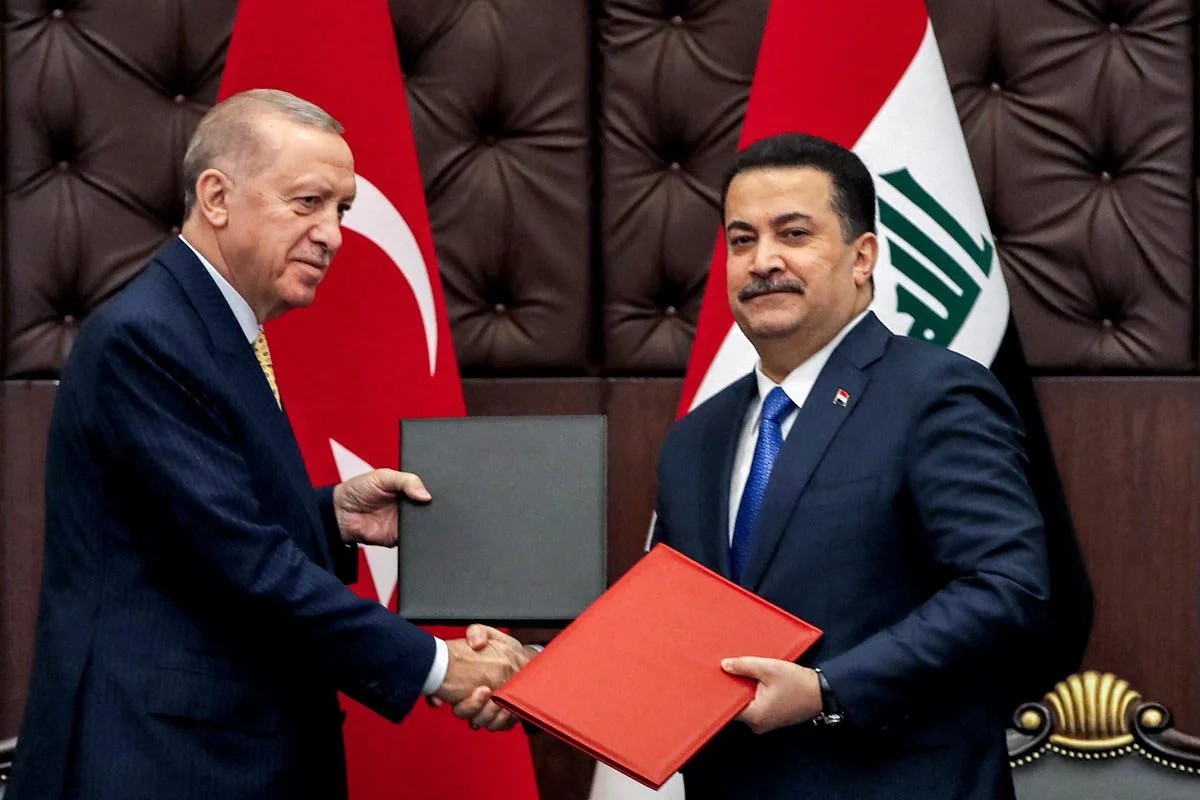
Türkiye’s Strategic Ambitions in Iraq
January 24, 2026 - Written by Tarik Ata
Introduction
Türkiye was closely following the parliamentary elections in Iraq in November 2025, hoping to maintain the positive bilateral relations established over the past years under al-Sudani’s leadership.
These bilateral ties between Ankara and Baghdad have seen two particular breakthroughs: Iraq's March 2024 ban on the Kurdish Workers’ Party (PKK) and the establishment of new frameworks to resolve the longstanding water-sharing dispute, signed on November 2, 2025. These positive shifts, marked by a waning of Iran's influence throughout the region, have provided Ankara with a significant foothold to further promote its influence, but at a risk.
The report outlines the key areas of concern for Türkiye regarding Iraq and what Ankara seeks to achieve in its bilateral relations with Baghdad.
Ankara’s Foreign Policy Approach
Turkish foreign policy has been guided by the former prime minister and foreign minister, Ahmet Davutoğlu’s, approach of ‘strategic depth’, which seeks to reposition Türkiye as a periphery in international relations to a core or central actor sitting at the intersection of multiple regions.
The approach has seen Türkiye engage in cultural, religious, business, educational, and political initiatives throughout former Ottoman territories and Central Asia, leading some to refer to it as “Neo-Ottomanism,” but Davutoğlu rejects this definition because of the negative connotations it can carry. Preferring one of pragmatic Eurasianism, opting to emphasise Türkiye’s geo-strategic positioning and Türkiye’s ability to promote various facets of its society and culture, depending on the region it engages with, to increase ties with regional partners, forming part of its broader “good neighbour” policy.
Depending on the situation, Ankara emphasises the diverse social and cultural elements of the regions it engages with. For instance, with Central Asian partners, we see an emphasis on Turkic ethnic identity uniting the territories of Turkic-speaking peoples, with themes of Pan-Turkism or Turanism, as evidenced by the Organisation of Turkic States (OTS), of which Türkiye is a core member, with its General Secretariat located in Istanbul. Political initiatives form part of a broader, multipronged approach, with business ties, cultural and media projects, and tourism (Central Asia recently experienced a tourism boom, in part due to Turkish inflows) also contributing to this strategic depth policy.
In other regions, such as the Balkans, an area formerly under Ottoman rule, we see the promotion of further business, cultural, and religious elements. In Kosovo, which was under Ottoman yoke for over four centuries, we see what has been termed “religious diplomacy”, with the construction of the Central Mosque in Kosovo’s capital, Priştine, by Türkiye’s Presidency of Religious Affairs and the Türkiye Diyanet Foundation in co-operation with the Islamic Union of Kosovo.
Business relations between Ankara and Priştine are also strong, with Ankara ranking as the sixth-largest foreign direct investor in the country, with $1.5 billion in projects across various sectors and employing upwards of 10,000 people in Kosovo. Priştine and Ankara have deepened defence ties, with Priştine purchasing Turkish drones and recently receiving another batch of OMTAS anti-tank missile systems from Turkish defence contractor Roketsan.
Iraq, being a historic contested frontier between the Ottomans and Persians, remains a territory of utmost importance, where regional rivalries between Ankara and Tehran clash.
Ankara views Iraq as a strategic economic and security partner, as well as an investment space. Iraq is also part of Ankara’s broader geo-economic and geo-strategic ambitions to become a leading transit nation and an energy hub for Europe. Iraq and a reliable partner in Baghdad are needed to form part of this vision.
There are four areas of particular concern to Ankara regarding Baghdad: security, energy, trade, and their convergence to counter Iranian influence in Iraq.
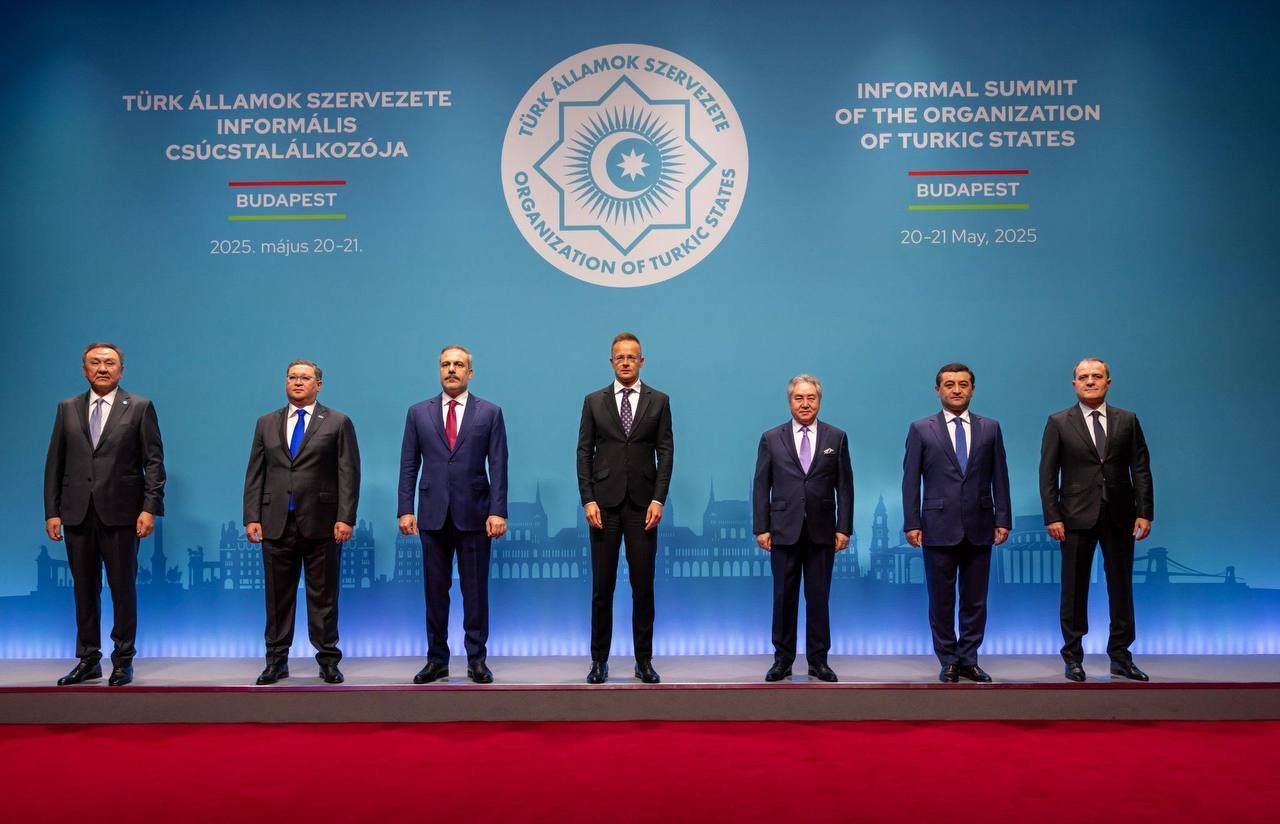
Organisation of Turkic States Summit in Hungry 2025.
Security
Security ambitions of Ankara in Iraq revolve around the PKK, the development of strategic security partnerships with Baghdad, and the current potential instability caused by domestic unrest in Iran.
PKK:
On the PKK front, Ankara has seen successes, delays, and renewed risks.
The successes stem from Iraq’s announcement to ban the PKK in 2024 and the silence from Iraq while Türkiye was conducting military operations in 2024 and 2025, and former Prime Minister al-Sudani’s commitment to preventing Iraqi territory being a launching pad by non-state actors, with al-Sudani declaring, "We consider Iraq's security as part of Türkiye's security."
Moreover, Abdullah Öcalan, founding member of the PKK, called for the PKK’s disarmament in February 2025, and the PKK agreed to formally dissolve in May 2025 with a symbolic disarmament display in Iraq in July 2025. In October 2025, as part of the peace process, the PKK announced it would be withdrawing all its forces from Türkiye to northern Iraq, and Ankara swiftly announced in early November 2025 a proposed law allowing for PKK fighters to return to Türkiye under the peace plan, something which is deemed a major hurdle in the peace process.
There have been significant gains made in the disbanding and disarmament of the PKK, as well as the reconciliation process. But issues exist. The delays have caused concern, and the PKK announced at the end of November 2025 that the peace process would halt if Öcalan is not freed, and stated that they would not take any further action; they are waiting on the Turkish state. Also, the PKK is awaiting the constitutional revisions that would grant the Kurds linguistic, cultural, and political rights; these issues will be dealt with, but in the meantime, it makes the whole process more fragile. But hope for the peace process does exist, and though the process is slow, it is nonetheless progress. Iraq is a central component of this, as its continued assistance to achieve true peace will be needed.
The renewed risks come from a surge in pan-Kurdish sentiment from the ongoing clashes between Kurdish groups in Iran and Syria. In Iran, armed Kurdish groups such as the Kurdistan Freedom Party (PAK), though based in Iraq, claimed to have crossed the Iranian border to intervene on behalf of Iranian-Kurds, potentially leading to a renewal of Islamic Revolutionary Guard Corps (IRGC) action in Iraqi Kurdistan. In Syria, the Syrian military clashed with the Kurdish-led Syrian Democratic Forces (SDF) in Aleppo, with the Syrian military taking over two neighbourhoods formerly controlled by the SDF. These clashes between Kurdish armed groups could galvanise them, including the PKK, and disrupt the already delayed peace process.
Furthermore, Iran’s, the Free Life Party of Kurdistan (PJAK), the PKK’s Iranian branch based in Iraqi Kurdistan, remains active, and reports have emerged of PJAK members being captured attempting to cross over into Iran. Ankara’s efforts to contain PKK-affiliates and PKK-focused operations in Syria and Iraq could be seriously disrupted if groups such as the PJAK, which seek to leverage the turmoil, are not prevented from expanding their influence.
Despite the progress made in the peace process, the recent unrest poses a threat, and having Baghdad onside to counter it is an imperative.
Security and Defence Mechanisms:
Ankara and Baghdad have, in recent years, significantly increased their military and security collaboration, largely centred on counterterrorism, and have expanded their intelligence and technology sharing.
In 2024, Türkiye and Iraq agreed to establish the Security Coordination Centre in Baghdad and convert a long-contested Turkish base in Bashiq into a Joint Training and Cooperation Centre under Iraqi command. These facilities will enhance the two states' intelligence and defence collaboration and further integrate Iraq into Türkiye’s defence ecosystem.
Building on these developments, Ankara signed a defence cooperation pact with Baghdad in May 2025. The agreement is expansive and includes a memorandum of understanding (MoU) for the indigenisation of Iraq’s defence industry.
Following this, Ankara integrated Baghdad into its flourishing defence industry architecture by inking an agreement with Baghdad to enhance Iraq’s industrial and military capabilities, including plans to build an ammunition production plant in cooperation with ASFAT, Türkiye’s state-owned entity dedicated to defence exports and technology transfers.
Türkiye has become a core node in Iraq’s military architecture, offering military training, arms sales, and increased defence cooperation, benefiting Türkiye’s soaring defence industry, which secured $8.5 billion in exports in 2025.
Ankara’s desire to secure Baghdad as a solid security and defence partner is part of its “good neighbour” policy and also part of its larger geo-economic and geo-strategic ambitions to become a core actor in regional and global affairs.

The PKK’s weapon burning ceremony in Northern Iraq.
Trade & Trade Corridors
Ankara’s efforts to enhance security in Iraq, through intelligence sharing, defence pacts, border controls, cracking down on non-state actors, and assisting in the indigenisation of Iraq’s defence industry, are not only part of Ankara’s security ambitions but also integral to Türkiye’s trade ambitions in Iraq.
The Iraqi market is often overlooked, but it is one of tremendous potential, with strategic consulting firms like UAE-based Sicuro Group referring to Iraq as “one of the Middle East’s most overlooked opportunities.” Iraq, itself, in a bid to secure investors, announced $450 billion in opportunities across various sectors.
Ankara recognises this potential and has been trading and investing heavily in Iraq. Iraq is ranked fifth among the top importers of Turkish goods. In August 2025 alone, Iraq imported $1 billion in Turkish goods. Türkiye is also Iraq's second-largest trading partner, behind China.
Moreover, Turkish companies, predominantly in the construction sector and with close ties to the government, have completed projects worth $36.6 billion in Iraq and invested $35 billion in the country.
The Turkish desire to further expand trade relations is reflected in the establishment of the Turkey-Iraq Joint Economic and Trade Committee (JETCO), which was signed into existence by President Erdoğan during his visit to Iraq in April 2024. At the second JETCO session in Baghdad in October/November 2025, additional MoUs on trade cooperation were signed, and Trade Minister Ömer Bolat underlined Ankara’s readiness to contribute to Iraq's reconstruction. These agreements pave the way for increased cooperation and interaction between the Turkish and Iraqi business communities.
Trade corridors also play a central role in the trade and security relations between Iraq and Türkiye, with Bolat affirming Ankara’s commitment and continued active participation in the construction of the Development Road Project (DRP), a major infrastructure project aiming to create a 1,200km transport corridor linking the Gulf to Europe via Iraq and Türkiye. Ankara is a key partner in the DRP, with Iraqi Transport Minister Razzaq Muhaybis al-Saadawi stating, "Turkey's role in the project is a main role, like Iraq's... Turkey is the door to Europe."
Baghdad's desire to become a flourishing trade corridor to Europe, exclusively through Türkiye, offers Ankara significant leverage and influence in Baghdad. Particularly due to levels of investment and trade flows Iraq is set to secure. However, Iraq needs to ensure the safety of this corridor, as non-state actors such as the Popular Mobilisation Forces (PMF) have significant control over Iraqi infrastructure and borders. Iraq needs to balance their interests to ensure there are no attempts to disrupt the project.
It is, therefore, no surprise that we saw Baghdad attempt to bring the PMF on board by drafting a new law in March 2025 that would place all PMF factions under the control of the Iraqi Prime Minister. Ensuring that investors and key players in the DRP that steps were being taken to secure the project. Offering guarantees of sorts to Türkiye, which claims the DRP could generate over $50 billion in 10 years and is expected to create employment for more than 100,000 people.
The element of security is vital to Ankara's trade ambitions in Iraq, as it seeks a stable environment for Turkish companies to invest and conduct business. Additionally, the trade corridor will also serve as an energy highway, playing a larger role in Ankara’s geo-strategic ambitions.
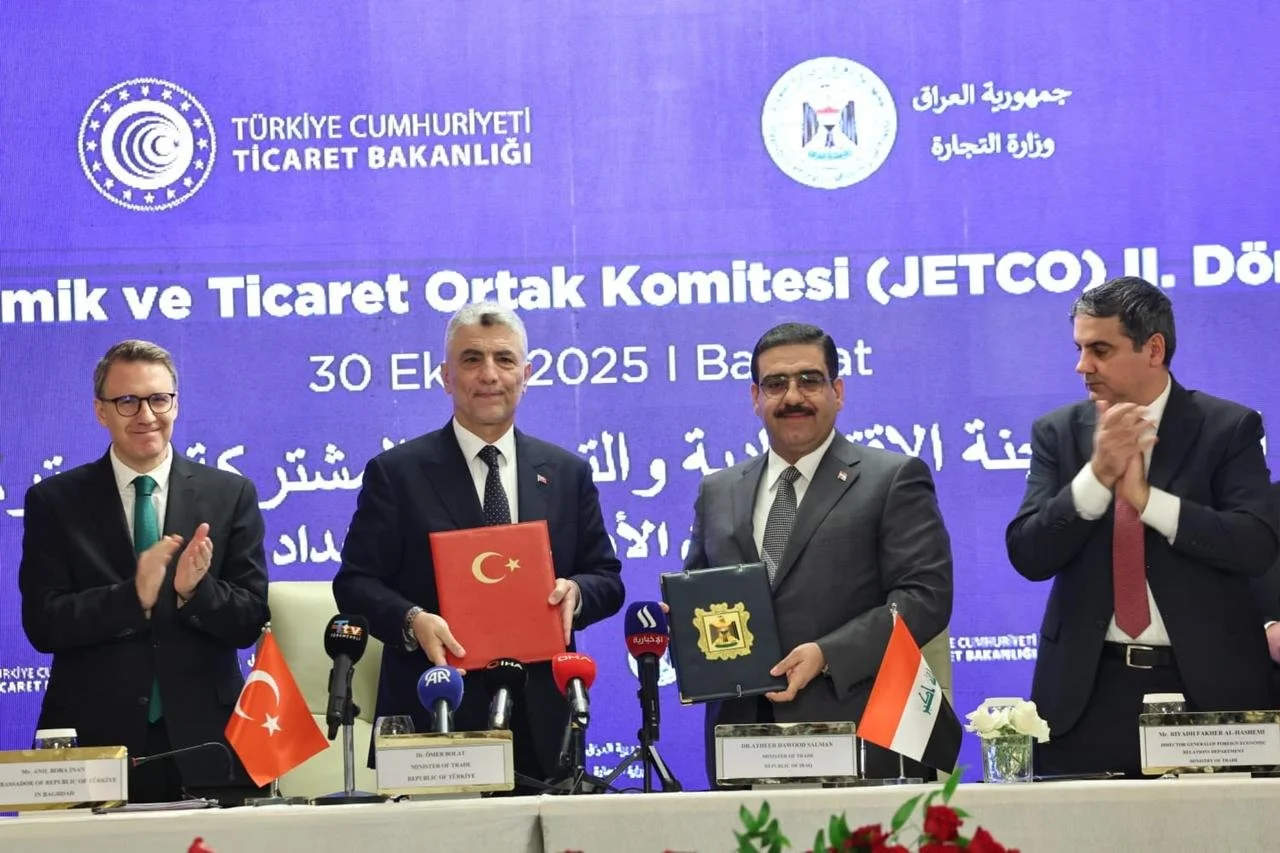
Signing of a MoU at the Turkey-Iraq Joint Economic and Trade Committee (JETCO) in October 2025.
Energy
Ankara and Baghdad have had continued disputes over the Euphrates and Tigris, as Türkiye is the upstream power and Iraq and Syria are the downstream riparian states. These disputes have revolved around Türkiye’s extensive hydroelectric projects and how they have drastically reduced water flow to Iraq, causing water shortages. These disputes, however, have recently been resolved in a water-sharing agreement, dubbed an “oil-for-water” deal. A framework has been agreed upon whereby Turkish oil payments to Iraq will be used to fund water infrastructure development projects in Iraq, to be carried out by Turkish firms.
Iraq, particularly the Kurdish Regional Government (KRG) region, is a major oil provider for Türkiye, after recently resuming oil exports for the first time in two-and-a-half years, reaching a reported 180,000 barrels per day (bpd) in October 2025. These export figures have risen by 21% since October 2025, and the new bpd estimate is projected to be 223,000 - highlighting Iraq’s growing reliance on its neighbours' market and Türkiye increasingly diversifying its oil imports away from Russian crude, that said Russian crude still has an outsized role in Türkiye but that can gradually change as Ankara seeks to diversify due to increasing oil sanctions on Russia by the EU. Placing Iraq in an important place for Ankara’s future energy ambitions.
Moreover, Turkish companies are increasingly involved in Iraq’s electricity infrastructure and in supplying electricity to Iraq. Iraq’s electrical grid and infrastructure have suffered years of neglect and destruction due to conflict, leaving the state in chronic electricity shortages. Türkiye has stepped in. In March 2025, Iraq doubled its electricity imports from Türkiye to address shortages and the halt in gas flows from Iran, which had been powering the grid. While Turkish companies such as Alifrin signed an agreement with the Iraqi Ministry of Electricity at the end of May 2025 to increase the capacity of the Iraqi-Turkish electricity interconnection line from 300 to 600 megawatts. This is part of Baghdad’s larger plans to diversify its own energy sources and expand opportunities to the European Union through Türkiye.
Türkiye also seeks to position itself at the centre of an energy highway and become an energy hub. Europe, since weaning itself off Russian energy due to Russia’s invasion of Ukraine in 2022, has been rapidly diversifying its energy sources, importing large amounts of LNG from Qatar and the US, with EU countries sourcing 57% of their LNG in 2025 from the US. Due to Europe's fears of overdependence on US gas imports, particularly since the White House is increasingly looked at in the EU as an unreliable ally, Ankara is aware of these growing tensions. Ankara is leveraging its geostrategic position as a transit hub for energy from Iraq and the Gulf to Europe, offering Europeans an opportunity to further diversify away from Russia and reduce their energy dependency on the US. Türkiye would also be a major beneficiary of the transit fees, as it earned $200-$300 million per year in transit revenue from the Kirkuk-Ceyhan pipeline before March 2023.
The security of these trade routes will be pivotal to ensuring the safe transit of these energy resources, crucial, as the Iranians do not look favourably upon Iraq’s Development Road, nor upon Türkiye’s increasing involvement and investments in Iraq.
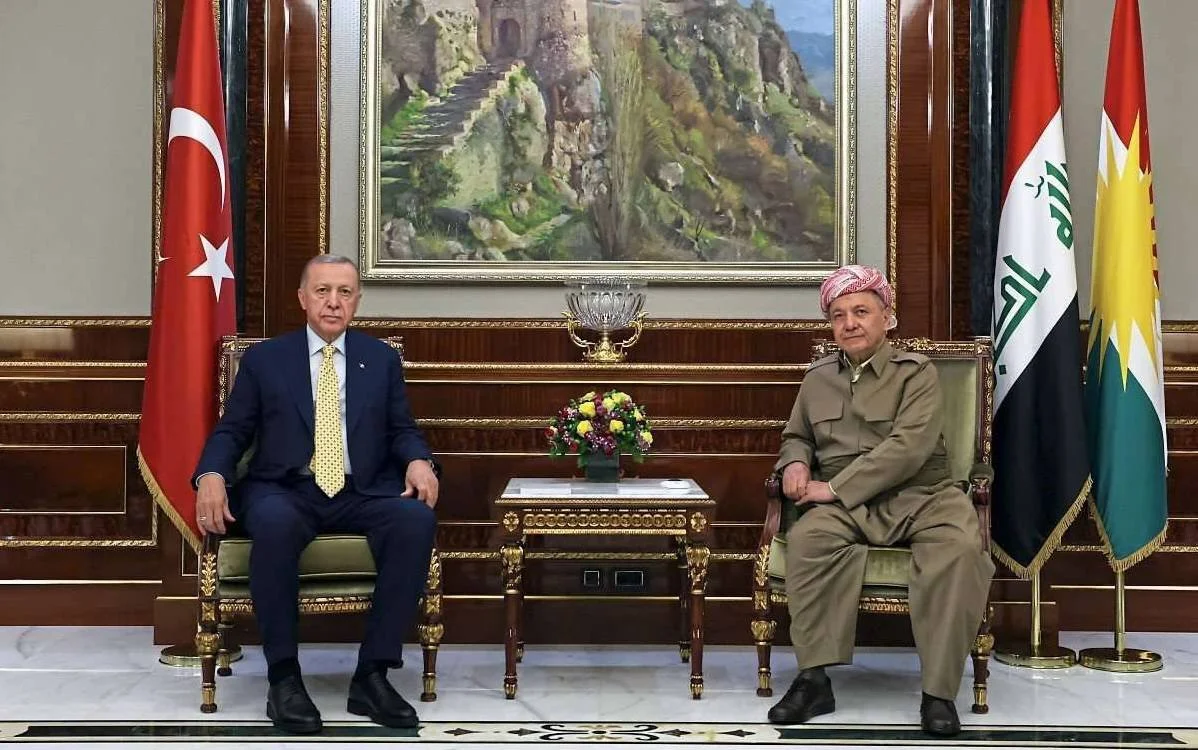
President Erdoğan with Masoud Barzani in Erbil.
Countering Iranian Influence
Türkiye has historically been engaged in a power competition with Iran. Due to Iran’s significant influence in Iraq since 2003, Ankara has been left with limited influence space, namely with select Sunni tribal networks, small Turkmen communities, and the KRG. But Türkiye and Iraq positively re-engaged, with Ankara aligning with Baghdad against the Kurdish independence referendum of 2017, marking the start of a gradual bilateral re-engagement.
Iranian and Turkish competition has usually been in the strategic region of Sinjar, forming the heart of their rivalry, as this is where Türkiye would conduct military operations against the PKK and sought to control it due to its use as a land bridge to support the SDF in northern Syria. While the Iranians sought to expand and diversify their crossing points through Iraq into Syria and Lebanon. Ankara reached an agreement with Baghdad and the KRG in 2020 to remove PKK elements from Sinjar. As a result, Iran-backed proxies, under the banner of the PMF, strengthened their positions on Sinjar, forming a loose alliance between Iranian-backed groups and the PKK. Tehran also more directly expressed its opposition to Türkiye’s military activities in the region, viewing this as Türkiye’s “neo-Ottomanism” threat and stated its opposition to Turkish military operations and presence overall in northern Iraq.
Ankara has gradually been able to secure increasing influence in Iraq as Baghdad has increasingly seen Türkiye as a more reliable and strategic partner than Iran. Largely due to economic development, infrastructure, energy, water, and defence opportunities, Ankara can offer Baghdad. Moreover, public pressure has also been a factor encouraging the government in Baghdad to gradually rethink close bilateral ties with Iran, as widespread public protests erupted in October 2019, with one of the central grievances being foreign, but particularly Iranian, interventions in Iraqi affairs - resulting in attacks on Iranian consulates in Najaf and Karbala. The reduction in Iranian influence was also apparent in the November 2021 parliamentary elections, as Iran-allied Shiite factions lost significant seats, enabling Ankara to coordinate more closely with Iraq’s Sunni factions.
Türkiye’s military and economic footprint in the KRG is also expanding, adding an additional layer to the Iranian-Turkish competition. As Tehran and Ankara support opposing Kurdish factions, with Ankara supporting Barzani-family-controlled Kurdish Democratic Party (KDP) and Tehran supporting the Talabani-family-controlled Patriotic Union of Kurdistan (PUK). The KDP controls the parts of the KRG that are close to the Turkish border, while the PUK controls the parts on the Iranian border. Recently, however, due to Iran’s declining influence and economic and political turmoil, the PUK may be tempted to diversify its relations, and this could be seen by some levels of rapprochement between Türkiye and the PUK, with Ankara lifting the flight ban on Sulaymaniyah airport in late 2025 following talks.
Overall, Türkiye is succeeding in its efforts to counter Iranian influence in Iran, and an eclectic mix of state and private Turkish investments in Iraq, along with Iran’s collapsing economy and ongoing protests and political turmoil, allows Ankara to secure increasing influence in Iraq and achieve its strategic ambitions. But not without risk.
The widespread protest movement in Iran, talks of a potential foreign intervention and the collapse of the Islamic Republic, is not in Ankara’s interest. This scenario only opens the possibility of greater instability, including a refugee crisis that Ankara would not be able to handle. The Syrian refugee crisis caused substantial political damage and public unrest in Türkiye. Iran, with a population exceeding 90 million, along with more than three million Afghan refugees, would debilitate the Turkish state. Not to mention the potential power vacuum that could form in the Zagros Mountains, which make up a significant part of the 560km border between Türkiye and Iran. If the central state fractures, armed militias, likely exploited by the PJAK, could become a new security threat to Türkiye and fail to deliver the “terror-free Türkiye” the government aspires for, which is one reason why Ankara does not endorse a US attack on Iran but rather is opting for dialogue. Additionally, we saw Turkish intelligence assisting the Iranians in capturing PJAK members seeking to illegally enter Iranian territory from Iraq, highlighting Ankara’s desire to maintain levels of stability and prevent the escalations of violence that would have negative impacts upon itself.
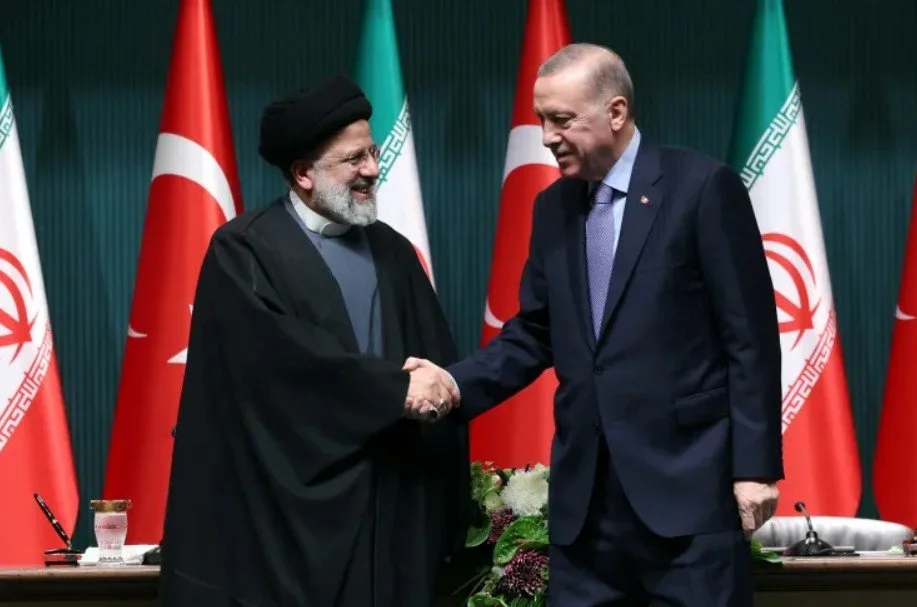
President Erdoğan and former Iranian President Ebrahim Raisi.
Conclusion
Ankara’s preferred outcome of the 2025 parliamentary elections would be the re-election of al-Sudani due to the positive relations fostered throughout his term. Al-Sudani’s Reconstruction and Development Coalition won the largest share of seats but was unable to form a successful coalition and recently al-Sudani stepped aside, nominating his rival, al-Maliki, to take over as prime minister in efforts to break the political deadlock regarding the premiership. But this is also believed to be a ploy by al-Sudani to make his own nomination look more acceptable and win the support of the Coordination Framework - a powerful group of Shiite politicians and militia leaders - who helped bring him to power in 2022 and the Framework is needed to secure the position of Prime Minister.
Regardless of who takes over, the process will be long and precarious, but Iraq will maintain strong bilateral ties with Ankara. This is primarily due to the overall faltering of Iran’s power in the region, from the loss of military and political influence in Syria, the near destruction of Hezbollah, and the severe attacks on its own military and intelligence agencies during the war with Israel. Tied with the numerous domestic issues (from severe water shortages, public backlash regarding failed delivery of security during the 12-day war with Israel, to an economic crisis with the introduction of further sanctions, and the eruption of protests and domestic unrest), leaving Iran in a poor position to exert its influence militarily, politically, and financially, creating a space for Ankara to move into.
The Coordination Framework, therefore, would likely put aside sectarian divisions, as we saw in 2022, and decide that maintaining a positive bilateral working relationship with Ankara is best suited to Baghdad’s immediate interests and future needs, so as not to become embroiled in the crises Tehran is experiencing.

Written by Tarik Ata
Director of Geopol Report and Head of the Türkiye Research Desk