
Türkiye's Defence Capabilities and its Geopolitical Positioning
November 26, 2025 - Written by Deniz Güven and Ozan A. Koyas
Introduction
Türkiye’s increasing geopolitical rise in the Middle East is in part explained by its dominant military. As a country placed at the crossroads of many conflicts, its military allows for the implementation of its Anatolian foreign policy, from maintaining a two-state solution in Cyprus to now advancing a Turkish-backed Syrian government. Erdoğan’s strong executive leadership of the military since 2016 has allowed Türkiye to further implement its foreign policy ambitions in the Levant and further develop its global military positioning by increasing its defence partners beyond the Middle East. Türkiye’s military capabilities have become increasingly indigenous and has often been resourced to Russia and other non-European allies for defence trades. This report analyses the current state of the Turkish defence industry to uncover its recent innovative strengths and potential operational weaknesses.
Türkiye’s Defence Industry
The development of Türkiye’s defence industry since the foundation of the Republic in 1923 reflects a long trajectory from dependency on foreign suppliers to an increasingly autonomous and export-oriented sector. In the early Republican period (1923–1939), the industry was modest, focusing on small arms and ammunition production, but constrained by limited resources and infrastructure. Following NATO accession in 1952, Türkiye entered a phase (1939–1974) of reliance on U.S. and Western aid, which strengthened its armed forces but stunted domestic industrial capacity. The Cyprus crisis of 1974 and subsequent U.S. arms embargo marked a turning point, triggering state-led initiatives and the creation of key institutions such as ASELSAN in 1975. The 1980s and 1990s brought further restructuring through institutions like Defense Industry Development and Support Administration (SAGEB), with greater emphasis on joint ventures and licensed production, including F-16s. Since the early 2000s under the AKP, the sector has expanded rapidly, culminating in the 2017 reorganisation of the Presidency of Defence Industries (SSB), which centralised oversight under the Presidency. This period has been characterised by strong emphasis on indigenisation, technological innovation, and a surge in defence exports, particularly unmanned aerial vehicles (UAVs). While Erdoğan’s era is often framed as a “great leap,” the trajectory is better understood as a cumulative process that built on earlier foundations while achieving unprecedented global competitiveness.
Türkiye’s budgetary trajectory underscores the structural transformation of its defence sector. Between 1996 and 2023, military expenditure as a percentage of GDP declined sharply, from 4.14% to 1.50% (a 63.7% decrease), placing Türkiye among the top ten countries worldwide in reducing relative defence spending. This reduction reflects both macroeconomic pressures and a deliberate move away from dependence on foreign military imports, which by 2019–2023 had fallen by 59% compared to earlier periods. At the same time, Türkiye drastically increased its research and development (R&D) spending: from 0.45% of GDP in 1996 to 1.40% in 2021, marking a 210% increase. This shift in expenditure priorities highlights a strategic pivot from raw military outlays toward technological innovation and indigenous production capacity. The rebalancing between declining military spending and rising R&D reflects Ankara’s “yerli ve milli” (domestic and national) agenda, positioning defence as both an engine of industrial modernisation and a tool of foreign policy autonomy. Importantly, these spending shifts also underpin Türkiye’s transition from one of the world’s top arms importers in the early 2000s to a competitive exporter by the 2020s, reinforcing Erdoğan’s narrative of self-reliance and signalling Türkiye’s ambitions to sustain long-term defence independence.
Deployment of Indigenous Weapons and Supply-Chain Weaknesses
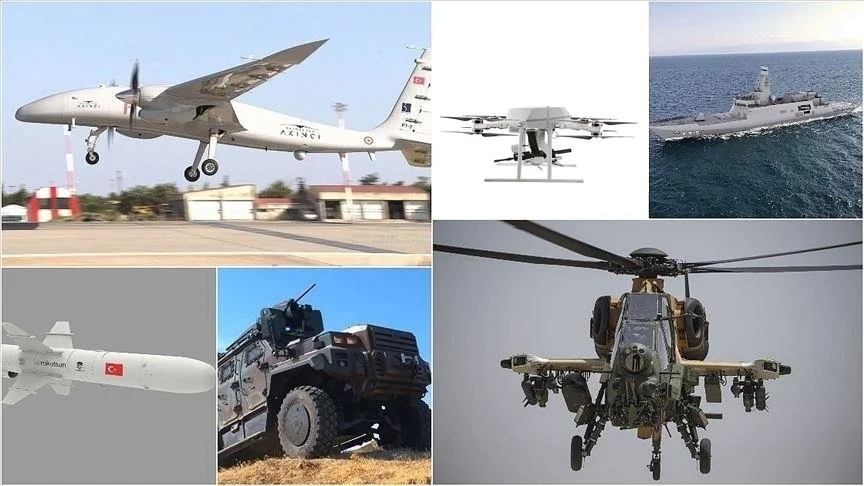
Türkiye has become a key regional power in certain military weapons, ranging from unmanned aerial systems to missile capabilities, since the early 2020s. However, despite these impressive achievements, Türkiye's defence industry still faces fundamental constraints that limit its strategic autonomy and operational effectiveness.
Unmanned Aerial Systems
Türkiye's defence transformation has been most pronounced in unmanned aerial vehicle development, establishing the country as a leading global UAV (Unmanned aerial vehicle) manufacturer and operator, with a reported 65% share of the market last year. Reaching this market position was part of a policy to reduce Western foreign dependency for UAV drones in the 2010s. The Bayraktar tactical drone kickstarted Türkiye’s current presence in the UAV market since 2014 and allowed for Türkiye and military client countries to gain an aerial advantage destroying artillery, tanks and air defence systems, at a cost-effective price. There have been numerous examples of effective deployment, such as Türkiye supplying these drones to the Government of National Unity (GNU) forces in Libya since 2020, and further deployments around the world, from Pakistan to Ukraine.
More specifically, in 2020, the drones aided the GNU’s counter-offensive against the Libyan National Army (LNA) in the Tripoli region. Taking out the LNA’s Russian Pantsir air defence systems proved to be instrumental for the GNA to push back the LNA’s previous offensive. This successful deployment proved to be beneficial for Turkish maritime ambitions in the Mediterranean. The 2019 GNA signed maritime agreement with Türkiye continues to play a crucial role for Türkiye’s vision to access underground maritime resources and project Turkish naval presence against its regional rival, Greece. Thus, the Bayraktar drones gave Türkiye the ability to send an indigenous made weapon to alter Mediterranean geopolitics in its favour. Such a deployment of key innovative weapons also could have had a major implication later on, with Türkiye recently in August 2025 engaging with the GNA government to continue to maintain the 2019 maritime deal.
However, this indigenous production did not mean that Türkiye had reduced all foreign dependencies. During the same year, Türkiye faced sanctions from Canada due to its role in supporting Azerbaijan in the 2020 Nagorno-Karabakh war; this had operational implications for the Bayraktar. The Canadian L3Harris WESCAM optics system, used extensively on Bayraktar TB2 drones, was suspended and had to be replaced by the ASELSAN CATS system in late 2021, but this domestic alternative had demonstrated inferior performance compared to Western equivalents.
Türkiye is also trying to decouple other key components of its drones. When Austria sanctioned Türkiye, the Turkish defence company developing drones, Baykar, had to replace its Austrian supplied Rotax engine with a Turkish Baykar developed one, with an April 2025 newer model boosting an international combustion engine going up to 100 hp. This engine was developed thanks to the coordinated effort of 40 Turkish defence companies and required several trials of testing to reach to its current 2025 matured level. Thus, Türkiye’s renowned drone can be subject to foreign disruptions for key components and requires a few years of adaptation for domestic equivalents to catch up to foreign competitors. But, these sanctions and resolve by the Turkish defence industry has also assisting Ankara in furthering the indigenisation of their defence sector, reducing reliance on external suppliers.
While it is uncertain how domestic equivalents compare in practice on the battlefield, they could have had an effect, since the TB2 Bayraktar model has not always had successful deployments for all exported partners. Despite initial high hopes and confirmed hits on Russian targets upon its deployment in Ukraine in 2022, most Turkish drone operations in Ukraine since 2023 have been reduced drastically as a result of Russian air-defence systems and tactics evolving to mitigate their strikes. Coupled with operational risks resulting from trade disruptions from previous partners, Türkiye has faced and continues to face such challenges, which could hinder its ability to reliably expand its defence trading partners in the developing world, from Central Asia to North and East Africa.
Missile and Rocket Capabilities
Türkiye's missile development surge stems directly from the 2017-2019 S-400 acquisition crisis that fundamentally altered Ankara's relationship with Western defence suppliers. Following Türkiye's $2.5 billion S-400 deal with Russia in September 2017, the US imposed F-35 program removal in July 2019 and CAATSA sanctions in December 2020. Although these sanctions could be reduced under the Trump administration, they provided the catalyst for Türkiye to develop its own missile capabilities. This technological isolation forced Türkiye to accelerate indigenous alternatives across its entire precision strike portfolio. Since then, Türkiye has innovated in its indigenous missile and aerial capabilities.
Since 2023, Türkiye’s Roketsan has achieved full indigenisation of its SOM (Stand-off Missile), with the KTJ-3200 turbojet engine’s final operational test on June 6, 2025. This milestone ended dependence on the French Microturbo TR-40, providing more autonomy to Türkiye’s precision strike capability. While Türkiye has been able to still export its SOMs with this foreign-sourced engine previously, such as in 2024 to Azeri attack aircraft, the successful testing of its turbojet engine could provide Türkiye with reduced operational risk and autonomy to develop and export its SOMs to its new defence partners.
On the maritime front, Roketsan’s ATMACA anti-ship cruise missile allows Türkiye maritime coercive capabilities. The missile plays a crucial role in securing Türkiye’s maritime claims in the East Mediterranean. Although the real likelihood of any real deployment against targets remains highly unlikely, it reinforces Türkiye’s EEZ claims and reinforces its maritime defence partnership with Libya. In the Black Sea, the deployment of ATMACA-equipped corvettes serves as a counterweight to the Russian Black Sea Fleet, increasing Türkiye's strategic value to NATO as a regional maritime power while simultaneously giving it the independent capability to protect its own interests. Its export to nations like Indonesia further cements Türkiye's role as a major arms supplier to the international partners.
Perhaps the most direct response to the S-400 crisis is the creation of a layered, indigenous air defence network composed of the HISAR family and the long-range SIPER system; they are utilised to protect bases and troops from other missiles and UAVs. At a time especially with increased tensions between Israel and Türkiye over the fall of Assad in Syria, these systems aid Türkiye in projecting its defence foreign policy in the Levant. The medium-range HISAR-O+ system has reportedly been deployed in Syria in Spring 2025, as part of Ankara’s larger regional strategy and establishment of a defence pact with Syria, expanding its influence in the region angering military competitors such as Israel.
However, this rapid and multi-front military industrialisation is not without significant latent risks. The primary challenge is one of strategic overstretch, where geopolitical ambition outpaces economic reality. Developing parallel next-generation systems—from ballistic missiles, air defence systems, to fighter jets and naval platforms—requires immense and sustained capital investment that Türkiye’s inflation-prone economy may struggle to support long-term. Export revenues, while growing, are unlikely to fully subsidise the high cost of domestic research, development, and procurement across so many platforms. This creates a critical dependency on a stable economy to maintain the current pace of innovation and production.
Furthermore, Türkiye’s success is already creating second-order effects by triggering regional arms race. In response to Ankara's growing capabilities, regional rivals, particularly Greece, are accelerating their own military modernisation programs, acquiring advanced frigates from France and F-35 jets from the United States. This action-reaction cycle threatens to create a more militarised and volatile security environment in the Aegean and Eastern Mediterranean. Therefore, the ultimate test of Türkiye's missile program and its broader defence industry will not only be its technological performance but also its economic sustainability and its ability to manage the escalating security dilemmas it inadvertently creates.
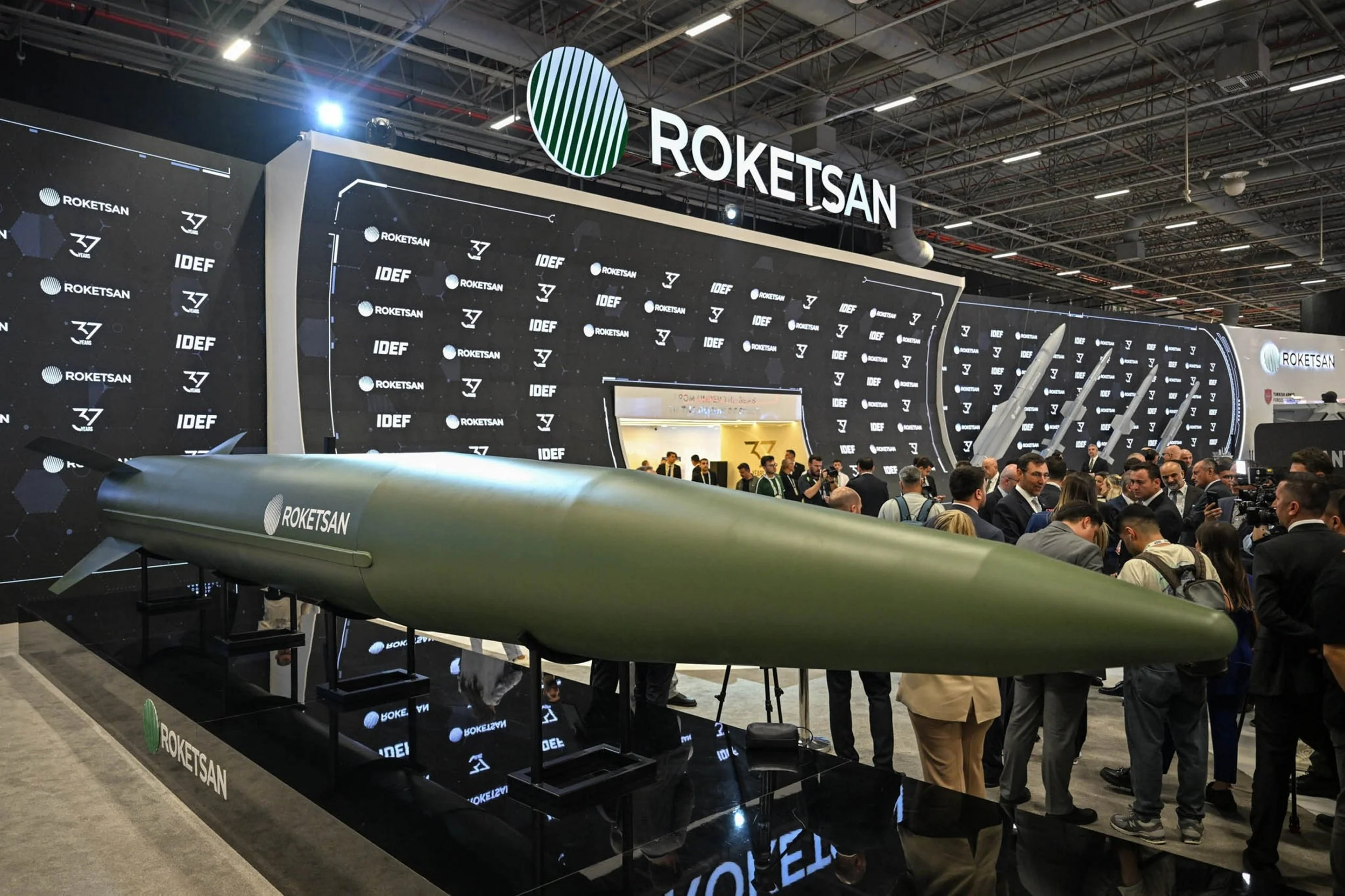
Tayfun Block-4 Hypersonic ballistic missile. Source: https://www.dailysabah.com/business/defense/turkiye-unveils-its-1st-hypersonic-missile-at-idef-2025
Geopolitical Strategy
Türkiye’s defence industry has become an increasingly important instrument of foreign policy, enabling Ankara to pursue greater strategic autonomy while expanding its influence across multiple regions. In Africa, Türkiye’s growing arms exports—especially drones—have been central to deepening defence cooperation and positioning Ankara as a potential counterweight to Russian and Chinese influence. Similarly, in the Black Sea, the combination of an indigenous defence base and geographical leverage has allowed Türkiye to adopt a more independent strategy: rather than acting solely within NATO frameworks, Ankara has sought to balance deterrence against Russia with its own regional interests. At the global level, Türkiye’s transition from a major importer to a rising exporter has reinforced this posture, with its share of global arms exports increasing more than fourfold since 2007. Together, these developments demonstrate how defence production has been integrated into Türkiye’s geopolitical strategy, serving as both a material and symbolic expression of its bid for autonomy in international affairs.
The growing reliance on the defence sector as a tool of statecraft also carries structural risks. While arms exports have created new opportunities for engagement, they also risk militarising Türkiye’s Africa policy by privileging short-term security partnerships over longer-term developmental or diplomatic commitments. In the Black Sea context, Türkiye’s pursuit of strategic flexibility could expose it to overreach, particularly as its defence ties with both NATO allies and non-Western partners create competing expectations. More broadly, major defence projects often proceed with limited parliamentary debate or public oversight, concentrating decision-making in the executive. This lack of transparency not only weakens democratic accountability but also raises the possibility that foreign policy choices are increasingly shaped by the logic of arms production and export markets. Thus, while Türkiye’s defence industry has reinforced its strategic autonomy, it has simultaneously generated concerns about democratic erosion, normative credibility, and the risks of embedding foreign policy too deeply in the logic of militarisation.
Conclusion
Türkiye has made substantial progress in taking domestic leadership in its defence production and technological development. Türkiye’s homegrown defensive capabilities have increased dramatically in a short space of time and sanctions on Ankara have in some cases spurred innovation, similarly to U.S. sanctions on China. But, the defence capabilities are still dependent on foreign partners for revenue creation to invest into R&D and somewhat reliant on the sophistication of foreign defence products. While some of its recent innovations have enhanced its ability to expand its defence partners to Global South nations, enhancing Ankara’s reputation as a solid security partner and reliable exporter of military hardware, it has weakened its relationship with European allies that view Ankara’s moves as detrimental to its own interests.

Analyst on the Türkiye Research Desk

Analyst on the Türkiye Research Desk