
The Scramble for Central Asia: Russia and China’s ‘No-Limits' Partnership Has Limits
February 26, 2026 - Written by Talha Haroon
Introduction
Since Russia and China declared a “no-limits” partnership in February 2022, followed weeks later by Russia’s invasion of Ukraine, analysts have sought to assess the trajectory of a “strategic partnership” linking the world’s second-largest economy in China with a major military and security power in Russia.
Some experts have emphasised the “geopolitical imperative” of the partnership “to undermine the United States and the order it leads” while others cite “competition over energy resources, transit routes, trade, political influence, and security relationships as factors that will hinder their ability to share power”.
To provide a comprehensive understanding of this evolving relationship, the following analysis incorporates concepts from economic statecraft as intersecting lenses through which to interpret the dynamics of the Sino-Russian entente. At the core of this relationship lies a contemporary “scramble” for Central Asia – a region long regarded as a latent source of geoeconomic competition between hegemonic powers.
Situated at the intersection of Eurasian supply chains and an emerging economic-security nexus, Central Asia has become a critical arena in both Beijing’s and Moscow’s grand strategies for shaping regional order. China signalled this with the launch of the Belt and Road Initiative (BRI) from Kazakhstan in 2013, while Russia has consolidated its influence through security compacts and historical-cultural ties with former Soviet republics such as Kazakhstan, Uzbekistan, Tajikistan, Kyrgyzstan, and Turkmenistan.
In light of these developments, and considering the backdrop of shifting political and economic postures following the war in Ukraine, the Sino-Russian “strategic partnership” should be viewed through two key areas of contestation:
Regional institutional arrangements such as Russia’s Eurasian Economic Union (EEU) and China’s BRI.
Resource securitisation via critical minerals.
To achieve this, the analysis that follows first unpacks how competing regional institutional frameworks structure great power influence in Central Asia, and then explores how resource securitisation intensifies geoeconomic rivalry between Russia and China. In practice, the Sino-Russian “strategic partnership” in Central Asia operates less as an integrated regional project than as a loose alignment of interests, in which coordination against Western influence clashes with competition over economic ordering and the control of strategic value-chains.
Competing Logics of Regionalism
In 2015, Thomas Wright framed the deepening rapprochement between China and Russia as a question of “whether Russia and China will acquire spheres of influence in their neighbourhoods” – a formulation that appears increasingly prophetic when read through the evolving political economy of Central Asia. Both powers have operationalised grey zones of sovereignty in their regions, advancing influence through expansive institutional arrangements. These compacts constitute a core pillar of economic statecraft, which describes the “various economic tools countries use – such as lending, foreign assistance, sanctions, and trade agreements – to advance their foreign policy priorities.”
For both Moscow and Beijing, initiatives like the Eurasian Economic Union (EEU) and the Belt and Road Initiative (BRI) act as crucial foreign policy and economic frameworks, bundling material incentives with normative and institutional commitments across Central Asia. However, despite this shared reliance on regionalism, Kaczmarski has described the differing institutional arrangements as “two ways of influence-building”; despite the “concentration on the economy, the projects [EEU and BRI] differ in substantial ways.” Thus, examining the construction and operating logics of these flagship arrangements highlights the extent to which the “strategic partnership” between Russia and China differs with respect to Central Asia.
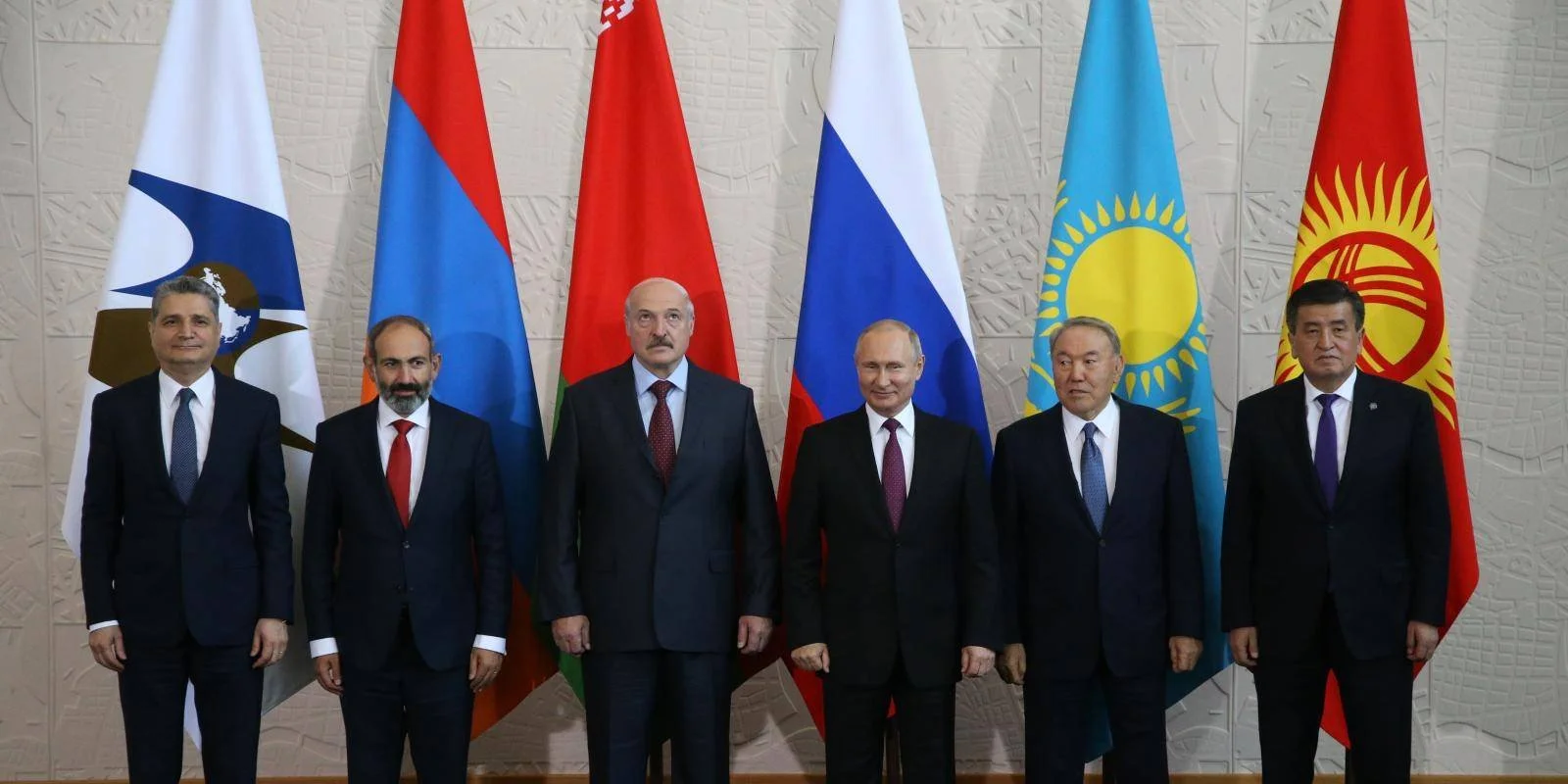
The EEU – established in May 2014 and operational since January 2015 – counts Armenia, Belarus, Kazakhstan, and Kyrgyzstan as core members, with Cuba, Iran, Moldova, and Uzbekistan holding observer status. The Union has been characterised by some as the opening move in a “neo-Soviet project” in the mind of President Putin, reflecting Moscow’s ambition to reconstitute Greater Russia, two decades after the fall of the Soviet Union in 1989. Operationally, however, the EEU is seen as being modelled on the European Union, promoting objectives such as a unified single market and the free movement of capital, services, and labour across borders. While Soviet-era legacies were initially invoked to legitimise cooperation and facilitate alignment on investment rules, regulatory standards, and competition policy, the longer-term strategic objective has been to capitalise on an increasingly multipolar international order by consolidating a Eurasian economic “pole” capable of counterbalancing Western economic dominance.
However, these ostensibly technocratic foundations of the EEU have weakened markedly in the aftermath of Russia’s invasion of Ukraine, where what was conceived as an economic customs union has been reframed through geopolitical imperatives. Lee and Shin note that the conflict has led to the “absence of a unified stance” among member states, which has “contributed to the EEU’s limited effectiveness as a regional organisation.” For example, while a country such as Belarus unequivocally backed Russia’s military intervention in Ukraine, underscoring its deep economic and political dependence on Russia, other members such as Armenia and Kazakhstan have pursued “multi-vector” diplomacy with respect to their national interest. Armenia is “caught between two sides” of Russian and Western alignment amid the Nagorno-Karabakh conflict, while Kazakhstan has deliberately diversified its partnerships, deepening ties with both China and other powers in order to hedge against over-dependence on Moscow. Consequently, Russia’s outsized influence within the EEU has recast its economic foundations (such as the Customs Union and Common Economic Space) into a rigid foreign policy posture, conflating economic integration with constraints on sovereignty. This inflexibility has elicited variegated responses across Central Asia, exhibiting the inherent limits of regional institutional arrangements that elevate a single state as the political and cultural lodestar.
The BRI, by contrast, operates in a more fluid and ambiguous manner. Unlike the EEU, it lacks a formal international legal basis and has not been institutionalised as a coherent multilateral framework. As a result of this configuration, Kaczmarski argues that it is best understood as an “umbrella term” for what is, in practice, a series of bilateral economic engagements conducted largely on Chines. Rather than binding Central Asian states into a rules-based bloc or geopolitical “pole” requiring institutional coordination, the BRI conceptualises the region primarily as a strategic corridor that facilitates China’s economic connectivity and political reach across Eurasia. This institutional flexibility has allowed China to deploy the BRI not only as an instrument of economic statecraft, but as a means to align domestic and regional politico-economic imperatives following the war in Ukraine.
Beijing’s attempts to mediate the conflict – as evidenced by the twelve-point China’s Position on the Political Settlement of the Ukraine Crisis published in February 2023 – led to an ambivalent “pro-Russian neutrality”. However, this peace-brokering rhetoric has done less to materially support Russia as a strategic ally than to enhance China’s own diplomatic appeal, with expanded investment in “infrastructure, such as pipelines, energy projects, and the China-Kyrgyzstan-Uzbekistan railway” widening fissures within the Sino-Russian partnership.
Laruelle argues, the “BRI is first and foremost a response to China’s domestic economic woes, serving to postpone the decisive moment when Chinese production will need to be transitioned from a low-cost model (‘Made in China’) to a value-added production model (‘Created by China’). As a result, the sustained shock to economic stability from the war in Ukraine has encouraged Central Asian states to hedge away from Russia’s institutionally rigid sphere-of-influence politics and towards China’s more transactional, finance-driven model of regionalism. This shift is particularly evident in Kazakhstan, which has emerged as a central facilitating node in the reconfiguration of Eurasian connectivity away from Russia. For a landlocked state historically reliant on the Russian “Northern Corridor” for connectivity, the war in Ukraine dealt a severe blow to logistics networks, with successive rounds of sanctions contributing to a collapse in container traffic along Russian routes in 2023.
In response, Kazakhstan pivoted to China for the development of the Trans-Caspian International Transport Route (TITR) – a component of the BRI as of 2013 – as a viable alternative artery linking Central Asia to Europe while reducing exposure to Russia’s sanction-constrained economic space. According to the Foreign Ministry of Kazakhstan, cooperation between Kazakhstan and China has resulted in “100 joint investment projects currently in progress, including 45 key projects valued at over $14.5 billion” as of October 2024. The project-led nature of China’s regional engagement with Central Asian states highlights how the BRI facilitates selective alignment at the state level, even as Beijing and Moscow commit to strategic partnership at the global level.
Therefore, regional institutional arrangements such as the EEU and BRI highlight that Sino-Russian cooperation does not necessarily presuppose the emergence of a unified regional order, particularly when the exogenous shock of the Russia-Ukraine war reconfigures the incentives and constraints embedded within national strategies of Central Asian states. On the contrary, divergent operating logics and institutional structures, which separate security and political considerations from economic preferences, generate distinct and competing patterns of engagement between Central Asian states and both Russia and China. Rather than complementing one another, the EEU and BRI embody incompatible governance strategies, creating schisms that allow Central Asian states to exercise their own agency by leveraging vast endowments of natural resources. This has given rise to a contemporary “scramble” for critical minerals across the region. As the following section demonstrates, institutional divergences between Russia and China shape the ways in which these resources are securitised through competing frameworks, creating parallel geoeconomic divergences between the two powers.
Resource Securitisation & Geoeconomic Rivalry
Securing resources central to global economic networks lies at the forefront of contemporary geoeconomics among major powers; in Central Asia, this competition is increasingly mediated through critical minerals. These naturally occurring inputs – ranging from lithium and copper to a wide array of other strategic materials – underpin an array of cutting-edge technologies including electric vehicles, renewable energy systems, semiconductors, and digital infrastructure. Central Asian states possess a significant share of global reserves of several essential minerals that feed into these technologies, accounting for approximately 38.6% of manganese ore, 30.1% of chromium, and 20% of lead. Owing to this concentration of strategically indispensable resources, the region occupies a pivotal position within overlapping Russian and Chinese geoeconomic strategies. Yet understanding how these resources become objects of strategic rivalry requires examining the political processes through which they are instrumentalised as matters of economic security.
It is in this context that the concept of resource securitisation becomes analytically useful. Rooted in constructivist international relations theory, most notably advanced by the Copenhagen School, resource securitisation posits that security is not an objective condition but a socially constructed duality of “discourse and materialities.” By instantiating policy changes as matters of insecurity, political actors are able to legitimise exceptional policy measures and economic interventions that would otherwise fall outside the bounds of normal governance (Billon et al) extend this framework by arguing that resource securitisation “enables the configuration of resources to support or undermine modes of existence and thus bring about a sense of (in)security.” In doing so, securitisation moves beyond conventional notions of “resource security” as a static or objective condition, instead spotlighting strategic processes through which resources are acquired and governed. In the context of critical minerals in Central Asia, this conceptual fluidity has produced a distinctly multi-vectoral landscape in which regional states maintain resource partnerships with both Russia and China, albeit under different incentive structures and operational logics.
For example, Russia’s vertically integrated, state-embedded model of resource governance in Central Asia is illustrated through its engagement with Kazakhstan, which produces over 40% of the world’s uranium. Kazakhstan’s abundant uranium reserves were first identified in the 1950s, when the country formed part of the Soviet Union, embedding the sector within a legacy of shared institutional, technical, and infrastructural frameworks. While uranium extraction expanded in the post-Soviet period, the consolidation of Kazakhstan’s nuclear sector took place in the 2000s, culminating in the development of nuclear fuel-cycle activities under the state-owned company Kazatomprom. Although Kazatomprom formally “controls all uranium exploration and mining as well as other nuclear-related activities, including imports and exports of nuclear materials”, the sector operates extensively through joint ventures with foreign partners, with Russia being the most prominent beneficiary.
For instance, in May 2023, Rosatom – Russia’s state-owned nuclear corporation – acquired a 49% stake in the Budenovskoye uranium deposit, widely expected to become the world’s largest single source of uranium. Russia’s deep embeddedness in Kazakhstan’s uranium sector arises from the fact that while Kazatomprom successfully developed a full nuclear cycle from uranium extraction, it has not been able to reach the “enrichment stage”. As a result, “Kazatomprom sends uranium to Russia for enrichment and then uses it to produce pellets for Russian nuclear power plants”. This configuration highlights a core mechanism of contemporary economic statecraft, in which control over critical nodes within strategic value chains generates asymmetric leverage. While Kazakhstan dominates upstream uranium production, Russia’s control over downstream enrichment constitutes a structural chokepoint, granting Moscow disproportionate influence over Kazakhstan’s nuclear sector.

Kazatomprom
However, for many Central Asian states embedded within Russia’s sphere-of-influence, the war in Ukraine has stripped relationships of this fraternal veneer, rendering them increasingly transactional and financially burdensome. In September 2024, Kazatomprom acknowledged that sanctions-related constraints on Russia had complicated uranium sales to Western buyers, undermining the reliability of Russia-linked export channels. These pressures, in turn, contributed to Rosatom’s Uranium One Group divesting a 50% stake in Kazakhstan’s Zarechnoye mine, reducing Russian ownership in a strategically significant uranium asset. Crucially, Kazakhstan used this moment of disruption to operationalise its long-standing multi-vector foreign policy within the nuclear sector. Rather than privileging a single external partner, Astana pursued a deliberate strategy of bifurcation, awarding nuclear power plant contracts separately to both Russia’s Rosatom and China’s National Nuclear Corporation (CNNC). This split tender was designed to insulate Kazakhstan from political retaliation while maximizing leverage across bilateral relationships: while Rosatom remains the preferred partner for the flagship nuclear reactor on the shores of Lake Balkhash – drawing on decades of regional integration and established nuclear expertise – CNNC’s proposal to construct a 1-gigawatt reactor for approximately $2.8 billion halves the projected cost of rival bids by prioritising speed and cost efficiency.
Although this arrangement may resemble a functional division of labour between Russia and China in Central Asia, whereby Moscow provides security and Beijing supplies capital and economic connectivity, the Kazakh nuclear deal more pointedly underscores the growing agency of resource-rich Central Asian states in delineating the fissures that have emerged in Sino-Russian relations since the outbreak of the war in Ukraine. As Baldwin argues in his landmark book Economic Statecraft, “economic techniques usually cost more than propaganda or diplomacy and thus tend to have more inherent credibility”; while Russia’s emphasis on military and strategic security retains credibility through coercive capacity, China’s economic engagement offers “an appealing combination of costs that are high enough to be effective yet low enough to be bearable”. Consequently, the institutional divergences observed between the EEU and the BRI translate into geoeconomic divergences, where Russia’s focus on historical integration and China’s emphasis on unlocking resource-led growth for Central Asian states lead to conflicting alliances. Therefore, if Kazakhstan is imagined as a microcosm of broader Central Asian dynamics, its calibrated engagement with both powers accentuates the trade-off between security-centric and economically driven modes of hegemonic influence. This, in turn, casts doubt on the depth and durability of the Sino-Russian strategic partnership in Central Asia.
Conclusion
In a comprehensive report for the Centre for European Policy Analysis (CEPA), Natasha Kuhrt argues that “Russia’s invasion of Ukraine in 2022 placed in question Russia’s role as a regional security provider while its military remains fully engaged in Ukraine,” fundamentally altering perceptions of Moscow’s reliability in Central Asia. This shift has, in turn, accelerated Central Asian states’ turn toward multi-vector foreign policy agendas, as governments seek to diversify partnerships and hedge against overdependence on a single security guarantor. China has increasingly filled the resulting vacuum through expanded bilateral engagement, combining economic inducements with selective security dialogue across the region. It is clear that the so-called “no-limits” or “strategic partnership” between Russia and China, formalised on the eve of the Ukraine war, has undergone a substantive transformation in Central Asia. Through an examination of regional institutional arrangements such as the EEU and the BRI, alongside patterns of resource securitisation in critical minerals in Central Asian states such as Kazakhstan, it becomes evident that while Moscow and Beijing share a broad interest in constraining Western influence in the region, their approaches to Central Asian states differ fundamentally in both substance and execution.

Written by Talha Haroon
Analyst