
The Kurdish Question: Spanish-Turkish Relations and the Post-Assad Turning Point
March 09, 2026 - Written by Daniela Jerez Cubillo
Introduction
Spain and Türkiye, a somewhat understudied pairing within international politics, have benefitted from strong diplomatic ties and bilateralism since the former’s backing of the EU-Türkiye Customs union in 1995. The last decade however, has seen increasing strain placed on this relationship through its extension into both domestic and international security concerns, centred around the issue of Kurdish nationalism in the Middle East.
For Türkiye, Kurdish independence represents an existential threat. With Kurds making up 15% to 20% of the Turkish population, and what would be Northern Kurdistan covering as much as 30% of Turkish territory, suppression of nationalist movements is naturally a major concern for Ankara. For the West, de facto independent Kurdish groups had played a significant role in the conflict with ISIS, Assad, and other regional extremist groups. Though this divergence of interests caused some friction between Spain and Türkiye throughout the 2010s, America’s alignment with Spain’s pro-Kurdish stance kept Türkiye sufficiently restrained in its pursuit of control, and thus kept the relationship amicable.
However, the fall of the Assad regime, and the Pentagon’s subsequent support for Ahmed Hussein al-Sharaa destabilised this equilibrium. Kurdish nationalism has lost its utility as an instrument of US interests in Syria, and without American protection, the Kurds have been abandoned. Since the end of 2024, Hay’at Tahrir al-Sham (HTS), a former branch of al-Qaeda now backed by both the US and Türkiye, have engaged in multiple massacres, and continuous displacement of Syrian Kurds. Domestically, Erdoğan has continued to engage in ‘terror-free’ state policy through the disarmament of the Kurdistan Workers’ Party (PKK), moving towards peace.
More recently, the rapidly escalating US-Israel-Iran war has opened several dilemmas for Türkiye, Iraq, and Kurdish populations in the region regarding positionality and the existential threat of the war. Specifically, Türkiye is balancing multiple interests, expressing support for anti-war rhetoric and diplomacy in the West, primarily emanating from Spain, but it is increasingly unlikely that Ankara will be able to stay away from the conflict on their doorstep.
This report explores how bilateral relations have been shaped by these factors. Building on the regional transformations outlined above, it argues that Spain’s recent divergence from US foreign policy signals broader implications for Spain-Türkiye relations, depending on the direction of Ankara’s involvement in the conflict.
Spain and a European Türkiye at the end of History (1990s-2000s)
Spain and Türkiye enjoyed strong diplomatic relationships between the 1990s and the 2000s. At the peak of the Liberal International Order, Spain strongly advocated for Turkish integration into the European Union’s economic sphere, encouraging the EU-Turkey Customs Union in 1995. Most relevantly, Türkiye was able to leverage its liminality between the Middle East and the Western World by leading the UN Alliance of Civilizations Initiative in 2005 under Kofi Annan. Responding to the 9/11 attacks and increasing pessimism, aggravated by texts such as Samuel Huntington’s The Clash of Civilizations and the Remaking of World Order, Türkiye created an incentive towards (re)approachment between the Western world and the Middle East. This initiative was co-sponsored by Spain under President José Luis Rodríguez Zapatero, who openly opposed Spain’s involvement in Iraq under Spain’s previous administration, and who pushed for a UN mandate to prevent a US-led war after the 2004 Madrid Bombings.
The Alliance permitted Türkiye to gain a seat at the table, opening the possibility of accession to the European Union in 2005, which was adamantly supported by Spain. The motivation behind this involvement – whether it is a genuine belief on the norms and moral structure allegedly championed by the UN and the EU, or pure strategic interests – it is undeniable that through the adoption of language of inter-civilizational dialogue and norm diffusion, Türkiye was able to leverage its position to increase their credibility on the global stage, which enabled it to gain momentum as a rising power.
At the same time, Spain and Türkiye’s relationship reflected on economic investment in various sectors, including infrastructure, defense and textiles. To remain amicable, Spain needed to maintain a certain degree of normative leniency, for instance by recognising Armenia but not the Armenian genocide despite general consensus in the European Union. Thus, up to the 2010s, Spain-Türkiye relations were characterised by seemingly uninterrupted allyship.
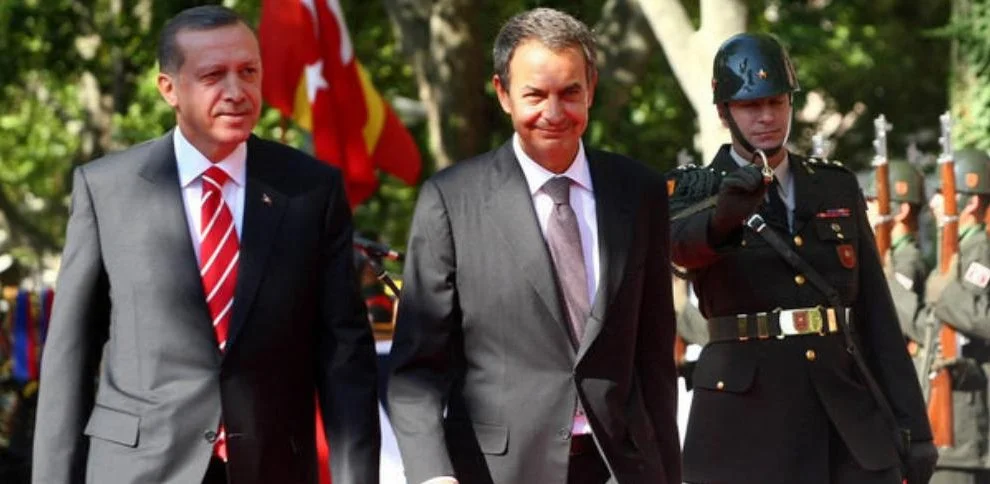
Spain's President José Luis Rodríguez Zapatero and Turkish president Recep Tayyip Erdoğan walk together in the military parade of the third Spanish-Turkish Summit, 2011. Credits.
The Kurdish Question: A War on Two Fronts
The past decade, however, has revealed significant underlying tensions between both countries on the issue of Kurdistan. The region is of fundamental strategic importance for various international actors, including, but certainly not limited to, the United States, Iraq, Türkiye, and Syria. The Republic of Türkiye has securitised Kurdish populations and independence movements within its borders, engaging in continuous efforts to delegitimise dissidence, both peaceful and violent, such as the PKK, which is recognised as a domestic terrorist group. The Turkish state has also participated in a number of military operations in Kurdistan between 2016 and 2019 in attempts to dissolve and weaken the Syrian Democratic Forces (SDF) and the People’s Defense Units (YPG), namely Operation Euphrates Shield (2016-2017), Operation Olive Branch (2018), and Operation Peace Spring (2019). The latter two made visible significant cracks in Spanish-Turkish relations, given the adamant condemnation by the European Union of Operation Peace Spring through an arms embargo.
Spain, which was Türkiye’s fifth biggest arms supplier between 2008 and 2019 – after the United States, South Korea, Germany, and Italy — selling 162.5 million euros worth of arms to Türkiye (about 10% of Turkish defence spending) in the first semester of 2018, also took part in divestment. Consistent with EU policy, Spain denied export licenses for military equipment which could potentially be used in Syria.
Moreover, Spain remains an advocate for Kurdish communities as a Western-aligned Muslim population in the Middle East, with an honorary consulate in Madrid, and a planned Spanish honorary consulate in Erbil, the Kurdish region in Iraq. However, this tension was never sufficient for Spain to sacrifice their otherwise amicable commercial and diplomatic relationship with Türkiye, with investments recovering slightly between 2021 and 2023. Similarly, though Kurdish nationalism remained an existential threat for Türkiye, America’s interest in the Kurds persistence left them restrained in their response capability.
The Post-Assad Turning Point
The fall of Assad and the rise of Hay’at Tahrir al-Sham (HTS) might result in a turning point for Spanish-Türkiye relationships, where the isolation of the Kurds within a now US and Türkiye-aligned Syria, Erdoğan’s government was released from its predicament and swiftly resumed efforts to halt Kurdish nationalism in Syria and build a unified state. The Trump administration has shown full support for the new authorities in Damascus under Ahmed Hussein al-Sharaa, removing HTS from official terrorism lists. As a result, Rojava and the Kurds, which were formerly of utmost importance for US security interests by counterbalancing the Assad regime, are no longer of use. US protection and funding of the SDF have thus mitigated, abandoning Rojava and Kurds more generally, and leaving them without their security guarantors, giving Türkiye leeway to pursue its interests.
For Kurdish nationalism, the volatility of the multiplicity of forces and powers that have invested in them since their inception has highly compromised their movement, raising the question of what will happen to the Kurds without a US security umbrella. The recalibration of power in the region thus raises several questions regarding relations between Türkiye and Spain, particularly in terms of Spanish provision of Turkish defence, as well as diplomatic amicability. Although the Spanish state has seemingly welcomed the ‘democratisation’ of Syria after the fall of Assad, potentially as a way to appease US interests, its position remains unclear, as Madrid has also condemned violence against Kurdish communities.
Simultaneously, Spain remains critical of Erdoğan’s wider democratic backsliding practices, but has not taken a stance on Ankara’s “terror-free policy” and ongoing negotiations with the PKK. Most recently, the Spanish government has demonstrated its continuous engagement with the Kurdish question through the repatriation of several members of Kurdish militias with Spanish nationalities in the face of increasing violence in northeastern Syria, consistent with Spain’s international brigadier history.
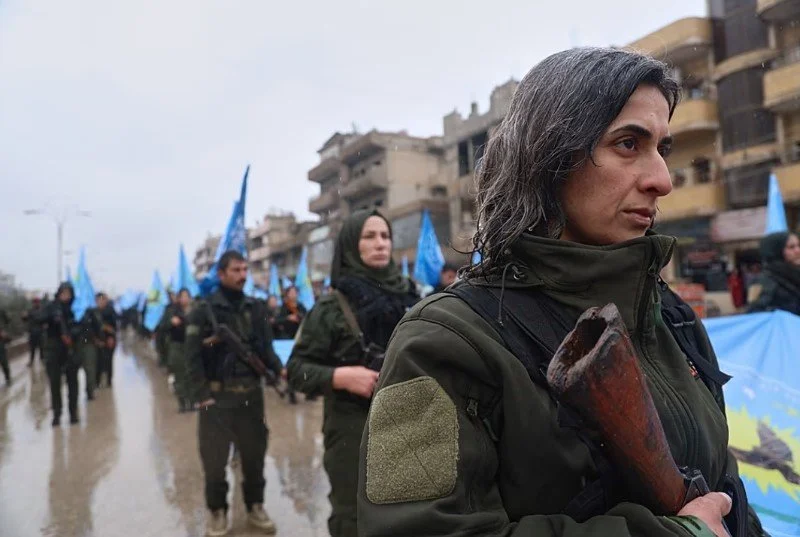
SDF soldiers march in a military parade in northeastern Syria, 2026. Credits.
American Disjuncture: Türkiye’s Balancing Act
As mentioned, the role of the United States within the wider global order and foreign policy changes under the Trump Administration is key to comprehending the Kurdish question and how it bleeds into Turkish-Spanish relations and beyond. US domestic decline and its increasingly aggressive foreign policy have shaken Europe, bringing into question the reliability of the US security umbrella. European states have thus shown willingness to reassess their relationship with their trans-Atlantic allies and opt for the reduction of dependency on NATO and the United States. This has led some countries to strategically re-approach powers like China.
Spain, for instance, has continued to maintain diplomatic ties with Beijing, hosting the Imperial Springs International Forum in December 2024 in Madrid for the first time. Thus, a potential movement towards multipolarity away from US hegemony has created a window of opportunity for states like Spain to differentiate themselves from their interests. In fact, in light of Spain’s ongoing strengthening of diplomatic ties to Kurdish autonomous and its growing split from Trump’s America and opposing NATO membership requirements, particularly over Palestine and more recently the war in Iran, Spanish ideational objectives seem to be in direct conflict with US interests.
Compared to the tensions observed between 2016 and 2019, support of Kurdish nationalism in Syria is no longer a US and EU-backed project. Though the USA has publicly declared interest in arming Kurdish groups against Iran, the precedent set in Syria has discouraged Iraqi Kurdish involvement, leaving a geographical gap in multiple borders if a ground invasion breaks out. Overall, while it is not yet clear exactly how the continued escalation on its southern border will affect Turkish regional military engagements, it is apparent that the Kurdish people will be caught, by or against their will, in any northern conflict. As a result, Turkish-Spanish relationships might suffer friction given Spain’s humanitarian approach to the conflict if Türkiye is forced into the conflict.
The recent start of the US-Israeli-Iranian war has profound implications for Türkiye, which seems to be performing a balancing act, with conflicts of interest with virtually all parties involved. Ankara has remained adamant about its anti-war position, offering itself as a broker of peace and favoring de-escalation prior to the attacks. Despite its rivalry with Iran, Türkiye cannot support a war with a state with which it shares a 500-kilometer border. At the same time, Iran’s alleged attack on the Incirlik Air Base used by the United States, which was intercepted by NATO – and which Iran denies– further complicates the matter. As more major actors are sucked into the conflict, the likelihood of Türkiye being brought further into the conflict on the Western front increases. Simultaneously, the fact that some regional Kurdish proxies in Iraq and Syria are refusing to cooperate with the US complicates Türkiye’s ability to avoid involvement.
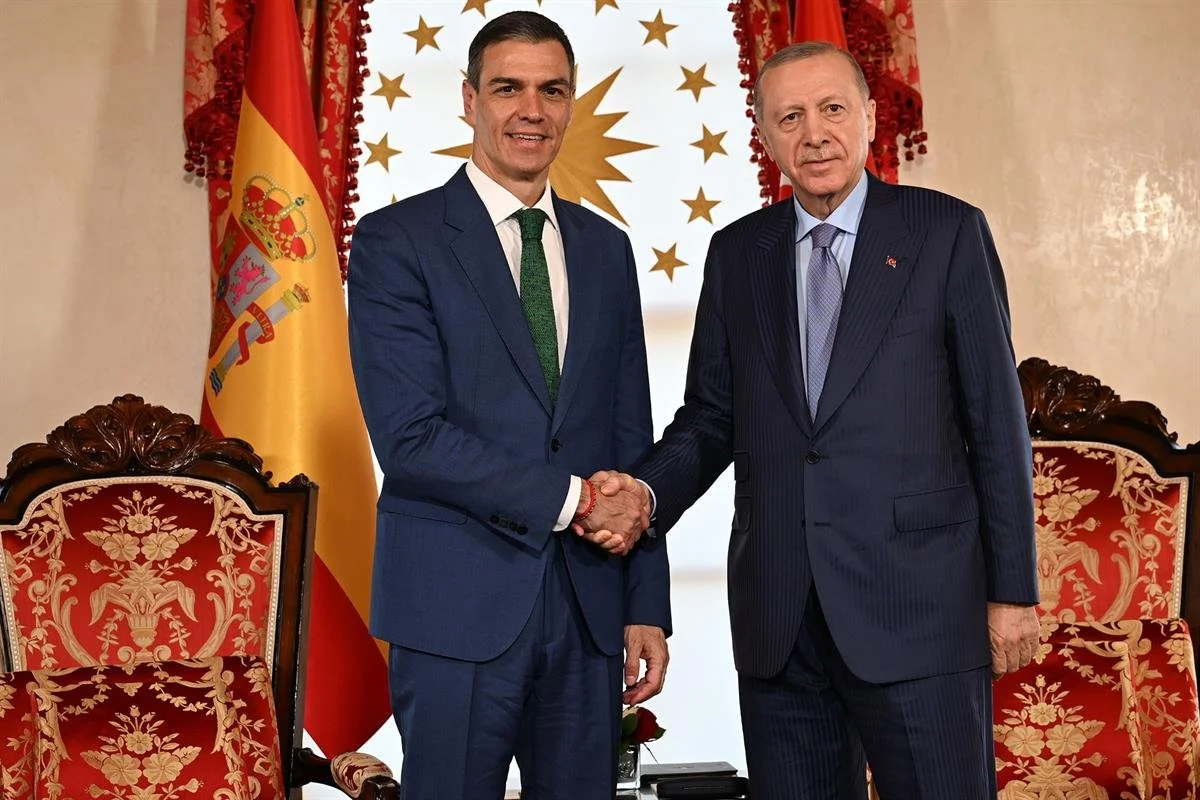
Given these stakes, Ankara is naturally deeply supportive of Spain’s anti-war position, reinvigorating positive diplomatic relationships. Spanish President Pedro Sánchez has rejected the use of US military bases in Rota and Morón, doubling down after Trump’s threat to cut off trade with Spain by reiterating their wish for peace and respect for international law.
Conclusion
The regime change in Syria and Türkiye’s pursuit of national interests in their region through their support of HTS in absorbing the Kurds, and their possible involvement in the rapidly developing war in Iran is likely to reconfigure Spanish-Turkish bilateralism. All that remains to be seen is whether the Kurdish question in the Middle East becomes substantial enough for the Spanish government to offset the economic benefits of bilateralism.

Written by Daniela Jerez Cubillo
Analyst for the European and Türkiye Research Desks.