
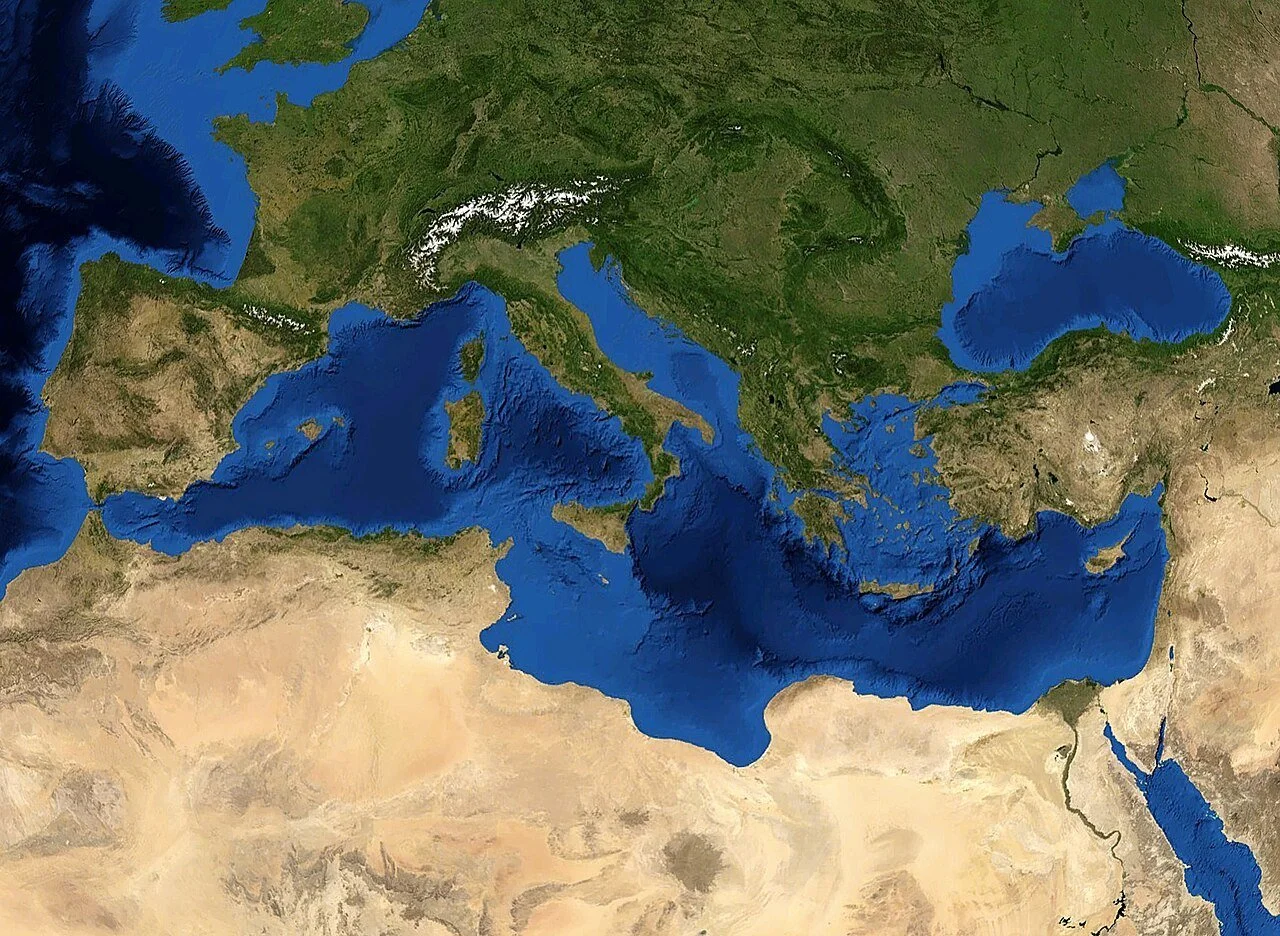
The Euro-Mediterranean Network
November 06, 2026 - Written by Enrico Dal Bosco
In 2006, then-EU Commissioner for Enlargement Olli Rehn stated that, “It is obviously better to export our stability than to import instability. This is our task for the future.” That was three years into the Iraq war; four years later, the Arab Spring turned a range of Middle Eastern and North African nations upside down, whereas millions of refugees made their way northwards towards Europe by the mid-2010s.
The subsequent rises in political outrage over immigration have wreaked havoc across the continent, as well as the recent disputes over Israeli and American foreign policy in the Middle East. Factoring in several other conflicts and crises that unfolded, the impression has arisen that Europe has a staggering deficit when it comes to stability, and is quite unable to change that.
Moreover, there is a sense that the Middle East and North Africa (MENA) export nothing but instability to Europe. The reality, however, is that beneath highly visible crises, a parallel process of institutional and economic integration has steadily unfolded. In turn, any strategic engagement with the Euro-Mediterranean region needs to consider both the crises that occurred as well as its successes and potentials, though the latter appear unknown to large swaths of the European public.
The Crisis Narrative
Where in the 1980s the many Europeans supported the Afghan mujahideen’s resistance to the Soviets, and the 90s saw first anxious glances at Islamic volunteers in the Bosnian war, 9/11 starkly increased the salience of security concerns in dealings with the Middle East and North Africa. This profoundly ruptured Western post-Cold War optimism, whilst the subsequent Global War on Terror fuelled concerns over the spread of instability, radicalisation and transnational terrorism. These fears would be exacerbated by highly publicised terrorist attacks in Madrid (2004) and London (2005), among others.
Upheavals like the Arab Spring and the Syrian Civil War produced unprecedented migratory pressure towards Europe in the 2010s. As around one million refugees fled across the Mediterranean in 2015, migration
became a defining political issue, accompanied by more anxieties regarding terrorist attacks such as the 2015 Charlie Hebdo shooting in Paris. According to the European Commission's Spring 2016 Eurobarometer, 47% cited immigration as the greatest issue facing the European Union, whilst 26% of respondents identified terrorism.
Though perhaps a less prominent issue, energy ties with the Middle East have surely sat at the back of European policymakers’ minds since at least the 1973 oil embargo. As Russia’s invasion of Ukraine increased strategic attention towards other sources of energy, this dimension is also complicated by supply chain concerns regarding the ongoing conflicts around Gaza and Iran.
In the European public imaginary, the result has been a persistent narrative where Europe-MENA relations are primarily understood through terrorism, armed conflict, irregular migration, and associated energy/trade disruptions. According to the Standard Eurobarometer published in late 2024, 33% of Europeans identified security and defence as the EU's principal medium-term priority, while 29% again selected migration. In both of these respects, Europe’s southern neighbourhood looms large as a source of concern.
The Euro-Mediterranean Network on Paper
Undoubtedly, the crises of the 21st century have carried profound strategic consequences. Nevertheless—as is often the case in international politics— emergencies have obscured gradual developments. Though Europe’s relationships vary across the vast Middle East and North Africa, recent dealings with countries specifically around the Mediterranean have actually grown more cooperative and structured, not disorderly. Through the successive creation of multilateral fora and bilateral treaties, there exists intricate institutional infrastructure spanning the Euro-Mediterranean region, largely outside the public eye.
Its origin can be traced to the eponymous 1995 Euro-Mediterranean Conference, which brought together the then fifteen EU Member States and twelve Mediterranean partners. The resulting Barcelona Declaration stated its objective as turning "the Mediterranean into a common area of peace, stability and prosperity.” This multilateral ambition, termed the Barcelona process, also known as the Euro-Mediterranean Partnership, was to pursue political/security partnership, economic/financial partnership, as well as social/cultural partnership in unison. However, actual policy implementation was to unfold by way of the EU’s bilateral Association Agreement (AA) format.
These permanent, legally binding treaties ratified by all EU members and a given partner country establish frameworks for trade, political dialogue and regulatory cooperation. Between 1998 and 2006, AAs entered into force with every North African nation except Libya, as well as with Israel, Jordan, and Lebanon. These laid legal groundwork governing trade, political dialogue and regulatory cooperation between the EU and many Mediterranean partners.
Following the EU's Eastern enlargement in 2004, Brussels sought to integrate its various neighbourhood relationships strategically, which produced the European Neighbourhood Policy (ENP) as a broad, non-binding framework for articulating concrete action plans on the basis of the AAs. Crucially, the ENP also introduced a dedicated financial instrument for external action (ENI, now NDICI), as well as the principle of “differentiation”. Under differentiation, an individual nation like Morocco could negotiate an advanced action plan if it wanted to move ahead with deeper ties, irrespective of other partners. In addition, the NDICI would provide necessary funding, monitoring, and bureaucracy.
As AAs with some in the ENP’s “Southern Neighbourhood” (North Africa, the Levant, including the Palestinian Territories) were not forthcoming, and as bilateral processes were differentiated, the limited implementation capacity of the Barcelona Process had become evident by the mid-2000s. To salvage multilateral hopes, the Union for the Mediterranean (UfM) was established in 2008. As a purely intergovernmental institution based in Barcelona, it has no legal power to negotiate trade, manage EU funds or alter AAs, relying on the financial engine of ENP funds and the European Investment Bank. Nevertheless, the UfM does sustain regular political engagement despite periods of acute regional tension.
The 43 participating states—the 27 EU Member States and 16 partners— often hold meetings even when bilateral political relations among participants have deteriorated. Representatives of all members attended the 2023 forum amid the Gaza crisis, and 2025 even saw the adoption of a new strategic vision. Generally, the organisation describes its work in terms of common agendas, sectoral ministerial meetings and concrete cooperation projects.
Essentially, it provides a platform where pragmatic cooperation can continue despite political disagreement. Beginning with Tunisia in 2023, larger deals were negotiated through the EU’s Strategic and Comprehensive Partnerships (SCPs). These non-binding pacts managed by the European Commission and Council build upon existing AAs, serving as situational upgrades tailored to the strategic leverage of the partner. As flexible, executive-led initiatives, they can circumvent lengthy negotiations in emergencies, and have since been concluded with Egypt (2024) and Jordan (2025).
Taken together, Euro-Mediterranean institutional development over the last thirty years exhibits a substantial degree of continuity. Each successive initiative —the Barcelona Process, the AAs, the ENP, the UfM and the recent SCPs— has opened new possibilities in communication, planning, and implementation.
These developments stand in stark contrast with the predominant crisis narrative. While terrorism, irregular migration and regional conflicts consistently seize political attention, institutional ties continue to expand in both depth and breadth. By 2026, Europe and the Southern Mediterranean are linked by an extensive web of multilateral institutions, bilateral treaties and regulatory dialogues building upon one another, even if this does not constitute a single, systemic construct.
The Euro-Mediterranean Network in Action
For all the great strides the Euro-Mediterranean network has made on paper, what results has it really produced? To get a concrete answer, this paper draws on the annual Eurostat data on extra-EU merchandise trade with the Southern Neighbourhood countries from 2002 to 2025.
Goods trade provides the clearest quantitative measure of the relationship, while the 2002 starting point captures the post-9/11 period in which geopolitical tensions increasingly shaped Euro-Mediterranean relations. In turn, these economic outcomes not only quantify how much is going on beyond what the crisis narrative presents, but also indicate how resilient economic ties have been vis-à-vis major upheavals.
The aggregated results appear encouraging. EU exports increased from approximately €50.4 billion in 2002 to €133.3 billion in 2025, representing cumulative growth of 164.4%, while imports rose from €50.2 billion to €115.2 billion, or by 129.4%. In compound annual growth rates, this means an EU Southern Mediterranean export expansion of 4.3% per annum, an import expansion of 3.7%, and an aggregate trade upturn of approximately 4.0% annually.
At the same time, expansion became more volatile during the 2010s, wedged between two abrupt downturns. In the wake of the global financial crisis, aggregate imports from beyond the Mediterranean contracted by 33.2% in 2009, while the total trade volume declined by 21.8%. These declines coincided with the severe economic recession affecting European demand. In 2020, as COVID-19 interrupted worldwide supply chains, restricted mobility and reduced international demand, both imports and exports fell, amounting to a 19.5% decrease in aggregate trade.
Notably, both of these major contractions were related to crises not specific to the region and followed by recoveries in subsequent years. Accordingly, they did not cause a lasting reversal of the long-term expansion of Euro-Mediterranean trade, or a weakening commitment to the agreements regulating it.
In further contrast to crisis-induced slumps, Russia's 2022 invasion of Ukraine and the ensuing European energy crisis produced the largest year-on-year growth jump within the entire dataset. Imports from Southern Mediterranean partners increased by 54.6% in 2022, reaching a historical peak of approximately €137.1 billion and lifting overall trade by 34.8% to approximately €264.8 billion. This surge is consistent with the exceptional energy market conditions of 2022 and Europe’s increased reliance on Mediterranean suppliers. The subsequent years show a marked stabilisation around €248 billion through 2025.
This data shows that the Euro-Mediterranean goods trade went from persistent growth to a fluctuating pattern post-2009, with dips, stagnation and spikes keeping the overall value broadly between €160 billion and €190 billion before the 2022 jump. Notably, the sharpest downturns have come with crises not particular to the geopolitical neighbourhood, with more regionally specific upheavals like the 2011 Arab Spring or the 2015–16 migration crisis not exhibiting such contractions. The long-term pattern is thus not one of uninterrupted growth, but a resilient upward trajectory that can structurally absorb short-term shocks.
This is where aggregate data, however, obscures critical asymmetries in country-by-country outcomes. Just as the ENP’s differentiation principle portended, some countries have developed increasingly dense production and investment links with Europe, whereas others built more asymmetric relationships or were unable to weather political headwinds. The variation can be illustrated through at least four country trajectories
Morocco is a notable example of production-network integration. According to the European Commission, the EU was Morocco's largest trading partner in 2025, accounting for 33.7% of the country's goods trade, while total bilateral goods trade reached €62.3 billion. More revealingly, machinery and transport equipment accounted for €12.9 billion, or 50.6%, of EU imports from Morocco.
This composition points to increasingly enmeshed manufacturing and supply chains rather than Europe simply treating Morocco as a market for finished goods. Similarly, the OECD found that European firms accounted for almost 55% of Morocco's FDI stock in 2022, predominantly concentrating in automotive, aerospace, textiles, metals and electronics. Morocco therefore illustrates a form of integration in which trade, investment and industrial production are increasingly networked with Europe.
By comparison, Tunisia represents asymmetric integration. The EC tallied the EU’s share of Tunisian goods trade at 59.5%, with 73.2% of Tunisian exports destined for the EU. Total bilateral goods trade reached €26 billion. The composition of those exports again points beyond simple commodity exchange: machinery and appliances accounted for €6 billion, or 44.5%, of EU imports from Tunisia, while textiles contributed another €2.5 billion, or 18.9%. According to the EC, the EU also accounted for 85% of Tunisia's FDI stock. Tunisia consequently also exhibits an economy in which European demand, capital and production networks are deeply embedded. The key difference to Morocco is that it is much more dependent on the European market than vice versa.
Algeria occupies an intermediate position of commodity interdependence. As the Commission details, its economic relationship with Europe is vital, with the EU accounting for 49.6% of Algeria's international trade in 2025 and bilateral goods trade reaching €43.4 billion. Yet its importance to Europe remains strongly tied to hydrocarbons and mineral exports. Algeria therefore illustrates that substantial integration may not produce the same degree of industrial complementarity or production-network density evident in its Eastern and Western neighbours.
At the other extreme is Syria. Before the outbreak of the Syrian civil war, EU Syria trade peaked at more than €7 billion in 2010. Following the repression of the 2011 uprising, EU sanctions and the wider conflict sharply reduced commercial relations. By 2025, total EU-Syria goods trade had fallen to just €558 million, of which €165 million consisted of EU imports and €393 million of EU exports. Syria is therefore an important qualification to the broader resilience of Euro-Mediterranean trade.
These variant archetypes matter for interpreting the overall trend. The persistence of aggregate EU-Mediterranean trade growth despite successive crises does not imply that integration has become deeper across the board, but more asymmetric or commodity-dependent in some cases, and vulnerable to outright reversal where conflict and institutional breakdown intervene. If the Arab Spring had a relatively small aggregate trade fallout, it may be argued that it set individual countries on different trajectories.
The most important finding is therefore not that economic exchange benefits the region despite its successive crises, but that there is substantial potential in the Euro-Mediterranean network. In the strongest cases, the relationship increasingly rests on interconnected production, investment, services and energy systems. The crisis narrative thus subsumes the Euro-Mediterranean relationship into a Syria-like umbrella, painting it as less productive than the economic data suggests.
Conclusion
Going by trade data, the successive geopolitical crises that have unfolded around the Mediterranean basin were not the symptoms of general chaos they are commonly perceived as. On the one hand, such crises were actually fluctuations in a long-term trend towards institutional deepening and economic integration. On the other hand, only the 2009 financial crisis and COVID coincided with substantial dips in trade growth, neither of which were particular to the region.
These insights invite a re-evaluation of recent Euro-Mediterranean history. Rather than comprising a vague danger zone spanning from the Maghreb to the Levant and further East, several MENA nations maintain consistently productive relationships with Europe. These successes should be acknowledged as a relevant counterpoint to the crises.
On the geopolitical side, there can be little doubt that policymakers are well aware of the Mediterranean’s potential. Economically, Europeans benefit from integrating their geographically proximate, demographically younger, and resource-rich partners. Much the same way, the Southern Neighbourhood nations have strong incentives to maintain access to the EU’s massive market, wealthy consumers, and resilient institutions.
That growth has not come with developmental convergence between partners. Shocks like the Arab Spring continue to shape the present, having placed individual countries on different economic trajectories which the differentiated policies in place accommodate rather than reverse. For Europe, this implies valuable diversified trade - Morocco and Tunisia offer nearshoring opportunities, Algeria a source of energy. For partner countries, however, this can lead to economic dependencies.
Economic interdependence can also create political leverage, as recent experience in relations involving both the United States and China demonstrates. As Europe falls more on the side of those responding to these pressures, it has all the more reason to build productive relationships with geographic neighbours. And it should be noted that, as the EU’s own development has shown, pragmatic trade ties and accompanying institutions can be a foundation for other ambitions.
The aforementioned SCP with Tunisia, for example, included migration management as a major component, with dedicated EU funds for that purpose. In 2025, migrant arrivals from Tunisian shores had fallen by roughly 80%, the Commission asserts. Although other factors undoubtedly contributed, Frontex explicitly associated a 59% decrease in Central Mediterranean crossings with Tunisian and Libyan departures. Such developments receive considerably less public attention than the crises that surround them. Regardless, twenty years after Mr. Rehn’s stated objective, there is much stability to be appreciated in Europe’s imports and exports.

Written by Enrico Dal Bosco
Contributing Analyst on the European Research Desk