

Introduction
Sinazongwe 600 MW thermal power plant is the latest in a series of large-scale infrastructure developments funded by Chinese state-backed firms in Zambia. The plant’s primary goal is to address Zambia’s ongoing energy deficit by reducing the country’s reliance on hydropower. In turn, Zambia’s government hopes that increased stability will spur significant growth across the country’s mining and agricultural industries while enhancing opportunities for regional exports.
With global trade tensions mounting, developments like this warrant attention for their potential to intensify economic competition. For China, the project represents an opportunity to strengthen its partnership with one of the world’s most copper-rich countries. By contrast, China’s increasing presence in Africa has implications for the US and allies seeking to build their own capacity. In particular, this project reflects the broader struggle being held over strategic resources like copper, with significant implications for global trade and the energy transition.
Contextual Analysis
Chinese investment in Africa
In recent years, Chinese investment in Africa has been marked by large-scale projects designed to fill infrastructure gaps in developing countries. Ports, bridges, power stations and roads all fall within the scope of China’s Belt and Road Initiative (BRI). Many argue that projects like this are successful in boosting economic growth in Africa. At the same time, they serve China’s strategic interests by fostering positive relations with resource-rich nations, and by diversifying its imports of energy and other goods.
However, advanced industrial economies have criticised the BRI for contributing to Africa’s mounting debt problem. Recent debt defaults in borrowing countries have contributed to China’s pivot away from lending and towards equity investment in smaller commercial projects. These projects are then operated by Chinese construction firms, allowing China to receive a share of the revenue while reducing exposure to debt risks. A recent example is Nigeria’s Lekki Port. Completed in 2023, the port operates under a public-private partnership, with China Harbour Engineering Company playing a leading role in the construction of the port and receiving a large equity stake in return.
Last month, President Hakainde Hichilema reaffirmed plans to accelerate work on the Tanzania-Zambia Railway (TAZARA), colloquially known as the “Freedom Railway”. Completed in 1975, TAZARA cost China approximately 1 billion yuan in interest-free loans and remains its biggest aid project in Africa to date. The railway connects Kapiri Mposhi in Zambia and the Dar es Salaam port in Tanzania, improving Zambia’s access to international markets by providing an alternative route for key exports, particularly copper.
Zambia’s power crisis
Zambia’s energy crisis stems from the fact that it relies heavily on hydropower, making the country highly vulnerable to the effects of climate change and natural disasters. Recently, long periods of drought have caused water levels to decline significantly in hydroelectric reservoirs, notably the Kariba Dam. At the same time, Zambia has faced increasing energy demand from small and medium-sized enterprises (SMEs). These trends caused Zambia’s electricity deficit to reach 1,600 MW in February 2024, pushing President Hichilema to declare the drought a national disaster in the hopes of receiving international aid.
To address this ongoing problem, the Zambia Electricity Supply Company (ZESCO) introduced load shedding – nationwide power cuts that initially lasted 12 hours daily. Without a reliable source of electricity, many small and medium-sized enterprises were forced to rely on diesel generators, leading to increased costs and slowing productivity. This caused socio-economic development to slow, particularly in rural regions, where 60% of the population lives yet connection to the national grid sits at just 34%. Although scheduled power cuts persist, Zambia’s deficit has improved significantly since 2024. In a Facebook post, the Ministry of Information and Media attributes this improvement to diversification from hydropower, among other measures.
Construction of the Thermal Power Plant
The construction of a coal-fired power plant in Sinazongwe was proposed in October 2024 by Ever Great Energy Company Limited – a subsidiary of Chinese-owned Wonderful Group Services. The following month, President Hichilema met with Wonderful Group to discuss the project, at which point it was announced that Wonderful had applied for building permits in the Southern Province. According to Wonderful Group, Zambia’s power crisis had caused the company’s production to fall by up to 40%.
Under the agreement, Wonderful Group Services is leading construction of the power plant through a special-purpose vehicle, Ever Great Energy. The total cost of the project is estimated to be $452 million, of which $54.2 million will be funded by Zambian investment company ZCCM-IH for an equity stake of 30%. This aligns with China’s new investment approach whereby infrastructure projects are jointly funded by itself and the host country through public-private partnership loans and run as concessions.
The power plant is to be constructed in two phases, each consisting of 300 MW, with the second phase expected to be completed within five years of the first. Upon completion, the plant will take Zambia 600 MW closer to its national energy target of 10,000 MW by 2031. The Zambian government has voiced its intention to make Sinazongwe one of Africa’s most energy-productive regions, with the district’s total energy contribution expected to reach 1,300 MW by mid-2027. Such an expansion could largely reduce the need for load shedding, while also creating opportunities for electricity exports to neighbouring countries.
Rising copper demand
In recent years, demand for critical minerals has skyrocketed, driven by electrification of industrial equipment, renewable energy projects, grid modernisation, and construction of data centres. Of these materials – which include lithium, cobalt and graphite – copper has the largest established market. In 2024, total demand for copper reached 26.7 million tonnes. By 2040, this demand is expected to grow by 30%. As the global energy transition picks up speed, concerns about the accessibility of copper are rising. Declining natural deposits and poor ore quality pose a threat to smelters already grappling with increased competition. With deficits rising, global powers are increasingly competing for the favour of copper-rich countries to avoid being left behind in the race for critical minerals.
This pressure is felt heavily in China, which is the world’s largest consumer of refined copper and leading supplier of refined copper products. China considers maintaining a steady copper supply vital to its economic stability. However, ramping geopolitical tensions have caused its copper concentrate imports to decline in several key countries. These include the US, which recently introduced measures to retain a greater proportion of its domestic copper production. Given copper’s importance to data-centre infrastructure, this approach reflects the US’s broader objective of strengthening its supply chains and accelerating AI development. In response, China has sought to deepen relations with copper-rich countries, especially Zambia, in an effort to reduce its exposure to US trade restrictions.
Key Players and Stakeholders
Zambia – Host Country and Minor Investor
The Zambian government views the Sinazongwe plant as one of, if not the most important piece in its long-term plan to meet national energy demands. Specifically, the project seeks to reduce Zambia’s reliance on hydropower. Furthermore, the power plant is expected to have widespread economic benefits, perhaps most impactfully on the country’s mining sector. As Africa’s second-largest exporter of copper, Zambia places foreign trade diplomacy at the heart of its economic policymaking. With the country’s 2031 copper production target now sitting at a 3 million tonnes annually, the plant will help provide the stable source of electricity required for an expansion of this scale.
China – Major Investor
The BRI has been widely praised for its ability to utilise excess manufacturing capacity and create opportunities for Chinese construction firms. With critical minerals now a strategic priority, China is relying on its strategic investments in Africa to secure its supply chains against US trade-related measures. The thermal power plant reflects China’s broader efforts to deepen its presence in Zambia through investment in infrastructure and production capacity.
The US – Competitor
The US presence in Zambia is centred on countering China’s influence in the critical minerals sector, particularly in cobalt and copper. June 2026 saw an expansion in the scope of a 2024 grant agreed between Zambia and the US worth $491 million. The grant, which was originally intended to boost Zambia’s agricultural development, now also serves to improve its critical minerals infrastructure. Specifically, the US intends to ramp up development of the Lobito Corridor – a major rail link connecting metal deposits in the Democratic Republic of Congo to the Lobito port in Angola.
Key Dimensions
Economic
For Zambia, the economic benefits of the thermal power plant are manifold. Chiefly, its planned electricity output will help alleviate energy pressures driven by an overreliance on hydropower. In turn, this will support the expansion of Zambia’s mining and agricultural industries, while also enabling small and medium-sized enterprises to operate without the threat of load shedding. Additionally, Zambia’s Ministry of Information and Media has stated that the plant will create 1,800 jobs, while also supporting local communities through indirect work. It hopes that by diversifying Zambia’s power sources, the plant will support Zambia’s long-term growth by enabling its transition into a regional exporter of electricity.
This project serves China’s economic interests by consolidating its supply of copper. This has prompted the US to increase its presence in Africa’s critical minerals industry through development of the Lobito Corridor. As both countries vie for control of key supply chains, we can expect to see ripple effects throughout the global economy. Specifically, high competition will lead to more export-related measures and increased pressure on developing countries to align with large powers.
Social
Zambia’s ongoing electricity crisis has had devastating effects on the lives of citizens. These include an increased cost of living, lack of water supply, and poor food quality. The impact is felt heavily in hospitals, where life-saving systems like dialysis machines are reliant on a consistent power supply. Together, these problems are contributing to poor public health and heightened social tensions. In some communities, a complete lack of public lighting at night leaves properties vulnerable to burglary, causing residents to fear for their personal security. The Zambian government hopes that establishing a reliable electricity supply will help to address these issues, while also creating long-term opportunities for local businesses.
Environmental
In its 2024 draft Environmental Impact Assessment (EIS), Ever Great Energy affirms its commitment to abiding by local and international regulatory frameworks. It lists several environmental impacts associated with construction of the plant, including poor air quality, lower water levels, contamination of local water bodies, and loss of agricultural land. Several mitigation measures are also suggested. These include suppressing dust emissions, storing fuel securely, and installing proper waste management systems.
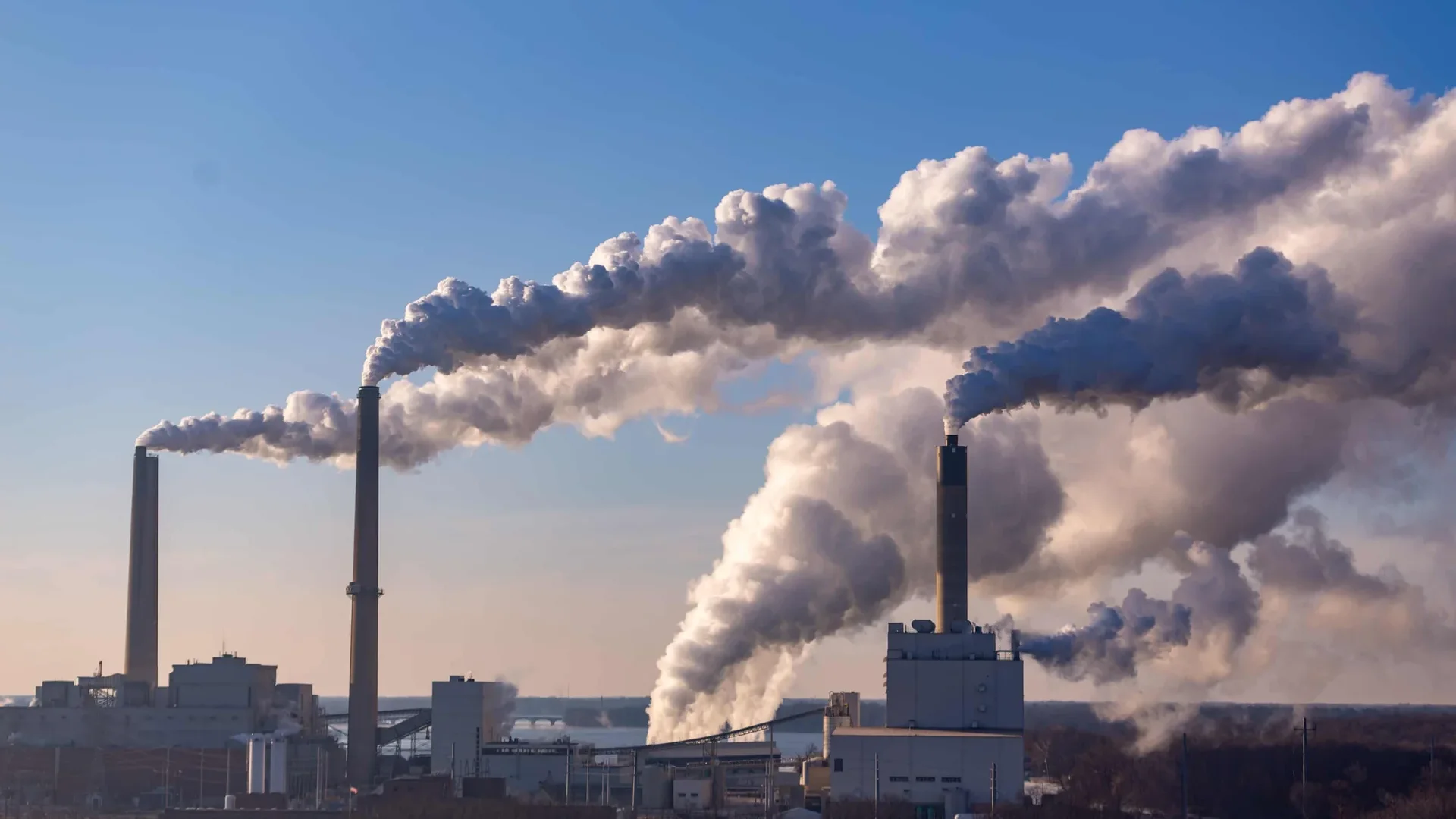
The plant itself functions via combustion. During this process, coal is pulverised into a fine powder and burnt to create steam. This steam is then directed towards turbines, generating electricity. In its draft EIS, Ever Great Energy states that it will endeavour to limit greenhouse gas emissions where possible. Nevertheless, the highly polluting nature of coal combustion means that the plant will contribute directly to global warming. This project therefore highlights the broader struggle faced by developing countries in balancing energy security needs with decarbonisation commitments.
Opportunities and Risks
Opportunities
- This project will address Zambia’s ongoing energy deficit by reducing its reliance on hydropower.
- Greater energy security will benefit Zambia’s social development by enabling small and medium-sized enterprises to thrive while addressing public health-related concerns.
- By consolidating its relationship with China, Zambia could reap long-term economic rewards in the form of infrastructure projects and favourable trade agreements.
Risks
- Competition between large powers around African states’ mining industries will have repercussions on the global political economy, including overlapping trade agreements and rising costs of critical minerals.
- Through investment in Zambia, China is consolidating its control of the global copper supply, potentially forcing countries like the US into a position of dependency.
- Without domestic processing capacity, Zambia’s role in the copper industry will remain limited to low-value work, primarily mining.
- The project could contribute to environmental degradation and climate change through emissions of carbon dioxide and other greenhouse gases.
Policy Recommendations
- Diversify energy mix: Zambia should increase investment in renewable energy sources to improve energy security and limit greenhouse gas emissions.
- Diversify international partnerships: Zambia should pursue a diverse range of partnerships to avoid becoming overly dependent on any one actor.
- Expand manufacturing capacity: Zambia should explore options to expand its mineral processing capacity, thereby creating opportunities for higher-value exports and skilled employment.
- Monitor environmental impact: Regular third-party audits should be conducted to ensure that the measures outlined in the Environmental Impact Assessment are being adhered to where possible, and that processing activities do not undermine Zambia’s decarbonisation commitments.
Conclusion
Sinazongwe 600 MW thermal power plant project offers tangible economic opportunities for Zambia, both through increased domestic business activity and the expansion of regional trade. Broadly, this development is an indicator of shifting trade policies around key natural resources such as copper. Amid heating competition, projects like this are considered vital by states looking to strengthen supply chains and build their own manufacturing capacity. Further competition is therefore likely as major actors vie for the support of resource-rich countries.
At the same time, projects that prioritise economic growth over decarbonisation are being called into question. Despite being the most vulnerable to the effects of climate change, when it comes to mitigation, developing countries are given a disproportionate share of the burden. International institutions will need to do more to ensure that environmental frameworks are upheld without putting excessive strain on developing economies. Ultimately, the thermal power plant is a positive development insofar as it will address Zambia’s energy deficit and foster growth. However, its long-term impact depends on how well its economic benefits are balanced against environmental concerns and wider competition over critical minerals.


